|
Legal & Tax Disclosure
ATTORNEY ADVERTISING.
This article is provided for general informational purposes only and does not constitute legal, financial, or tax advice. Reading this content does not create an attorney-client or professional advisory relationship. Laws vary by jurisdiction and are subject to change. You should consult a qualified professional regarding your specific circumstances. |
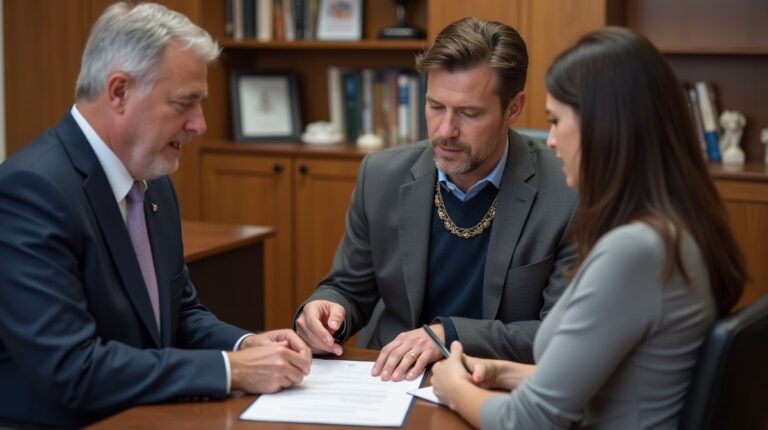
I recently had a client, Emily, call me in absolute distress. She’d meticulously crafted a codicil to her Trust, intending to shift a small portion of her estate to a local animal shelter. She and her witnesses signed it – or so she thought. Turns out, one of her witnesses was a beneficiary under the original Trust, and, critically, she hadn’t realized the signing order was off. The notary witnessed the signatures after the witnesses had already signed as beneficiaries. A seemingly minor technicality, but one that threatened to invalidate her wishes and could have cost her estate upwards of $50,000 in litigation. This is where a Heggstad petition comes in, and understanding the costs involved is vital.
As an Estate Planning Attorney and CPA with over 35 years of experience here in Escondido, I’ve seen countless instances where perfectly sound testamentary intent is thwarted by procedural errors. The Heggstad petition, named after a key California case, provides a mechanism to validate a Will or Trust even with technical defects in its execution. It’s not a magic bullet, and it’s certainly not free, but for clients like Emily, it can be a lifeline.
What Exactly Does a Heggstad Petition Cover?

A Heggstad petition, formally a Petition for Order Determining Validity of Testamentary Document (Probate Code § 6110), essentially asks the court to overlook errors in the signing or witnessing of a Will or Trust. Common issues include incorrect signing order, witnesses not present simultaneously, or a beneficiary acting as a witness. As mentioned before, California Probate Code § 6112 makes the latter particularly problematic, triggering a presumption of duress or fraud, potentially voiding the beneficiary’s gift unless there are two disinterested witnesses.
Breaking Down the Costs: Attorney’s Fees
The largest component of a Heggstad petition’s cost is undoubtedly the attorney’s fees. These vary significantly depending on the complexity of the situation and the attorney’s experience. Expect a flat fee ranging from $3,500 to $10,000 or more. A simple case with a clear error and easily obtainable evidence will fall on the lower end. Complex scenarios – involving disputes among beneficiaries, challenges to the testator’s capacity, or extensive evidence gathering – will naturally incur higher fees. My firm typically charges between $5,000 – $8,500, depending on the specifics. This fee covers legal research, drafting the petition, preparing exhibits, court appearances, and communication with opposing parties.
Court Filing Fees and Service of Process
Beyond attorney’s fees, you’ll encounter court costs. The initial filing fee for a Heggstad petition is currently around $460 (as of 2024, subject to change). Additionally, you must legally notify all interested parties (beneficiaries, heirs, etc.) of the petition. This is accomplished through formal “service of process,” which involves a professional process server delivering copies of the petition and summons. Service fees typically range from $100 to $300 per person served, depending on the number of parties and their location.
Additional Expenses to Consider
- Witness Fees: If you need to compel a witness to testify, you’ll be responsible for their mileage and a nominal per diem fee.
- Copying and Exhibits: Preparing and copying exhibits (the Will or Trust itself, affidavits, etc.) can add another $50-$200.
- Expert Testimony: In rare cases, expert testimony might be needed to establish the testator’s testamentary capacity, adding substantial expense.
- Court Reporter: If a hearing is held, you might need to hire a court reporter to create a transcript, costing several hundred dollars.
The CPA Advantage: Valuation and Tax Implications
As a CPA as well as an attorney, I’m acutely aware of the tax consequences of even seemingly minor estate planning errors. If a Will is invalidated, assets fall under intestacy; however, for deaths on or after April 1, 2025, estates with personal property under $208,850 (per CPC § 13100) may still bypass full probate via affidavit. But a Heggstad petition isn’t just about preserving your wishes; it’s about maximizing the value of your estate. Properly establishing the step-up in basis for inherited assets is crucial for minimizing capital gains taxes, and a clear, validated estate plan ensures this process runs smoothly.
Avoiding the Need for a Heggstad Petition Altogether
The best way to avoid the expense and hassle of a Heggstad petition is, of course, to ensure your Will or Trust is executed flawlessly in the first place. This means:
- Strong Ensure all signatures are present and in the correct order.
- Strong Use disinterested witnesses.
- Strong Confirm the notary is present while all signatures are being executed.
- Strong Consider including a self-proving affidavit (Probate Code § 8220) to streamline the probate process.
Furthermore, remember that while California allowed temporary remote witnessing during the pandemic, the law (CPC § 6110) has reverted to requiring strict simultaneous presence; remote signatures are generally invalid for Wills unless they meet the narrow ‘Electronic Will’ standards of AB 298. And don’t forget about digital assets; effective 2025, California law (CPC § 871) was expanded to grant fiduciaries power over digital accounts; however, you must still grant explicit RUFADAA powers in your Will or Trust to bypass federal privacy blocks.
Solving the immediate legal issue is only the first step; ensuring your foundational documents hold up in court is the next.
In my 32 years of practice in Riverside County, I have seen many estate plans fail not because of specific asset errors, but because the underlying Will was ambiguous.
To protect your family from unnecessary conflict, you must understand how judges evaluate the enforceability of your Will:
What makes a California will legally enforceable when it matters most?
In California, a last will and testament operates within a probate system that emphasizes intent, clarity, and procedural compliance. When properly drafted, a will does more than distribute property—it creates legally enforceable instructions that guide courts, fiduciaries, and beneficiaries through administration with fewer disputes and less uncertainty.
- Preparation: Review future needs regularly.
- Law: Check legal requirements.
- People: Update testator details.
When a will is drafted with California probate review in mind, it becomes a stabilizing roadmap rather than a source of conflict. Clear intent, proper authority, and compliant execution protect both families and estates.
Resources for Legal Standards & Probate Procedure
-
Escondido Local Rules: San Diego Superior Court – Probate Division
Access the essential “Local Rules” (Division IV) effective January 1, 2026. This includes mandatory e-filing procedures, current Probate Examiner notes, and Local Rule 4.4.5 regarding remote appearance requirements (via MS Teams) for non-evidentiary hearings. -
Attorney Verification: State Bar of California
The official regulatory body for California attorneys. Use this to verify a lawyer’s “Certified Specialist” status in Estate Planning or to access 2026 guidelines on the ethical handling of Client Trust Accounts (IOLTA). -
Self-Help & Forms: California Courts – Wills, Estates, and Probate
The Judicial Council’s official portal. It includes the updated 2026 forms for the $208,850 personal property threshold and the $750,000 “Primary Residence” simplified transfer procedure (AB 2016). -
Federal Estate Tax: IRS Estate Tax Guidelines
The authoritative federal resource for estate and gift tax filing. It reflects the 2026 “OBBBA” permanent exemption of $15 million per individual, replacing the previously scheduled Tax Cuts and Jobs Act (TCJA) sunset.
|
Attorney Advertising, Legal Disclosure & Authorship
ATTORNEY ADVERTISING.
This content is provided for general informational and educational purposes only and does not constitute legal, financial, or tax advice. Under the California Rules of Professional Conduct and State Bar advertising regulations, this material may be considered attorney advertising. Reading this content does not create an attorney-client relationship or any professional advisory relationship. Laws vary by jurisdiction and are subject to change, including recent 2026 developments under California’s AB 2016 and evolving federal estate and reporting requirements. You should consult a qualified attorney or advisor regarding your specific circumstances before taking action.
Responsible Attorney:
Steven F. Bliss, California Attorney (Bar No. 147856).
Local Office:
Escondido Probate Law720 N Broadway 107 Escondido, CA 92025 (760) 884-4044
Escondido Probate Law is a practice location and trade name used by Steven F. Bliss, Esq., a California-licensed attorney.
About the Author & Legal Review Process
This article was researched and drafted by the Legal Editorial Team of the Law Firm of Steven F. Bliss, Esq.,
a collective of attorneys, legal writers, and paralegals dedicated to translating complex legal concepts into clear, accurate guidance.
Legal Review:
This content was reviewed and approved by Steven F. Bliss, a California-licensed attorney (Bar No. 147856). Mr. Bliss concentrates his practice in estate planning and estate administration, advising clients on proactive planning strategies and representing fiduciaries in probate and trust administration proceedings when formal court involvement becomes necessary.
With more than 35 years of experience in California estate planning and estate administration,
Mr. Bliss focuses on structuring enforceable estate plans, guiding fiduciaries through court-supervised proceedings, resolving creditor and notice issues, and coordinating asset management to support compliant, timely distributions and reduce fiduciary risk. |