|
Legal & Tax Disclosure
ATTORNEY ADVERTISING.
This article is provided for general informational purposes only and does not constitute legal, financial, or tax advice. Reading this content does not create an attorney-client or professional advisory relationship. Laws vary by jurisdiction and are subject to change. You should consult a qualified professional regarding your specific circumstances. |
Alan received a call last week, utterly distraught. His mother had recently passed, and she’d meticulously updated her will… or so he thought. Included was a clause leaving him “my antique desk,” a piece of furniture he’d always admired and assumed was the ornate walnut desk in her study. However, his sister, Emily, claimed that “the antique desk” referred to a much smaller, less valuable writing desk in the guest bedroom. This seemingly simple disagreement escalated quickly, threatening to derail the entire estate. Alan was facing legal fees potentially exceeding $10,000 simply to prove his understanding of his mother’s intent.
Ambiguity in wills and trusts is surprisingly common. People use imprecise language, assume shared understanding, or simply don’t anticipate future disputes. As an estate planning attorney and CPA with over 35 years of experience, I’ve seen countless cases where a few poorly chosen words trigger extensive litigation. The key to resolving these disputes lies in how the courts interpret these ambiguous terms. They don’t simply guess; they employ a set of well-established rules, and understanding these rules can significantly impact your estate planning strategy.
What Happens When a Will is Unclear?
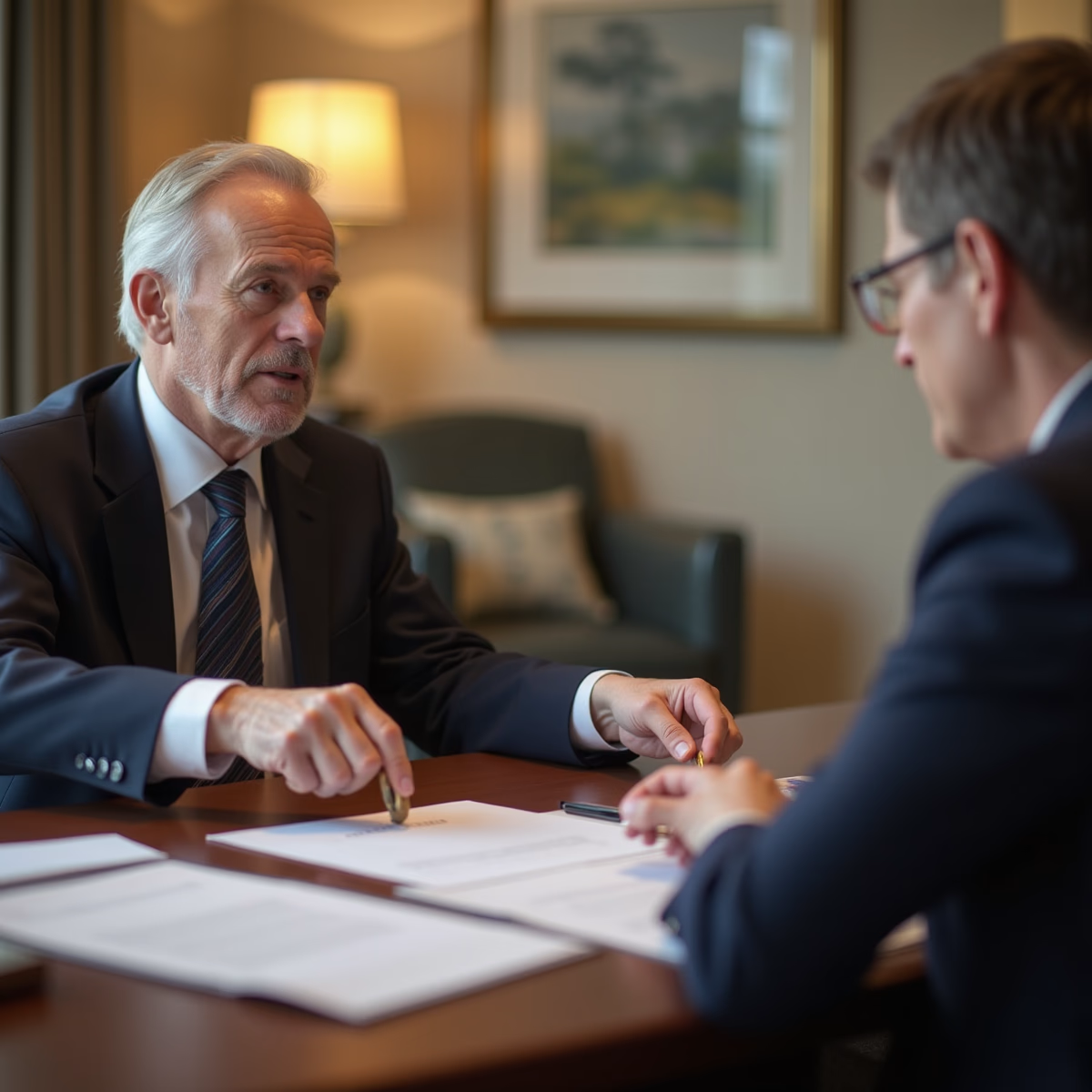
When a court encounters ambiguous language in a will, its primary goal is to ascertain the testator’s intent – what the person who wrote the will actually meant. This isn’t about what the will says, but what the testator intended it to say. This is where the rules of construction come into play. California courts will initially look to the “four corners” of the document itself, attempting to reconcile any inconsistencies. However, if the ambiguity persists, they will consider extrinsic evidence.
What is Extrinsic Evidence and How is it Used?
Extrinsic evidence refers to any information outside the will itself. This can include prior drafts of the will, correspondence, and, critically, testimony from witnesses. For example, the court might consider a letter Alan’s mother wrote to a friend mentioning her plans to leave the walnut desk to Alan specifically. They could also hear testimony from Alan and Emily regarding conversations they had with their mother about her wishes. However, there are strict rules regarding the admissibility of this evidence. The “parol evidence rule” generally prohibits the introduction of evidence that contradicts the clear terms of the will. But, when a term is genuinely ambiguous, the rule is relaxed.
As a CPA, I emphasize the importance of a complete and accurate asset valuation. Sometimes, ambiguity isn’t about which asset, but how much it’s worth. A precise appraisal of each item can resolve disputes, especially when dealing with collectibles or real estate. The step-up in basis at death also becomes crucial; correctly valuing the assets not only avoids litigation but also minimizes capital gains taxes for the beneficiaries.
Can the Court Consider the Executor’s Interpretation?
The executor’s interpretation of the will carries some weight, but it’s not determinative. Courts generally give deference to the executor’s good-faith efforts to administer the estate, but ultimately, the court makes the final decision. If the executor is acting in their own self-interest or is demonstrably biased, their interpretation will receive less consideration.
What if the Court Still Can’t Determine Intent?
If, after considering all the evidence, the court remains unable to determine the testator’s intent, it will generally interpret the ambiguous term against the drafter of the will. This is known as the “rule of contra proferentem.” This is why meticulously drafted wills with clear, unambiguous language are so crucial.
What Steps Can You Take Now to Avoid Ambiguity?
The best defense against ambiguity is proactive estate planning. Specifically list each asset you intend to leave to a beneficiary, avoiding vague terms like “my antiques” or “personal effects.” Regularly review and update your will as your assets change. And, most importantly, work with a qualified estate planning attorney who understands the nuances of California law.
- Specific Identification: Always clearly identify each asset. Instead of “my jewelry,” say “my diamond necklace purchased from Tiffany & Co. on January 1, 2010.”
- Avoid General Terms: Steer clear of broad categories.
- Regular Updates: Review your will every three to five years, or whenever there’s a significant change in your assets or family situation.
How do enforcement rules in California probate court shape outcomes for heirs and fiduciaries?
Success in probate court depends less on the size of the estate and more on the accuracy of the petition and the behavior of the fiduciary. Whether the issue is a forgotten asset, a contested creditor claim, or a disagreement among siblings, understanding the procedural triggers for court intervention is the best defense against prolonged administration.
To protect against specific family risks, review heir disputes without a will, check for left-out heirs issues, and be vigilant for signs of elder financial abuse.
California probate is most manageable when authority is documented early, assets are classified correctly, and procedure is followed consistently from petition through closing. When the process is approached with realistic expectations about notice, claims, accounting, and dispute risk, the estate is more likely to move toward closure without avoidable conflict or delay.
Verified Authority on California Probate Litigation
-
Double Damages (Bad Faith Taking): California Probate Code § 859
The “nuclear option” of probate litigation. If the court finds that a person has in bad faith wrongfully taken, concealed, or disposed of property belonging to the estate, the judge may assess liability for twice the value of the property, in addition to recovering the asset itself. -
Grounds for Removal of Executor: California Probate Code § 8502
This statute lists the specific legal reasons a judge can fire a Personal Representative. Common grounds include wasting or mismanaging assets, neglecting the estate (moving too slow), or having an incurable conflict of interest with the beneficiaries. -
The “850 Petition” (Title Disputes): California Probate Code § 850
Probate litigation often revolves around ownership. This powerful petition allows the probate court to solve title disputes without filing a separate civil lawsuit. It is used when an asset is titled to a third party but belongs to the estate (or vice versa). -
Presumption of Undue Influence (Caregivers): California Probate Code § 21380
To prevent elder abuse, California law makes it incredibly difficult for paid caregivers to inherit from their patients. The law presumes the gift was the result of undue influence, forcing the caregiver to prove their innocence in court, often requiring a “Certificate of Independent Review.” -
Civil Discovery Rules Apply: California Probate Code § 1000
Probate is not just administrative; it is a court of law. This code section confirms that the standard rules of civil practice apply. This means litigators can use interrogatories, depositions, and demands for production of documents to build their case against a rogue executor. -
Extraordinary Fees (Litigation Costs): California Probate Code § 10811
Litigation is not covered by the standard statutory fee. Attorneys can petition the court for “extraordinary fees” for litigation services (e.g., defending a will contest or recovering stolen property). These fees are billed hourly and must be approved by the judge.
|
Attorney Advertising, Legal Disclosure & Authorship
ATTORNEY ADVERTISING.
This content is provided for general informational and educational purposes only and does not constitute legal, financial, or tax advice. Under the California Rules of Professional Conduct and State Bar advertising regulations, this material may be considered attorney advertising. Reading this content does not create an attorney-client relationship or any professional advisory relationship. Laws vary by jurisdiction and are subject to change, including recent 2026 developments under California’s AB 2016 and evolving federal estate and reporting requirements. You should consult a qualified attorney or advisor regarding your specific circumstances before taking action.
Responsible Attorney:
Steven F. Bliss, California Attorney (Bar No. 147856).
Local Office:
Escondido Probate Law720 N Broadway 107 Escondido, CA 92025 (760) 884-4044
Escondido Probate Law is a practice location and trade name used by Steven F. Bliss, Esq., a California-licensed attorney.
About the Author & Legal Review Process
This article was researched and drafted by the Legal Editorial Team of the Law Firm of Steven F. Bliss, Esq.,
a collective of attorneys, legal writers, and paralegals dedicated to translating complex legal concepts into clear, accurate guidance.
Legal Review:
This content was reviewed and approved by Steven F. Bliss, a California-licensed attorney (Bar No. 147856). Mr. Bliss concentrates his practice in estate planning and estate administration, advising clients on proactive planning strategies and representing fiduciaries in probate and trust administration proceedings when formal court involvement becomes necessary.
With more than 35 years of experience in California estate planning and estate administration,
Mr. Bliss focuses on structuring enforceable estate plans, guiding fiduciaries through court-supervised proceedings, resolving creditor and notice issues, and coordinating asset management to support compliant, timely distributions and reduce fiduciary risk. |