
|
Legal & Tax Disclosure
ATTORNEY ADVERTISING.
This article is provided for general informational purposes only and does not constitute legal, financial, or tax advice. Reading this content does not create an attorney-client or professional advisory relationship. Laws vary by jurisdiction and are subject to change. You should consult a qualified professional regarding your specific circumstances. |
Emily just received the devastating news. Her husband, David, passed away unexpectedly. Beyond the grief, a lawsuit was already in progress against David related to a business deal gone sour. Now, Emily is terrified the lawsuit will wipe out her family’s inheritance, and she doesn’t know how to protect herself. She estimates potential liability at $350,000 – a sum that would cripple their financial future. This is a far too common scenario, and one that demands immediate, specialized legal attention.
As an Estate Planning Attorney and CPA with over 35 years of experience, I frequently guide clients through these complex situations. It’s not simply about navigating the probate process; it’s about proactively defending the estate against existing claims and ensuring a fair outcome. The intersection of estate law and tax implications requires a unique skillset, and having a CPA on board is invaluable. We can analyze the potential tax consequences of any settlement or judgment, particularly the crucial step-up in basis for inherited assets, minimizing capital gains exposure and accurately valuing complex holdings.
What Happens to a Lawsuit When Someone Dies?
The simple answer is: it doesn’t automatically disappear. A pending lawsuit against an individual generally survives their death, but it shifts responsibility. The case doesn’t get dropped; instead, the estate becomes the responsible party. This means the executor or administrator of the estate steps into the deceased’s shoes and must defend the claim. However, there are critical nuances. The estate’s liability is limited to the assets within the estate. Assets with beneficiary designations (like life insurance or retirement accounts) typically pass directly to the beneficiaries and are shielded from estate creditors.
How Does the Estate Defend a Lawsuit?
The process begins with proper notification. Probate Code § 9202 dictates that the executor has a mandatory duty to send specific notice to the Franchise Tax Board, Victim Compensation Board, and Medi-Cal (DHCS) within 90 days of appointment. Failure to notify these agencies pauses their statute of limitations, allowing them to claw back assets years later. But beyond these statutory notifications, we must actively analyze the merits of the lawsuit. Is the claim valid? Is there insurance coverage that might apply? Was David shielded by any contractual limitations of liability?
We then file an appearance with the court, potentially answer the complaint, and begin the discovery process – gathering evidence to build a robust defense. Sometimes, settlement negotiations are the most pragmatic approach, minimizing legal fees and potential exposure. Other times, a vigorous defense is necessary to protect the estate’s assets.
What If the Lawsuit is Still in Discovery?
This is a very common scenario. If the lawsuit is ongoing at the time of death, the estate will likely have to participate in the discovery process – answering interrogatories, producing documents, and potentially taking depositions. There may be motions to stay the proceedings to allow the estate time to determine its assets and potential liability. The court will often be understanding, but it’s crucial to maintain communication and adhere to deadlines.
What About Claims Filed After Death?
Even if no lawsuit was pending during David’s lifetime, claims can still arise after his death. This could be from unpaid debts, car accidents, or even professional negligence. Probate Code § 9100 outlines the timeframe for creditors to file claims against the estate: either 4 months after Letters are issued or 60 days after notice is mailed (whichever is later). Once this period expires, unfiled claims are generally forever barred, protecting the heirs. However, certain claims, like those of government agencies, have longer windows.
What Debts Are Paid First?
It’s important to understand that debts are not paid first-come, first-served. Probate Code § 11420 establishes a strict hierarchy: (1) Administration expenses, (2) Funeral costs, (3) Medical/Last Illness, (4) Family Allowance, (5) Wage Claims, and finally (7) General Debts (credit cards). Executors who pay low-priority debts first can be personally liable. Furthermore, Probate Code § 11423 dictates that debts bear interest from the date of death (or the date the claim is allowed) at the rate of 10% per annum (unless the contract specifies otherwise). Delaying payment unnecessarily drains the inheritance.
What If the Executor Disagrees with a Claim?
If the executor believes a claim is invalid or overstated, it can be rejected. However, this triggers a specific deadline. The 90-Day Suit Window (Probate Code § 9353) states that if an executor rejects a creditor’s claim (using Form DE-174), the creditor has exactly 90 days to file a lawsuit in civil court. If they fail to sue within this window, the claim is legally dead.
What If Assets Were Held in Trust?
If David had established a trust to avoid probate, the rules are slightly different. Probate Code § 19000 outlines the Optional Trust Claims Procedure. While probate requires creditor notice, trusts do not automatically trigger this process. However, a trustee can opt-in to the claims procedure to cut off liability after 4 months. Without this, creditors can theoretically sue the trust beneficiaries for up to 1 year after death (CCP § 366.2).
What separates an efficient California probate process from a drawn-out conflict over authority and assets?
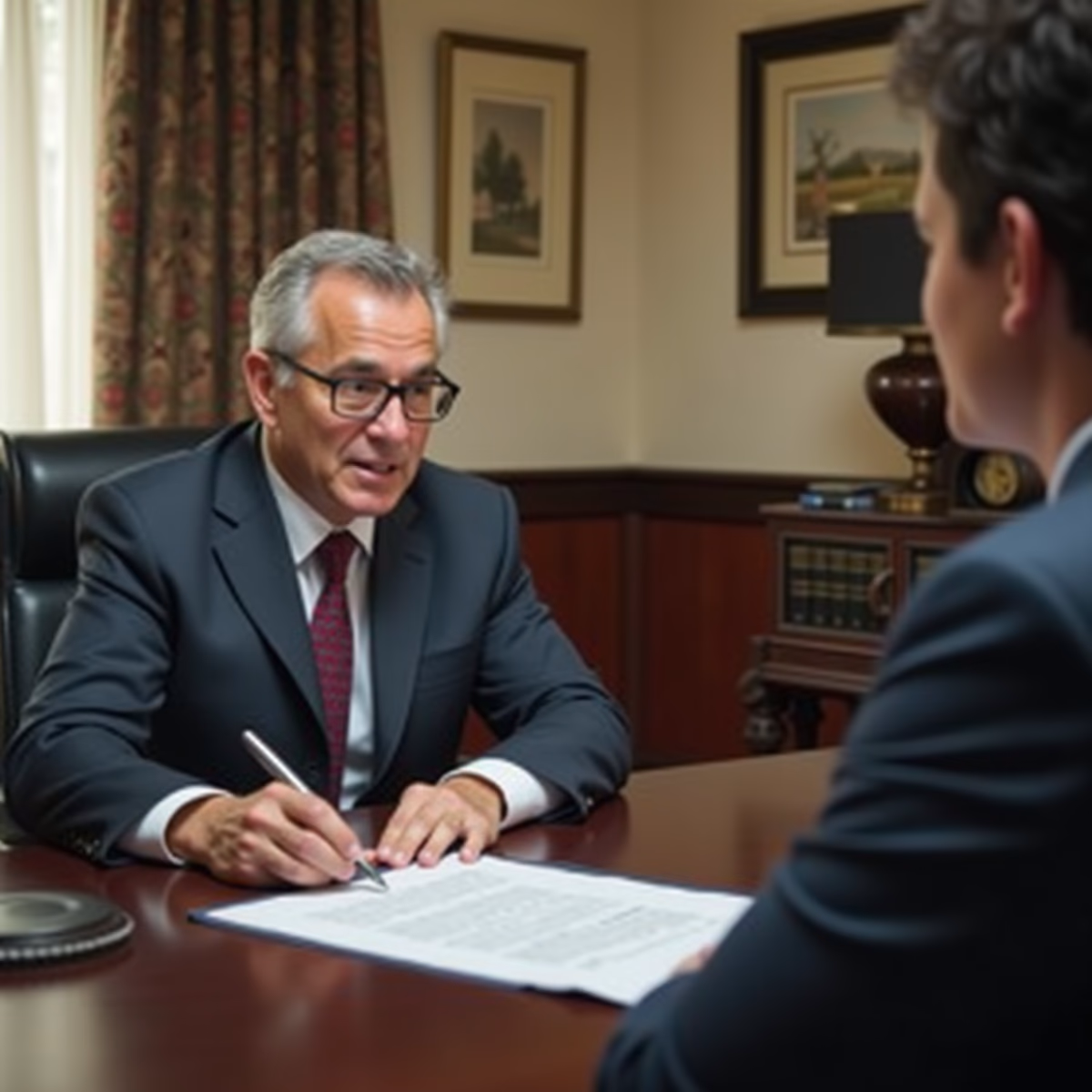
California probate is designed to provide court-supervised transfer of property, yet cases often break down when authority is unclear, required steps are missed, or disputes arise over assets, notice, and fiduciary conduct. When the process is misunderstood, families can face avoidable delay, escalating conflict, and increased exposure to creditor issues, hearings, or litigation before the estate can close.
- Options: Explore alternatives to probate.
- Nuance: Check specific considerations.
- Administration: Manage administering a probate estate.
A stable probate administration outcome usually follows from clarity, consistency, and readiness for court review, especially when multiple stakeholders and competing interpretations are involved. When documentation supports enforcement and timelines are respected, families are less likely to face preventable escalation.
Verified Authority on Probate Creditor Claims
-
The Creditor Window (4-Month Rule): California Probate Code § 9100
This statute provides the primary protection for the estate. Generally, any creditor who fails to file a formal claim within four months of the executor receiving Letters is barred from collecting. This “clean break” is one of the main advantages of formal probate. -
Mandatory Notice to Public Agencies: California Probate Code § 9202
Regular creditors aren’t the only concern. You MUST send specific notices to the Director of Health Care Services (Medi-Cal), the Franchise Tax Board, and the Victim Compensation Board. Missing this step keeps the liability window open indefinitely for the state. -
Priority of Payments: California Probate Code § 11420 (Debt Hierarchy)
If an estate is “insolvent” (debts exceed assets), you cannot simply pay bills as they arrive. This code establishes the strict pecking order: funeral expenses and administration costs (lawyer/executor fees) get paid before credit cards and medical bills. -
Rejection of Claim (The “Sue or Lose It” Rule): California Probate Code § 9353
When an executor formally rejects a claim (Form DE-174), the clock starts ticking. The creditor has exactly 90 days to file a civil lawsuit to enforce the debt. If they miss this deadline, the claim is barred, regardless of its validity. -
Personal Liability of Executor: California Probate Code § 9601
An executor can be held personally liable for “breach of fiduciary duty” if they pay debts out of order (e.g., paying a credit card before the funeral home) or distribute assets to heirs before clearing all valid creditor claims. -
One-Year Statute of Limitations (Non-Probate): California Code of Civil Procedure § 366.2
This is the ultimate backstop. Even if no probate is opened, creditors generally only have one year from the date of death to file a lawsuit against the decedent’s successors (e.g., trust beneficiaries). After one year, most debts expire automatically.
|
Attorney Advertising, Legal Disclosure & Authorship
ATTORNEY ADVERTISING.
This content is provided for general informational and educational purposes only and does not constitute legal, financial, or tax advice. Under the California Rules of Professional Conduct and State Bar advertising regulations, this material may be considered attorney advertising. Reading this content does not create an attorney-client relationship or any professional advisory relationship. Laws vary by jurisdiction and are subject to change, including recent 2026 developments under California’s AB 2016 and evolving federal estate and reporting requirements. You should consult a qualified attorney or advisor regarding your specific circumstances before taking action.
Responsible Attorney:
Steven F. Bliss, California Attorney (Bar No. 147856).
Local Office:
Escondido Probate Law720 N Broadway 107 Escondido, CA 92025 (760) 884-4044
Escondido Probate Law is a practice location and trade name used by Steven F. Bliss, Esq., a California-licensed attorney.
About the Author & Legal Review Process
This article was researched and drafted by the Legal Editorial Team of the Law Firm of Steven F. Bliss, Esq.,
a collective of attorneys, legal writers, and paralegals dedicated to translating complex legal concepts into clear, accurate guidance.
Legal Review:
This content was reviewed and approved by Steven F. Bliss, a California-licensed attorney (Bar No. 147856). Mr. Bliss concentrates his practice in estate planning and estate administration, advising clients on proactive planning strategies and representing fiduciaries in probate and trust administration proceedings when formal court involvement becomes necessary.
With more than 35 years of experience in California estate planning and estate administration,
Mr. Bliss focuses on structuring enforceable estate plans, guiding fiduciaries through court-supervised proceedings, resolving creditor and notice issues, and coordinating asset management to support compliant, timely distributions and reduce fiduciary risk. |