|
Legal & Tax Disclosure
ATTORNEY ADVERTISING.
This article is provided for general informational purposes only and does not constitute legal, financial, or tax advice. Reading this content does not create an attorney-client or professional advisory relationship. Laws vary by jurisdiction and are subject to change. You should consult a qualified professional regarding your specific circumstances. |
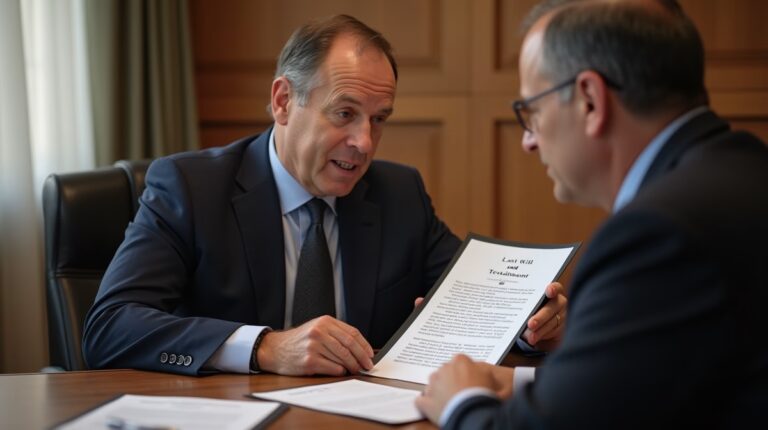
I recently had a client, Emily, a successful entrepreneur originally from Italy, come to me absolutely devastated. She had meticulously planned her estate, including a Grantor Retained Annuity Trust (GRAT) designed to transfer significant wealth to her children. However, a simple oversight in the trust document—failing to account for her non-citizen status—threatened to invalidate the entire strategy, costing her family hundreds of thousands in potential estate tax savings. Emily’s story isn’t unique. Many non-citizen clients assume estate planning tools apply to them identically as to U.S. citizens, and that’s often not the case.
The primary benefit of a GRAT is to remove appreciating assets from your taxable estate while minimizing gift tax liability. You transfer assets to the trust, receive a fixed annuity stream back over a specified term, and any appreciation exceeding the IRS-defined hurdle rate passes to your beneficiaries tax-free. But for non-citizens, there are crucial nuances, particularly around domicile and the potential for “exit tax” implications. The IRS scrutinizes GRATs established by non-citizens more closely, focusing on whether the structure is primarily intended to avoid U.S. estate tax.
As a seasoned Estate Planning Attorney & CPA with over 35 years of experience, I’ve learned that a CPA’s perspective is invaluable when structuring GRATs for non-citizens. The step-up in basis, capital gains considerations, and accurate valuation of assets are paramount. A poorly structured GRAT can trigger unintended gift tax consequences or even be deemed a taxable event under Section 734(b) of the Internal Revenue Code.
What are the main concerns for a non-citizen establishing a GRAT?

Several key areas require careful attention. First, the grantor’s domicile status is critical. If you’re not domiciled in the U.S., the IRS may question the legitimacy of using a U.S.-based GRAT for estate tax planning. The trust document must clearly demonstrate a genuine connection to the U.S., beyond simply holding assets here. Second, the potential for an “exit tax” looms large. Under IRC § 2702, if the grantor dies before the GRAT term expires, the trust assets ‘claw back’ into the taxable estate, nullifying the estate tax benefits; this is why ‘short-term’ or ‘rolling’ GRATs are often preferred to mitigate mortality risk. Third, accurately valuing assets transferred into the GRAT is essential. The IRS closely examines appraisals, particularly for illiquid assets like real estate or business interests. A low valuation can raise red flags.
How does the IRS view GRATs created by non-citizens?
The IRS isn’t necessarily opposed to non-citizens using GRATs, but they’re far more likely to challenge these trusts than those created by U.S. citizens. The agency will look for evidence of a legitimate estate planning purpose, beyond simply avoiding U.S. estate tax. This means demonstrating a strong connection to the U.S., such as owning property here, operating a business, or having family residing in the country. It’s important to remember that a GRAT is only successful if the assets appreciate faster than the IRS § 7520 ‘Hurdle Rate’; if investment returns fail to beat this rate, the assets simply return to the grantor without any tax penalty, often called a ‘heads I win, tails I tie’ scenario.
What happens if I distribute assets from the GRAT to my children?
Distributing assets from the GRAT to your children at the end of the term can also trigger tax implications. While the transfer into the GRAT itself is often gift tax neutral, the distribution to children will generally be considered a taxable gift. However, the benefits of removing those assets from your estate can outweigh the gift tax liability, especially if the assets have appreciated significantly. Additionally, under Prop 19, while transferring a home into a GRAT doesn’t trigger reassessment (since the grantor retains interest), the distribution to children at the end of the term will trigger a full property tax reassessment unless the child moves in as their primary residence within one year.
- Domicile Verification: Provide robust documentation to support your U.S. domicile claim.
- Asset Valuation: Obtain independent appraisals from qualified experts for all assets transferred into the GRAT.
- Trust Purpose: Clearly articulate a legitimate estate planning purpose in the trust document, beyond tax avoidance.
- Term Length: Consider a shorter GRAT term to minimize mortality risk.
What failures trigger court intervention and contests in California trust administration?
Success in trust administration depends on more than just the document; it requires active management of assets, precise accounting to beneficiaries, and careful navigation of tax rules. Whether dealing with a blended family or complex real estate, understanding the mechanics of trust law is the only way to ensure the grantor’s wishes survive scrutiny.
| Strategy | Implementation |
|---|---|
| Marital Planning | Setup a QTIP trust. |
| Credit Shelter | Establish a bypass trust. |
| Safety Check | Avoid common trust pitfalls. |
California trust planning is most effective when the structure is matched to the specific family goal and assets are fully funded into the trust name. When administration is handled with transparency and adherence to the Probate Code, the trust can fulfill its promise of privacy and efficiency.
Verified Authority on GRAT Administration & Compliance
-
Zeroed-Out Structure (IRC § 2702): Internal Revenue Code § 2702
The governing statute for Grantor Retained Annuity Trusts. It allows the grantor to retain an annuity value equal to the contribution, effectively “zeroing out” the gift tax value of the remainder interest. -
IRS Hurdle Rate (§ 7520): Section 7520 Interest Rates
The critical benchmark for GRAT success. The trust’s assets must appreciate faster than this monthly published rate for any wealth to pass tax-free to the beneficiaries. -
Real Estate Reassessment (Prop 19): California State Board of Equalization (Prop 19)
Vital for GRATs holding real property. While funding the GRAT is safe, the eventual transfer to children at the end of the term is subject to strict Prop 19 reassessment rules if the property is not used as a primary residence. -
Estate Tax Exemption (OBBBA): IRS Estate Tax Guidelines
Reflects the OBBBA permanent increase to a $15 million per person exemption (effective Jan 1, 2026). This is the “safety net” if a GRAT fails and assets are pulled back into the grantor’s taxable estate. -
Missed Asset Recovery (AB 2016): California Probate Code § 13151 (Petition for Succession)
If an asset intended for the GRAT was legally left out, this statute (effective April 1, 2025) allows for a “Petition for Succession” for assets up to $750,000, bypassing full probate to clean up funding errors. -
Digital Asset Valuation (RUFADAA): California Probate Code § 870 (RUFADAA)
Mandatory for GRATs funded with volatile digital assets (crypto). Without RUFADAA powers, a trustee cannot access or properly appraise these assets for the required annual annuity payments.
|
Attorney Advertising, Legal Disclosure & Authorship
ATTORNEY ADVERTISING.
This content is provided for general informational and educational purposes only and does not constitute legal, financial, or tax advice. Under the California Rules of Professional Conduct and State Bar advertising regulations, this material may be considered attorney advertising. Reading this content does not create an attorney-client relationship or any professional advisory relationship. Laws vary by jurisdiction and are subject to change, including recent 2026 developments under California’s AB 2016 and evolving federal estate and reporting requirements. You should consult a qualified attorney or advisor regarding your specific circumstances before taking action.
Responsible Attorney:
Steven F. Bliss, California Attorney (Bar No. 147856).
Local Office:
Escondido Probate Law720 N Broadway 107 Escondido, CA 92025 (760) 884-4044
Escondido Probate Law is a practice location and trade name used by Steven F. Bliss, Esq., a California-licensed attorney.
About the Author & Legal Review Process
This article was researched and drafted by the Legal Editorial Team of the Law Firm of Steven F. Bliss, Esq.,
a collective of attorneys, legal writers, and paralegals dedicated to translating complex legal concepts into clear, accurate guidance.
Legal Review:
This content was reviewed and approved by Steven F. Bliss, a California-licensed attorney (Bar No. 147856). Mr. Bliss concentrates his practice in estate planning and estate administration, advising clients on proactive planning strategies and representing fiduciaries in probate and trust administration proceedings when formal court involvement becomes necessary.
With more than 35 years of experience in California estate planning and estate administration,
Mr. Bliss focuses on structuring enforceable estate plans, guiding fiduciaries through court-supervised proceedings, resolving creditor and notice issues, and coordinating asset management to support compliant, timely distributions and reduce fiduciary risk. |