|
Legal & Tax Disclosure
ATTORNEY ADVERTISING.
This article is provided for general informational purposes only and does not constitute legal, financial, or tax advice. Reading this content does not create an attorney-client or professional advisory relationship. Laws vary by jurisdiction and are subject to change. You should consult a qualified professional regarding your specific circumstances. |
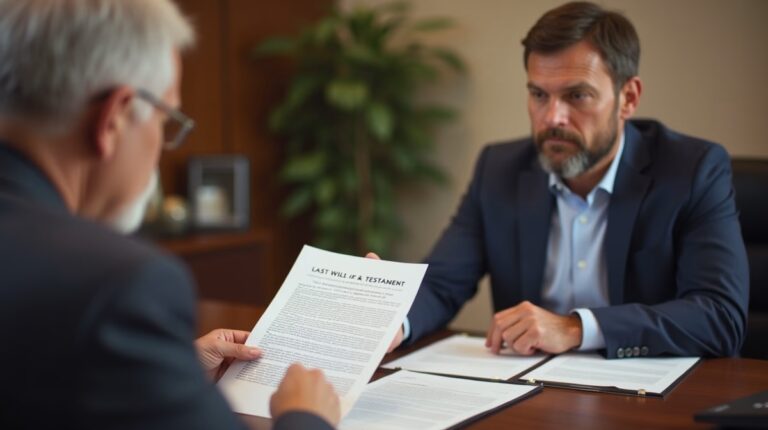
Emily lost everything because she didn’t understand how a simple letter could derail a codicil. Her mother recently passed, leaving a clear will naming Emily as the sole beneficiary of a beautiful beach house. Then, Emily’s uncle, David, produced a handwritten codicil, dated just weeks before her mother’s death, gifting the beach house to him. Emily fought back, arguing the codicil was a forgery. She had a strong case, but David had already submitted a letter to the court, requesting the court accept the codicil without a formal hearing. The judge, facing a seemingly unopposed motion, initially granted David’s request. It cost Emily $25,000 in legal fees and months of heartache to reverse the damage.
As a California estate planning attorney and CPA with over 35 years of experience, I’ve seen countless situations like Emily’s. People underestimate the power of written submissions to the probate court. A letter isn’t just a casual communication; it’s a formal legal document that can significantly impact the outcome of your case. In fact, it’s often the first impression the court has of your position.
What kind of letters can I submit to the Probate Court?
There are several types of letters you might submit. Objections to petitions are common, but you can also submit letters to request information, provide updates on the estate administration, or even challenge the validity of a document like a will or trust. Any communication intended to influence the court’s decision should be in writing. Remember, the court operates on a paper trail, and a well-crafted letter can lay the groundwork for a successful outcome.
Consider letters requesting accountings, letters demanding compliance with fiduciary duties, or even letters seeking clarification on court orders. However, be extremely careful not to make unsupported accusations or engage in personal attacks. Your letter should be professional, factual, and focused on the legal issues.
What should I include in my letter?
The specifics will vary depending on your situation, but there are some key elements every letter should contain. First, clearly state the case name and case number. Next, identify yourself and your relationship to the estate (e.g., beneficiary, executor, creditor). Then, concisely state your request or objection, supported by relevant facts and legal arguments. Attach any supporting documentation, such as copies of the will, trust, or financial statements. Finally, include your contact information and a statement that you are available to answer any questions the court may have.
It’s crucial to be accurate and truthful. Misrepresentations can have serious consequences, including sanctions from the court. A CPA’s expertise is invaluable here. We understand the financial implications of estate administration, and can help ensure your letter accurately reflects the assets involved and potential capital gains issues. For example, a proper valuation of an asset at the time of death is vital for step-up in basis calculations.
What if the court posts a “Tentative Ruling” before the hearing?
Most California probate departments post “Tentative Rulings” online 1-2 days before the hearing. If the ruling is “Recommended for Approval” and no one objects, the physical hearing may be waived. If you disagree with the ruling, you MUST notify the court and opposing counsel by 4:00 PM the day before. This is a critical deadline. Failing to respond to a Tentative Ruling can be fatal to your case.
Don’t assume the judge will read every page of your letter, or even the underlying documents. The Probate Examiner is often the first line of defense. Before the judge ever sees your file, a ‘Probate Examiner’ reviews it for defects. They post ‘Probate Notes’ weeks in advance. You MUST file a ‘Supplement’ to cure these defects before the hearing, or your case will be continued (delayed) for months.
- Label: Case Name & Number: Always include these at the top for easy identification.
- Label: Your Relationship: Clearly state how you are involved in the estate.
- Label: Factual Basis: Stick to the facts and avoid emotional language.
- Label: Legal Arguments: Cite relevant statutes or case law if possible.
- Label: Attachments: Include copies of supporting documents.
How do enforcement rules in California probate court shape outcomes for heirs and fiduciaries?

The path through California probate is rarely a straight line; it requires precise adherence to statutory deadlines, accurate asset characterization, and strict fiduciary compliance. Without a clear roadmap, what begins as a standard administrative proceeding can quickly dissolve into a costly battle over interpretation, valuation, and beneficiary rights.
To close an estate cleanly, you must understand the requirements for how to close probate, prepare a detailed final accounting, and ensure the plan for distributing estate assets is court-approved.
A stable probate administration outcome usually follows from clarity, consistency, and readiness for court review, especially when multiple stakeholders and competing interpretations are involved. When documentation supports enforcement and timelines are respected, families are less likely to face preventable escalation.
Verified Authority on California Probate Court Operations
-
Jurisdiction & Venue: California Probate Code § 7051 (Domicile Rule)
This statute dictates strictly where the probate case must be heard. It is based on the decedent’s “domicile” (permanent legal residence), not where they died or where their property is located. Filing in the wrong county will result in the case being transferred or dismissed. -
The “850 Petition” (Title Disputes): California Probate Code § 850 (Heggstad/Title)
The Probate Court is not just for processing paperwork; it is a trial court that can determine property ownership. A Section 850 petition allows the judge to order property returned to the estate (from a thief) or transferred out of the estate (to a rightful owner) without a separate civil lawsuit. -
Oral Objections & Continuances: California Probate Code § 1043
You have a right to be heard. This code allows any interested person to appear at the hearing and object orally. The court may grant a continuance to allow you time to file a written objection. This is a critical tool for beneficiaries who find out about a hearing at the last minute. -
Appeals (What Orders are Final?): California Probate Code § 1300 (Appealable Orders)
Not every decision by a probate judge can be appealed immediately. This section lists exactly which orders are “appealable” (e.g., directing distribution, determining heirship). Understanding this list is vital for litigation strategy. -
Tentative Rulings: California Rules of Court 3.1308
In modern California probate practice, the “hearing” often happens on paper before the actual court date. This rule governs the Tentative Ruling system. Checking the tentative ruling the day before is mandatory practice; if you don’t contest it properly, the judge’s tentative decision becomes final. -
Fee Waivers: California Government Code § 68633
Probate filing fees are high (often $435+ per petition). This code authorizes the court to waive these fees for petitioners who are low-income or receiving public benefits, ensuring that access to the probate court is not limited only to the wealthy.
|
Attorney Advertising, Legal Disclosure & Authorship
ATTORNEY ADVERTISING.
This content is provided for general informational and educational purposes only and does not constitute legal, financial, or tax advice. Under the California Rules of Professional Conduct and State Bar advertising regulations, this material may be considered attorney advertising. Reading this content does not create an attorney-client relationship or any professional advisory relationship. Laws vary by jurisdiction and are subject to change, including recent 2026 developments under California’s AB 2016 and evolving federal estate and reporting requirements. You should consult a qualified attorney or advisor regarding your specific circumstances before taking action.
Responsible Attorney:
Steven F. Bliss, California Attorney (Bar No. 147856).
Local Office:
Escondido Probate Law720 N Broadway 107 Escondido, CA 92025 (760) 884-4044
Escondido Probate Law is a practice location and trade name used by Steven F. Bliss, Esq., a California-licensed attorney.
About the Author & Legal Review Process
This article was researched and drafted by the Legal Editorial Team of the Law Firm of Steven F. Bliss, Esq.,
a collective of attorneys, legal writers, and paralegals dedicated to translating complex legal concepts into clear, accurate guidance.
Legal Review:
This content was reviewed and approved by Steven F. Bliss, a California-licensed attorney (Bar No. 147856). Mr. Bliss concentrates his practice in estate planning and estate administration, advising clients on proactive planning strategies and representing fiduciaries in probate and trust administration proceedings when formal court involvement becomes necessary.
With more than 35 years of experience in California estate planning and estate administration,
Mr. Bliss focuses on structuring enforceable estate plans, guiding fiduciaries through court-supervised proceedings, resolving creditor and notice issues, and coordinating asset management to support compliant, timely distributions and reduce fiduciary risk. |