|
Legal & Tax Disclosure
ATTORNEY ADVERTISING.
This article is provided for general informational purposes only and does not constitute legal, financial, or tax advice. Reading this content does not create an attorney-client or professional advisory relationship. Laws vary by jurisdiction and are subject to change. You should consult a qualified professional regarding your specific circumstances. |
I recently had a client, Emily, spend over $10,000 fighting a motion to compel her to appear in person for a hearing in San Diego. The issue? She lived in Oregon. Emily’s mother’s estate was small, relatively straightforward, but her brother, the executor, was determined to make her travel. He claimed she needed to testify about a family loan. Ultimately, we prevailed, but the cost could have been avoided with proper planning and understanding of the current rules.
The short answer is yes, you can often appear remotely via Zoom in California Probate Court. However, it’s not automatic, and simply showing up on the screen won’t suffice. Each individual court has its own Local Rules of Court regarding remote appearances. These rules, established in response to the pandemic, are slowly evolving, and vary significantly by county. Some courts require a formal request, a showing of “good cause,” and even a stipulation from opposing counsel. Other courts allow it as a matter of course.
What constitutes “good cause” is key. Simply stating you prefer to appear remotely is rarely enough. Commonly accepted reasons include serious illness, significant distance, or extreme hardship. Documentation supporting your claim is critical – a doctor’s note, proof of travel expenses, or a declaration outlining the hardship. The court will weigh your reasons against the need for in-person testimony and the convenience of all parties. Remember, probate is often about family disputes, and the court wants to ensure fairness and a complete understanding of the facts.
What if the Court Denies My Zoom Request?
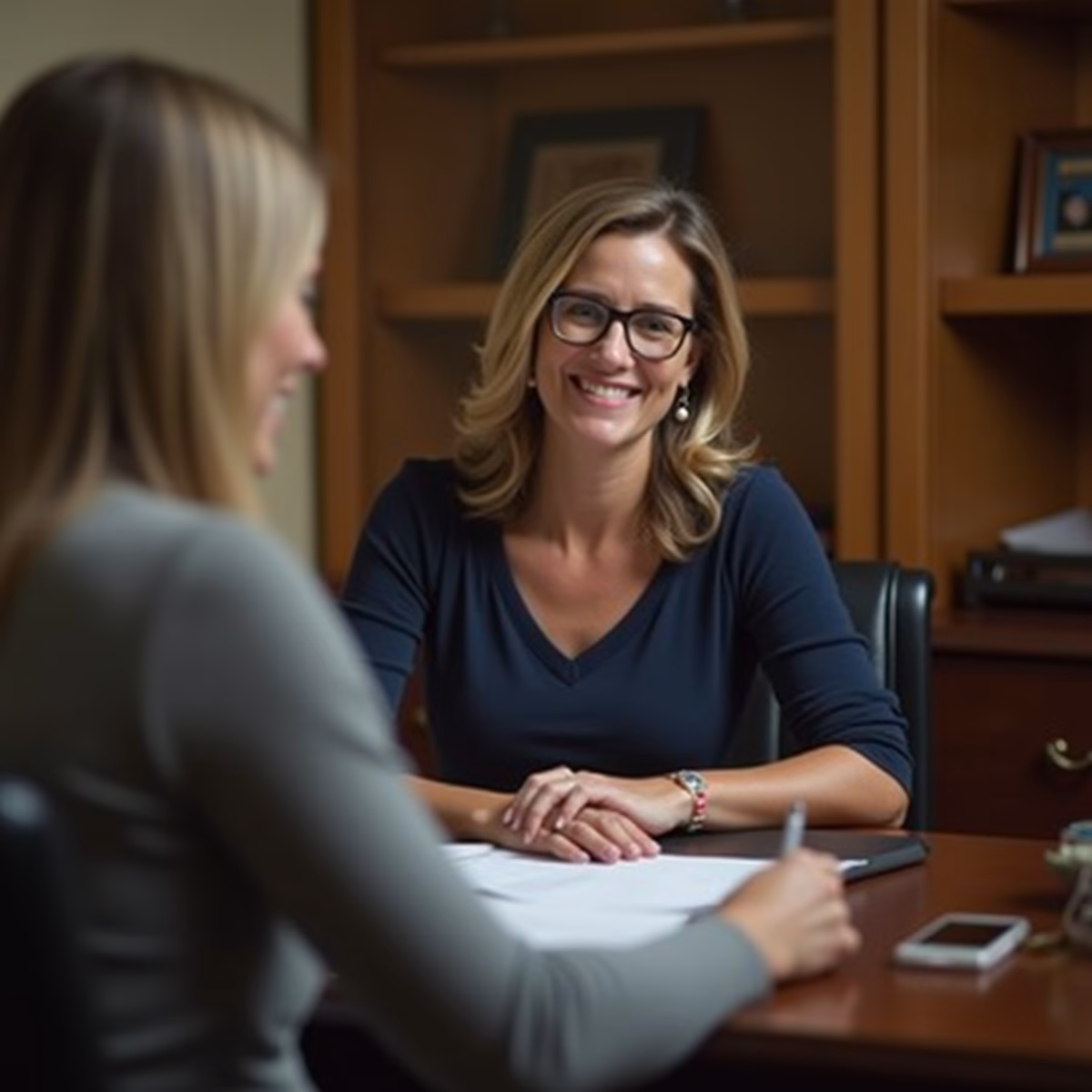
If your request is denied, don’t panic. You have several options. First, and most importantly, understand the basis for the denial. Was it simply a lack of support for your “good cause” argument? If so, you can supplement your request with additional evidence. Was it due to the specific nature of the hearing (e.g., a complex trial)? In that case, you might consider retaining local counsel to appear on your behalf.
As a CPA as well as an attorney with over 35 years of experience, I can tell you that a remote appearance can sometimes create evidentiary challenges. For instance, accurately presenting complex financial documents, like a trust valuation or step-up in basis analysis, can be difficult over Zoom. Opposing counsel may object to the admissibility of evidence if it isn’t clearly presented. Preparing thoroughly, including digital versions of all exhibits and a clear outline of your presentation, is vital.
How Do I Properly Prepare for a Remote Probate Hearing?
- Technology Check: Test your internet connection, microphone, and camera well in advance. Ensure a quiet, well-lit environment free from distractions.
- Local Rules Review: Scour the court’s website for the most current Local Rules of Court regarding remote appearances.
- Notice to Opposing Counsel: Formally notify opposing counsel of your intention to appear remotely and provide them with the Zoom link.
- Exhibit Preparation: Digitize all exhibits and have them readily accessible during the hearing.
- Courtroom Etiquette: Treat a remote hearing with the same formality as an in-person appearance. Dress professionally, address the judge respectfully, and avoid interrupting.
What About Tentative Rulings and the Night Before?
Many California probate departments post ‘Tentative Rulings’ online 1-2 days before the hearing. California Rule of Court 3.1308 dictates that if the ruling is ‘Recommended for Approval’ and no one objects, the physical (or virtual) hearing may be waived. This is a critical step. Check the court’s website daily leading up to the hearing. If you disagree with the ruling, you MUST notify the court and opposing counsel by 4:00 PM the day before. Failure to do so can result in the ruling being adopted without your input.
Don’t Forget About Probate Notes
Before the judge ever sees your file, a ‘Probate Examiner’ reviews it for defects. They post ‘Probate Notes’ weeks in advance, outlining any deficiencies in your pleadings or supporting documentation. You MUST file a ‘Supplement’ to cure these defects before the hearing, or your case will be continued (delayed) for months. This is a common pitfall, especially for self-represented parties.
How do enforcement rules in California probate court shape outcomes for heirs and fiduciaries?
The path through California probate is rarely a straight line; it requires precise adherence to statutory deadlines, accurate asset characterization, and strict fiduciary compliance. Without a clear roadmap, what begins as a standard administrative proceeding can quickly dissolve into a costly battle over interpretation, valuation, and beneficiary rights.
To manage the estate’s value, separate property types by learning what counts as a probate asset, confirm exclusions through assets that bypass probate, and support valuation steps with inventory and appraisal to reduce disagreements about what is in the estate.
California probate is most manageable when authority is documented early, assets are classified correctly, and procedure is followed consistently from petition through closing. When the process is approached with realistic expectations about notice, claims, accounting, and dispute risk, the estate is more likely to move toward closure without avoidable conflict or delay.
Verified Authority on California Probate Court Operations
-
Jurisdiction & Venue: California Probate Code § 7051 (Domicile Rule)
This statute dictates strictly where the probate case must be heard. It is based on the decedent’s “domicile” (permanent legal residence), not where they died or where their property is located. Filing in the wrong county will result in the case being transferred or dismissed. -
The “850 Petition” (Title Disputes): California Probate Code § 850 (Heggstad/Title)
The Probate Court is not just for processing paperwork; it is a trial court that can determine property ownership. A Section 850 petition allows the judge to order property returned to the estate (from a thief) or transferred out of the estate (to a rightful owner) without a separate civil lawsuit. -
Oral Objections & Continuances: California Probate Code § 1043
You have a right to be heard. This code allows any interested person to appear at the hearing and object orally. The court may grant a continuance to allow you time to file a written objection. This is a critical tool for beneficiaries who find out about a hearing at the last minute. -
Appeals (What Orders are Final?): California Probate Code § 1300 (Appealable Orders)
Not every decision by a probate judge can be appealed immediately. This section lists exactly which orders are “appealable” (e.g., directing distribution, determining heirship). Understanding this list is vital for litigation strategy. -
Tentative Rulings: California Rules of Court 3.1308
In modern California probate practice, the “hearing” often happens on paper before the actual court date. This rule governs the Tentative Ruling system. Checking the tentative ruling the day before is mandatory practice; if you don’t contest it properly, the judge’s tentative decision becomes final. -
Fee Waivers: California Government Code § 68633
Probate filing fees are high (often $435+ per petition). This code authorizes the court to waive these fees for petitioners who are low-income or receiving public benefits, ensuring that access to the probate court is not limited only to the wealthy.
|
Attorney Advertising, Legal Disclosure & Authorship
ATTORNEY ADVERTISING.
This content is provided for general informational and educational purposes only and does not constitute legal, financial, or tax advice. Under the California Rules of Professional Conduct and State Bar advertising regulations, this material may be considered attorney advertising. Reading this content does not create an attorney-client relationship or any professional advisory relationship. Laws vary by jurisdiction and are subject to change, including recent 2026 developments under California’s AB 2016 and evolving federal estate and reporting requirements. You should consult a qualified attorney or advisor regarding your specific circumstances before taking action.
Responsible Attorney:
Steven F. Bliss, California Attorney (Bar No. 147856).
Local Office:
Escondido Probate Law720 N Broadway 107 Escondido, CA 92025 (760) 884-4044
Escondido Probate Law is a practice location and trade name used by Steven F. Bliss, Esq., a California-licensed attorney.
About the Author & Legal Review Process
This article was researched and drafted by the Legal Editorial Team of the Law Firm of Steven F. Bliss, Esq.,
a collective of attorneys, legal writers, and paralegals dedicated to translating complex legal concepts into clear, accurate guidance.
Legal Review:
This content was reviewed and approved by Steven F. Bliss, a California-licensed attorney (Bar No. 147856). Mr. Bliss concentrates his practice in estate planning and estate administration, advising clients on proactive planning strategies and representing fiduciaries in probate and trust administration proceedings when formal court involvement becomes necessary.
With more than 35 years of experience in California estate planning and estate administration,
Mr. Bliss focuses on structuring enforceable estate plans, guiding fiduciaries through court-supervised proceedings, resolving creditor and notice issues, and coordinating asset management to support compliant, timely distributions and reduce fiduciary risk. |