|
Legal & Tax Disclosure
ATTORNEY ADVERTISING.
This article is provided for general informational purposes only and does not constitute legal, financial, or tax advice. Reading this content does not create an attorney-client or professional advisory relationship. Laws vary by jurisdiction and are subject to change. You should consult a qualified professional regarding your specific circumstances. |
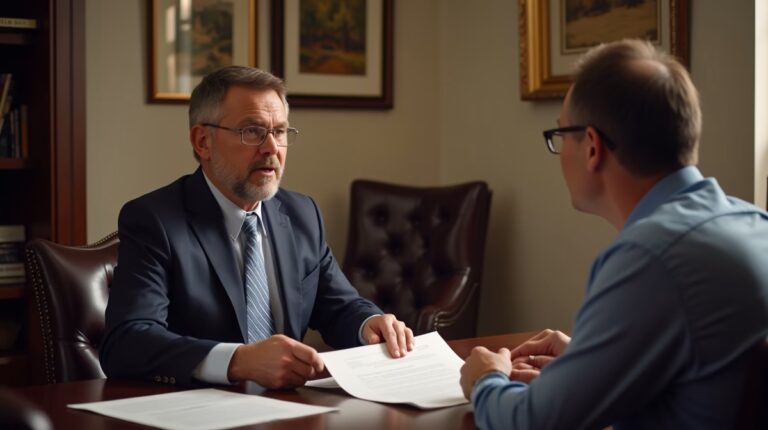
I recently had a client, David, come to me absolutely devastated. He’d meticulously prepared his trust, ensuring all his assets were properly titled. He’d even gone the extra step of creating a codicil to adjust the distribution of a vintage car collection to his son. But David hadn’t followed proper execution procedures. He’d signed it alone, with no witnesses present. The cost? A full probate, tens of thousands in legal fees, and a protracted battle with his family, all because of a technicality.
Do California Trusts Need Witnesses?

The answer isn’t always straightforward. California law doesn’t require witnesses for the validity of the trust itself. However, the specific clauses within the trust, particularly those involving powers of appointment or distributions to charitable beneficiaries, can trigger witness requirements. More importantly, the trust document often designates who can act as successor trustee, and these provisions almost always require witness signatures.
What About Amendments, Like Codicils?
Here’s where things get tricky. Amendments to a trust, like codicils, absolutely require two witnesses. This is non-negotiable. These witnesses must be present when you, as the settlor, sign the amendment, and they must also sign the document themselves. The witnesses can’t be beneficiaries of the trust; otherwise, their signatures are invalid. This is the exact issue David faced – his codicil was deemed unenforceable because of the lack of proper witnesses, leading to a much more complicated and expensive estate administration.
The Importance of Self-Proof Affidavits
Even with witnesses, it’s crucial to consider a self-proof affidavit. This is a notarized statement attesting to the proper execution of the trust and any amendments. While not legally required, a self-proof affidavit can significantly streamline the probate process (or avoid it altogether) by providing clear evidence of your intentions and compliance with California law. It creates a presumption of validity that can be invaluable if a disgruntled heir challenges the trust.
Trustees and the Duty to Account
As a trustee, you have a legal obligation to manage the trust assets responsibly. This includes maintaining accurate records and providing regular accountings to the beneficiaries. Probate Code § 16062 states “…trustees are legally mandated to provide a formal accounting to beneficiaries at least annually and at the termination of the trust; waiving this requirement in the trust document does not always protect the trustee if a beneficiary demands a report.” Failing to do so can result in personal liability. Moreover, thorough accounting is often essential when dealing with complex assets like business interests.
Protecting Real Estate Transfers Within the Trust
If your trust includes real estate, especially a primary residence, the transfer rules can be complicated. Prop 19 dictates “…before distributing a parent’s home to a child, the trustee must verify if the child intends to make it their primary residence within one year; failure to file the proper exclusion claim forms will trigger a property tax reassessment to current market value, potentially forcing a sale.” This is a common oversight, and one I address with all my clients to avoid unexpected tax consequences. We ensure all necessary forms are filed correctly to maintain the property tax benefits.
Missed Assets: The “Cleanup” Process
Sometimes, despite careful planning, assets are inadvertently left out of the trust. For deaths on or after April 1, 2025, if a primary residence intended for the trust was legally left out (valued up to $750,000), a trustee can use a ‘Petition for Succession’ under AB 2016 (Probate Code § 13151) instead of a full probate. It’s important to understand that this is a “Petition” (Judge’s Order), NOT an “Affidavit.” It provides a simpler, less costly alternative to full probate. However, a Small Estate Affidavit is still available for even smaller estates.
After 35+ years as both an Estate Planning Attorney and a CPA, I’ve seen firsthand the importance of meticulous execution. The benefits of a properly funded trust – avoiding probate, minimizing estate taxes, and ensuring your wishes are honored – are significant. But those benefits can be easily lost due to a seemingly minor technical error. That’s why I always recommend working with an experienced attorney and CPA who understands the intricacies of California trust law, especially regarding step-up in basis and capital gains implications.
What causes California trust administration to fail due to poor funding, vague terms, or trustee misconduct?
California trusts are designed to bypass probate and maintain privacy, yet they often fail when assets are not properly funded, trustee duties are ignored, or ambiguous terms trigger disputes. Even with a signed trust document, families can face court battles if the “operations manual” of the trust isn’t followed strictly under the Probate Code.
- Locking it Down: Explore permanent trust structures for asset shielding.
- Post-Death Creation: Understand testamentary trusts.
- Policy Management: Utilize an ILIT strategies for estate taxes.
California trust planning is most effective when the structure is matched to the specific family goal and assets are fully funded into the trust name. When administration is handled with transparency and adherence to the Probate Code, the trust can fulfill its promise of privacy and efficiency.
Verified Authority on California Trust Administration
-
Mandatory Notification (Probate Code § 16061.7): California Probate Code § 16061.7
The first critical step in administration. This statute requires the trustee to notify all heirs and beneficiaries within 60 days of death. It starts the 120-day clock for any contests, limiting the trustee’s liability. -
Trustee’s Duty to Account (Probate Code § 16062): California Probate Code § 16062
Defines the requirement for annual and final accountings. Trustees must report all receipts, disbursements, and changes in asset value to beneficiaries to ensure transparency and avoid surcharges. -
Primary Residence Succession (AB 2016): California Probate Code § 13151 (Petition for Succession)
Effective April 1, 2025, this statute is a “rescue” tool for administration. If a home (up to $750,000) was left out of the trust, the trustee can petition for this order rather than opening a full probate. -
Property Tax Reassessment (Prop 19): California State Board of Equalization (Prop 19)
Trustees must understand these rules before signing a deed to a beneficiary. Distributing real estate without filing the Parent-Child Exclusion claim can accidentally double or triple the property taxes for the heirs. -
Estate Tax Exemption (OBBBA): IRS Estate Tax Guidelines
Reflects the OBBBA permanent increase to a $15 million per person exemption (effective Jan 1, 2026). Trustees must evaluate if an IRS Form 706 is necessary to preserve “portability” of the unused exemption for a surviving spouse. -
Digital Asset Access (RUFADAA): California Probate Code § 870 (RUFADAA)
Without explicit authority under this statute, a trustee may be blocked from accessing the decedent’s online banking, email, or cryptocurrency accounts, stalling the administration process.
|
Attorney Advertising, Legal Disclosure & Authorship
ATTORNEY ADVERTISING.
This content is provided for general informational and educational purposes only and does not constitute legal, financial, or tax advice. Under the California Rules of Professional Conduct and State Bar advertising regulations, this material may be considered attorney advertising. Reading this content does not create an attorney-client relationship or any professional advisory relationship. Laws vary by jurisdiction and are subject to change, including recent 2026 developments under California’s AB 2016 and evolving federal estate and reporting requirements. You should consult a qualified attorney or advisor regarding your specific circumstances before taking action.
Responsible Attorney:
Steven F. Bliss, California Attorney (Bar No. 147856).
Local Office:
Escondido Probate Law720 N Broadway 107 Escondido, CA 92025 (760) 884-4044
Escondido Probate Law is a practice location and trade name used by Steven F. Bliss, Esq., a California-licensed attorney.
About the Author & Legal Review Process
This article was researched and drafted by the Legal Editorial Team of the Law Firm of Steven F. Bliss, Esq.,
a collective of attorneys, legal writers, and paralegals dedicated to translating complex legal concepts into clear, accurate guidance.
Legal Review:
This content was reviewed and approved by Steven F. Bliss, a California-licensed attorney (Bar No. 147856). Mr. Bliss concentrates his practice in estate planning and estate administration, advising clients on proactive planning strategies and representing fiduciaries in probate and trust administration proceedings when formal court involvement becomes necessary.
With more than 35 years of experience in California estate planning and estate administration,
Mr. Bliss focuses on structuring enforceable estate plans, guiding fiduciaries through court-supervised proceedings, resolving creditor and notice issues, and coordinating asset management to support compliant, timely distributions and reduce fiduciary risk. |