|
Legal & Tax Disclosure
ATTORNEY ADVERTISING.
This article is provided for general informational purposes only and does not constitute legal, financial, or tax advice. Reading this content does not create an attorney-client or professional advisory relationship. Laws vary by jurisdiction and are subject to change. You should consult a qualified professional regarding your specific circumstances. |
It’s a tactic I see attempted frequently, and frankly, almost always a waste of time and money. Roger came to me distraught. He’d discovered a codicil to his mother’s will that left her beachfront property to her caretaker, a recent addition to her life, cutting him out entirely. He immediately wanted to depose the attorney who drafted the codicil, believing the lawyer must know if his mother was pressured or lacked capacity when she signed it. While your instinct to gather information is sound, directly questioning the drafting attorney in a deposition is rarely the strategic win you envision.
Here’s why. Attorneys have a very strong attorney-client privilege protecting nearly all communications. That means I, as the drafting attorney, am legally obligated to refuse to answer questions about the specifics of my conversations with my client, even under oath. I can confirm when the codicil was signed, and that the client was physically present, but probing into why she made those changes? Shielded. Roger’s attorney was hoping to circumvent this by asking about the attorney’s observations of his mother’s mental state. Again, problematic. Unless the attorney witnessed something so egregious it falls under a narrow exception (like a confession to fraud), they’re shielded from revealing their subjective impressions.
The real value in a will contest isn’t usually found with the attorney; it’s in examining the testator’s state of mind. We need to gather evidence from medical records, financial documents, and, most importantly, witnesses who interacted with your mother around the time the will was modified. Was she experiencing dementia? Was she isolating herself? Was she easily influenced? Those are the questions we need to answer, and those answers come from the people closest to her, not from me recalling a single meeting 30 years ago.
What about the Attorney’s Notes?
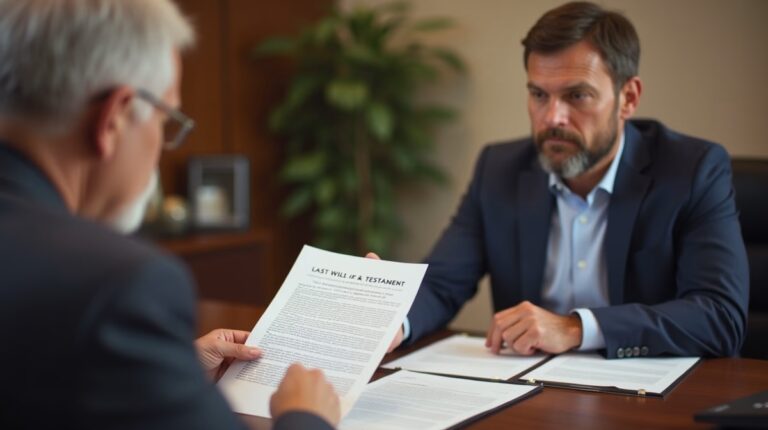
A frequent follow-up is whether the attorney’s notes can be discovered. The short answer is: maybe. But even if we can get our hands on them, they often contain summaries of conversations, not verbatim transcripts. And again, those summaries will likely be protected by attorney-client privilege. A skilled attorney will object to any attempt to dig into privileged information, and the judge will typically sustain those objections.
When Is a Deposition Useful in a Will Contest?
There are rare exceptions where deposing the drafting attorney can be helpful. If the attorney also acted as a witness to the will’s execution, and their testimony contradicts other evidence, a deposition might be valuable. Also, if you suspect the attorney had a conflict of interest (e.g., they were secretly financially benefiting from the will), deposing them could uncover crucial information. However, these situations are unusual.
What if I Suspect Fraud?
Proving forgery or fraud is a complex undertaking. As I tell my clients, proving a signature is fake often requires a forensic handwriting expert, whereas proving fraud in the inducement requires evidence that the testator relied on a lie (e.g., ‘your son is stealing from you’) to change their estate plan. In these cases, focus on deposing individuals who may have been involved in the alleged deception.
The Importance of Standing
Before you spend a single dollar on depositions, you need to establish standing. You cannot contest a will just because you think it’s unfair. You must be an ‘interested person’—meaning you would financially benefit if the current will is overturned (e.g., a child disinherited by a new will, or a beneficiary named in a previous version). Probate Code § 48 outlines this requirement specifically. Wasting resources on a deposition when you lack standing is throwing good money after bad.
As an Estate Planning Attorney and CPA with over 35 years of experience, I’ve seen my share of contested wills. My advantage as a CPA is I understand the tax implications of estate planning decisions, like the step-up in basis and potential capital gains, which often drive the motivations behind estate plan changes. I focus on gathering concrete evidence and building a strong case based on facts, not speculation. Let’s focus on getting the facts right, and avoiding the pitfalls of unproductive legal maneuvers.
What causes California probate cases to spiral into delay, disputes, and extra cost?
Success in probate court depends less on the size of the estate and more on the accuracy of the petition and the behavior of the fiduciary. Whether the issue is a forgotten asset, a contested creditor claim, or a disagreement among siblings, understanding the procedural triggers for court intervention is the best defense against prolonged administration.
| Responsibility | Compliance Check |
|---|---|
| Fiduciary Role | Review roles and responsibilities. |
| Negligence | Avoid fiduciary misconduct. |
| Protections | Understand beneficiary rights. |
Ultimately, the difference between a routine distribution and a protracted legal battle often comes down to preparation. By anticipating the demands of the Probate Code and addressing potential friction points with beneficiaries and creditors upfront, fiduciaries can navigate the system with greater confidence and lower liability.
Verified Authority on California Will Contests
-
The 120-Day Statute of Limitations: California Probate Code § 8270
Time is the enemy in a will contest. Under Section 8270, an interested person may petition the court to revoke the probate of a will, but this petition MUST be filed within 120 days after the will is admitted. Missing this deadline is usually fatal to the case. -
Mental Competency Standard: California Probate Code § 6100.5 (Unsound Mind)
This statute defines exactly what “mental incompetency” means in probate. It is not just general forgetfulness; the contestant must prove the deceased did not understand the nature of the testamentary act, could not recollect their property, or was suffering from a specific hallucination or delusion that dictated the will’s terms. -
Presumption of Undue Influence (Caregivers): California Probate Code § 21380
To protect vulnerable seniors, California law automatically presumes undue influence if a will leaves assets to a paid care custodian or the lawyer who drafted the instrument. This shifts the heavy burden of proof onto the accused to prove their innocence. -
No-Contest Clause Enforceability: California Probate Code § 21311
Many wills contain threats to disinherit anyone who challenges them. This statute limits the power of those clauses. A beneficiary cannot be penalized for a contest if the court finds they had “probable cause” to file the lawsuit. -
Standing to Contest: California Probate Code § 48 (Interested Person)
Not everyone can sue. To contest a will, you must qualify as an “interested person”—typically an heir who would inherit under intestate succession (if there were no will) or a beneficiary named in a prior valid will. -
Financial Elder Abuse Remedies: California Probate Code § 859 (Double Damages)
Will contests often overlap with elder abuse claims. If the court finds that a person used undue influence, fraud, or bad faith to take assets (or change a will) to the detriment of the estate, they can be liable for twice the value of the property taken, plus attorney fees.
|
Attorney Advertising, Legal Disclosure & Authorship
ATTORNEY ADVERTISING.
This content is provided for general informational and educational purposes only and does not constitute legal, financial, or tax advice. Under the California Rules of Professional Conduct and State Bar advertising regulations, this material may be considered attorney advertising. Reading this content does not create an attorney-client relationship or any professional advisory relationship. Laws vary by jurisdiction and are subject to change, including recent 2026 developments under California’s AB 2016 and evolving federal estate and reporting requirements. You should consult a qualified attorney or advisor regarding your specific circumstances before taking action.
Responsible Attorney:
Steven F. Bliss, California Attorney (Bar No. 147856).
Local Office:
Escondido Probate Law720 N Broadway 107 Escondido, CA 92025 (760) 884-4044
Escondido Probate Law is a practice location and trade name used by Steven F. Bliss, Esq., a California-licensed attorney.
About the Author & Legal Review Process
This article was researched and drafted by the Legal Editorial Team of the Law Firm of Steven F. Bliss, Esq.,
a collective of attorneys, legal writers, and paralegals dedicated to translating complex legal concepts into clear, accurate guidance.
Legal Review:
This content was reviewed and approved by Steven F. Bliss, a California-licensed attorney (Bar No. 147856). Mr. Bliss concentrates his practice in estate planning and estate administration, advising clients on proactive planning strategies and representing fiduciaries in probate and trust administration proceedings when formal court involvement becomes necessary.
With more than 35 years of experience in California estate planning and estate administration,
Mr. Bliss focuses on structuring enforceable estate plans, guiding fiduciaries through court-supervised proceedings, resolving creditor and notice issues, and coordinating asset management to support compliant, timely distributions and reduce fiduciary risk. |