
|
Legal & Tax Disclosure
ATTORNEY ADVERTISING.
This article is provided for general informational purposes only and does not constitute legal, financial, or tax advice. Reading this content does not create an attorney-client or professional advisory relationship. Laws vary by jurisdiction and are subject to change. You should consult a qualified professional regarding your specific circumstances. |
I recently had a client, David, come to me in a state of absolute panic. His mother had passed away six months prior, and he and his sister, Emily, were co-trustees of the family trust. They’d been managing things reasonably well until their brother, Kai, started making demands. Kai, wanting to sell the family beach house immediately, was systematically undermining their decisions, refusing to cooperate on even the most minor issues, and generally making life miserable. David and Emily discovered that Kai had secretly emailed the other beneficiaries, urging them to petition the court to remove David and Emily and install him as sole trustee. What David didn’t realize, and what many people don’t understand, is that simply gathering a majority vote of the beneficiaries doesn’t automatically remove a trustee.
The concept of beneficiaries directly “voting out” a trustee is a common misconception, often fueled by portrayals in television and film. While beneficiary input is absolutely critical, California law doesn’t provide for a simple majority rule replacement of trustees. The process is far more involved, and revolves around a formal petition to the court. The court, not the beneficiaries themselves, has the ultimate authority to appoint and remove trustees.
What Does it Take to Remove a Trustee?
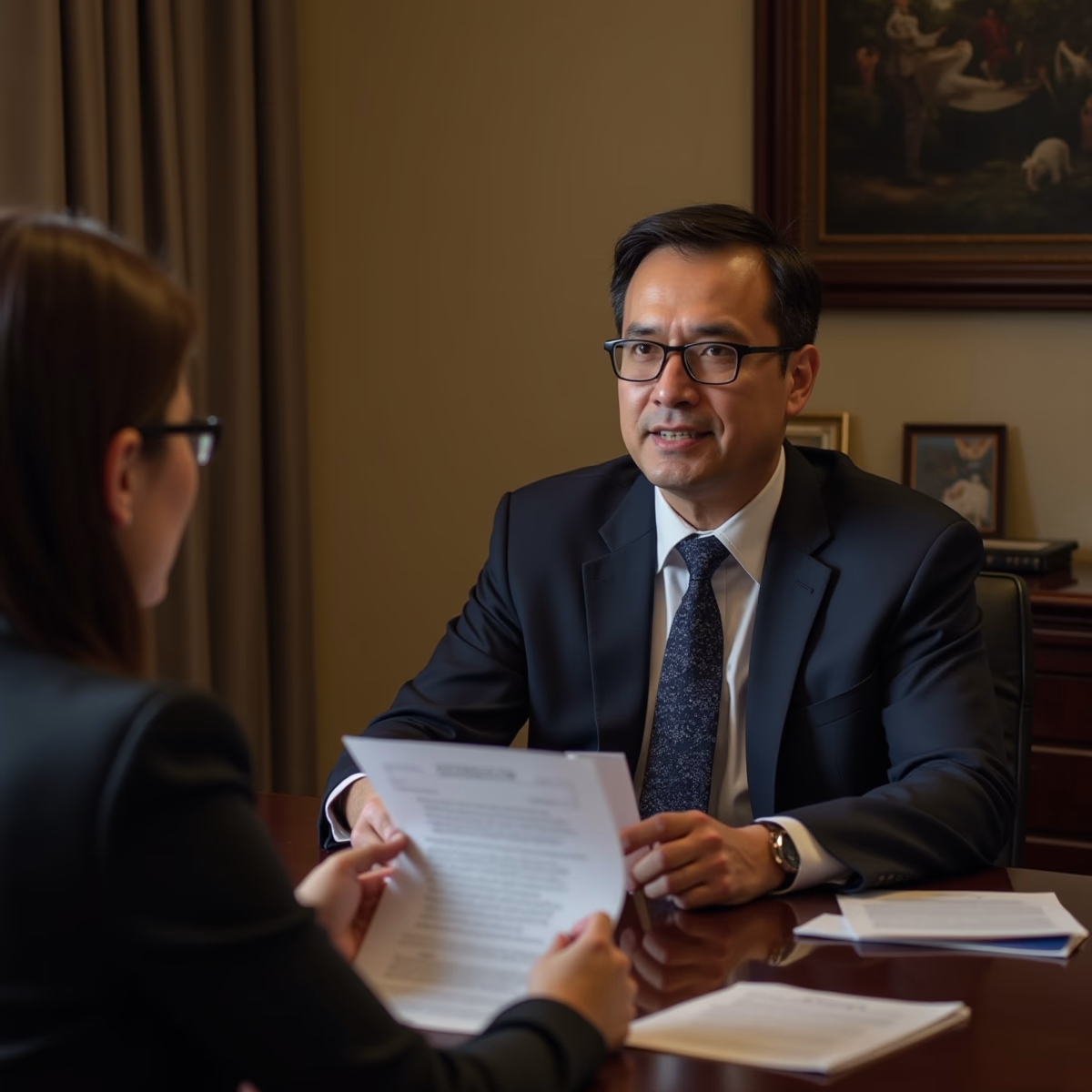
Successfully removing a trustee requires demonstrating to the court that the removal is warranted. As a CPA as well as an attorney with over 35 years of experience in estate planning, I often see situations where financial mismanagement is the clear issue, but it’s not always necessary. Generally, the beneficiaries need to show that the trustee has breached their fiduciary duty, is incapable of managing the trust effectively, or is acting against the best interests of the beneficiaries. This could involve allegations of self-dealing, conflicts of interest, or simply a persistent pattern of poor judgment.
“Hostility or Lack of Cooperation” and the Trustee Removal Standard
Interestingly, beneficiaries don’t always need to prove financial wrongdoing to remove a trustee. Probate Code § 15642 specifically allows for removal based on ‘hostility or lack of cooperation’ that impairs the administration of the trust. This is crucial. Kai’s behavior – actively working against his siblings, creating division among beneficiaries, and refusing to collaborate – could absolutely be grounds for a petition to the court. The burden of proof is still significant, requiring evidence of disruption and a clear demonstration that the trustee’s actions are detrimental to the trust.
The Benefit of a CPA’s Perspective
My dual background as an attorney and CPA gives me a unique insight into these situations. Often, disputes over trustee decisions stem from unclear valuation of assets or improper accounting practices. If Kai were pushing for an immediate sale of the beach house, for instance, but the valuation wasn’t independent or the sale price was significantly below market value, we’d have a strong argument for financial mismanagement. A proper accounting and a step-up in basis analysis can reveal red flags that might otherwise go unnoticed. We can also help determine if there is a capital gains tax implication that’s being ignored.
What If the Trustee Isn’t Cooperating with an Accounting?
Sometimes, the biggest hurdle is simply getting the information needed to assess the trustee’s performance. Probate Code § 16060 & § 16062 state that trustees have an affirmative duty to keep beneficiaries “reasonably informed” and provide a formal accounting at least annually. If a trustee refuses to cooperate, beneficiaries can file a petition to compel the accounting, and potentially recover legal fees from the trustee.
In David and Emily’s case, we prepared a detailed petition outlining Kai’s disruptive behavior, his lack of communication, and the potential for future financial harm. We included affidavits from several beneficiaries who corroborated their story. While it wasn’t a quick or easy process, we were ultimately successful in obtaining a court order removing Kai as trustee and appointing a neutral third party to oversee the trust.
What separates an efficient California probate process from a drawn-out conflict over authority and assets?
California probate is designed to provide court-supervised transfer of property, yet cases often break down when authority is unclear, required steps are missed, or disputes arise over assets, notice, and fiduciary conduct. When the process is misunderstood, families can face avoidable delay, escalating conflict, and increased exposure to creditor issues, hearings, or litigation before the estate can close.
- Escalation: Prepare for probate litigation if agreement fails.
- Validity: Understand the grounds for will contest process.
- Cross-Over: Navigate complex probate and trust disputes.
Ultimately, the difference between a routine distribution and a protracted legal battle often comes down to preparation. By anticipating the demands of the Probate Code and addressing potential friction points with beneficiaries and creditors upfront, fiduciaries can navigate the system with greater confidence and lower liability.
Verified Authority on California Beneficiary Rights
-
Statutory Notification Window (The “120-Day Rule”): California Probate Code § 16061.7
This is the most critical statute for beneficiaries. Once a trustee serves this formal notice, you have exactly 120 days to file a contest. If you miss this deadline, you are generally forever barred from challenging the validity of the trust, regardless of the evidence you have. -
Right to Accounting & Information: California Probate Code § 16060 (Duty to Inform)
Trustees have a mandatory legal duty to keep beneficiaries “reasonably informed” about the trust and its administration. Under Probate Code § 16062, most trustees must provide a formal financial accounting at least once a year. If they refuse, the court can compel them to do so. -
Inheriting Real Estate (Prop 19): California State Board of Equalization (Prop 19)
Beneficiaries must understand that inheriting a home no longer guarantees low property taxes. Under Prop 19, to avoid reassessment to current market value, the child must make the home their primary residence within one year of the parent’s death. -
No-Contest Clause Enforceability: California Probate Code § 21311
Fear of disinheritance often stops beneficiaries from fighting for their rights. However, this statute clarifies that a No-Contest clause is only enforceable if the contest is brought without “probable cause.” If you have a reasonable basis for your claim, your inheritance is likely safe. -
Recovering Trust Assets (Heggstad): California Probate Code § 850 (Heggstad Petition)
If a beneficiary finds that a parent intended an asset to be in the trust but failed to sign the deed or change the account title, a Section 850 Petition allows the court to “transfer” that asset into the trust without a full probate proceeding. -
Removal of a Bad Trustee: California Probate Code § 15642
Beneficiaries have the right to petition for the removal of a trustee who is unfit. Grounds for removal include excessive compensation, inability to manage finances, or “excessive hostility” toward beneficiaries that interferes with the trust’s administration.
|
Attorney Advertising, Legal Disclosure & Authorship
ATTORNEY ADVERTISING.
This content is provided for general informational and educational purposes only and does not constitute legal, financial, or tax advice. Under the California Rules of Professional Conduct and State Bar advertising regulations, this material may be considered attorney advertising. Reading this content does not create an attorney-client relationship or any professional advisory relationship. Laws vary by jurisdiction and are subject to change, including recent 2026 developments under California’s AB 2016 and evolving federal estate and reporting requirements. You should consult a qualified attorney or advisor regarding your specific circumstances before taking action.
Responsible Attorney:
Steven F. Bliss, California Attorney (Bar No. 147856).
Local Office:
Escondido Probate Law720 N Broadway 107 Escondido, CA 92025 (760) 884-4044 Escondido Probate Law 3914 Murphy Canyon Rd Escondido, CA 92123 (858) 278-2800
Escondido Probate Law is a practice location and trade name used by Steven F. Bliss, Esq., a California-licensed attorney.
About the Author & Legal Review Process
This article was researched and drafted by the Legal Editorial Team of the Law Firm of Steven F. Bliss, Esq.,
a collective of attorneys, legal writers, and paralegals dedicated to translating complex legal concepts into clear, accurate guidance.
Legal Review:
This content was reviewed and approved by Steven F. Bliss, a California-licensed attorney (Bar No. 147856). Mr. Bliss concentrates his practice in estate planning and estate administration, advising clients on proactive planning strategies and representing fiduciaries in probate and trust administration proceedings when formal court involvement becomes necessary.
With more than 35 years of experience in California estate planning and estate administration,
Mr. Bliss focuses on structuring enforceable estate plans, guiding fiduciaries through court-supervised proceedings, resolving creditor and notice issues, and coordinating asset management to support compliant, timely distributions and reduce fiduciary risk. |