|
Legal & Tax Disclosure
ATTORNEY ADVERTISING.
This article is provided for general informational purposes only and does not constitute legal, financial, or tax advice. Reading this content does not create an attorney-client or professional advisory relationship. Laws vary by jurisdiction and are subject to change. You should consult a qualified professional regarding your specific circumstances. |
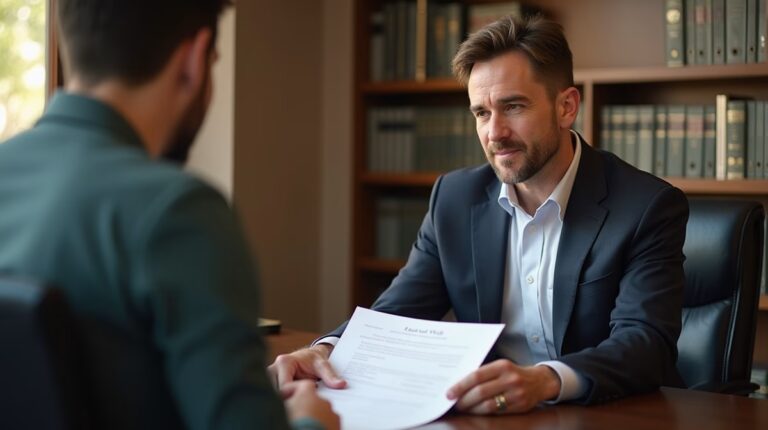
I recently met with Emily, a woman devastated by a seemingly small oversight. Her father, a successful real estate developer, passed away six months ago. He had a trust, meticulously drafted decades ago, but never fully funded. Emily discovered, to her profound dismay, that the trust held no actual assets – only a document outlining his wishes. Because the trust was unfunded, the entire estate is now subject to the lengthy and expensive probate process, wiping out a significant portion of the wealth her father worked so hard to build. This situation, unfortunately, is far too common.
The illusion of protection offered by an outdated or improperly executed estate plan is a dangerous one. Many people believe that simply having a trust is enough. But as California Probate Code § 15200 clearly states, a trust exists only when identifiable property is transferred into it; an unfunded trust is a ‘shell’ that fails to bypass probate, regardless of how well the documents are drafted. A trust is not a magic bullet, it’s a vehicle—and a vehicle is useless without fuel.
What happens when trust language becomes outdated?

Even a fully funded trust isn’t immune to challenges if the language within it isn’t regularly reviewed and updated. Life changes constantly. Assets are sold, beneficiaries predecease the settlor, and laws evolve. While Probate Code § 21102 defers to the settlor’s intent, ambiguous or outdated language regarding deceased successors or sold assets invites litigation that often overrides that original intent. For instance, a trust naming a child as a successor trustee who is no longer willing or able to serve—and lacking a named alternate—can create significant delays and necessitate court intervention.
What are the real estate specific issues I need to be aware of?
Real estate holdings present unique challenges. Beneficiaries often assume they can simply record a deed transferring ownership based on the trust. This isn’t always the case, particularly with older trusts. Furthermore, California law offers pathways to avoid probate for smaller estates, but these have strict limitations. The Small Estate Affidavit can be used for estates valued under $69,625. However, for deaths on or after April 1, 2025, a primary residence up to $750,000 qualifies for a ‘Petition for Succession’ under AB 2016 (Probate Code § 13151). It’s vital to understand the distinction: this is a “Petition” (Judge’s Order), NOT an “Affidavit.” Failing to properly execute this Petition can lead to unnecessary probate expenses.
What if I become incapacitated and can’t manage my trust?
Another critical consideration is planning for incapacity. A trust allows for the seamless transition of asset management if you become unable to act. However, without named backup fiduciaries, Probate Code § 15660 allows the court to appoint a public fiduciary, which can delay estate management by months and incur significant unnecessary fees. I’ve seen families spend tens of thousands of dollars—and endure agonizing delays—simply because a trust lacked a clearly designated alternate trustee.
What about my digital assets?
In today’s world, digital assets – online accounts, cryptocurrency, photos, and valuable intellectual property – are often a substantial part of an estate. Accessing these accounts can be surprisingly difficult. Without specific RUFADAA language (Probate Code § 870), service providers like Coinbase or Google can legally block a successor trustee from accessing digital accounts, even with a valid trust in hand. Proactive planning, including the identification and secure storage of account credentials, is essential.
Why is professional accounting expertise so important in estate planning?
As an Estate Planning Attorney & CPA with over 35 years of experience, I bring a unique perspective to my clients’ needs. The CPA advantage lies in understanding the tax implications of every estate planning decision. A well-structured trust isn’t just about avoiding probate; it’s about minimizing capital gains taxes, maximizing the step-up in basis on appreciated assets, and accurately valuing property to avoid potential IRS scrutiny. Accurate valuation is paramount, and a CPA’s expertise can be invaluable in navigating this complex landscape. Furthermore, proper trust accounting is legally required; failure to provide annual accountings or maintain accurate records as mandated by Probate Code §§ 16060–16069 can result in a court-imposed surcharge—making the trustee personally liable for missing funds or losses.
What failures trigger court intervention and contests in California trust administration?
The advantage of a California trust is control and continuity, but this relies entirely on accurate funding and disciplined administration. Without clear asset titles and strict adherence to fiduciary standards, a private trust can quickly become a subject of public litigation over mismanagement, capacity, or undue influence.
| Legal Foundation | Why It Matters |
|---|---|
| Law | Follow the California Probate Code for trusts. |
| Structure | Review revocable trust rules. |
| Roles | Identify key participants in trusts. |
Ultimately, the success of a trust depends on the details—proper funding, clear terms, and a trustee willing to follow the rules. By anticipating friction points and documenting every step of the administration, fiduciaries can protect the estate and themselves from liability.
Verified Authority on California Trust Pitfalls & Maintenance
-
Trust Funding Verification: California Probate Code § 15200 (Asset Transfer)
The primary statute confirming that a trust requires property to be valid. Use this to verify that your real estate deeds and bank accounts have been correctly retitled to the trust’s name. -
Real Estate Succession (AB 2016): California Probate Code § 13151 (Petition for Succession)
Specific guidance for the 2025/2026 process. It outlines how a primary residence worth $750,000 or less can be transferred via a court-approved Petition rather than a full probate. -
Trustee Duty to Account: California Probate Code § 16062 (Annual Reporting)
Trustees must provide an annual report to beneficiaries. Failure to do so is one of the top triggers for trust litigation in California. -
Digital Legacy (RUFADAA): California Probate Code § 870 (Digital Assets)
The authoritative resource on the Revised Uniform Fiduciary Access to Digital Assets Act. It explains why your trust must explicitly grant access to digital records and cryptocurrency. -
Successor Trustee Appointment: California Probate Code § 15660 (Vacancy in Trustee)
Outlines what happens when a trust lacks a successor. This resource highlights the importance of naming multiple backup fiduciaries to avoid court-appointed public administrators. -
Small Estate Personal Property: California Probate Code § 13100 (Affidavits)
Statutory limits for the $208,850 threshold (effective April 1, 2025). Use this for non-real estate assets like bank accounts and vehicles that were accidentally left out of the trust.
|
Attorney Advertising, Legal Disclosure & Authorship
ATTORNEY ADVERTISING.
This content is provided for general informational and educational purposes only and does not constitute legal, financial, or tax advice. Under the California Rules of Professional Conduct and State Bar advertising regulations, this material may be considered attorney advertising. Reading this content does not create an attorney-client relationship or any professional advisory relationship. Laws vary by jurisdiction and are subject to change, including recent 2026 developments under California’s AB 2016 and evolving federal estate and reporting requirements. You should consult a qualified attorney or advisor regarding your specific circumstances before taking action.
Responsible Attorney:
Steven F. Bliss, California Attorney (Bar No. 147856).
Local Office:
Escondido Probate Law720 N Broadway 107 Escondido, CA 92025 (760) 884-4044
Escondido Probate Law is a practice location and trade name used by Steven F. Bliss, Esq., a California-licensed attorney.
About the Author & Legal Review Process
This article was researched and drafted by the Legal Editorial Team of the Law Firm of Steven F. Bliss, Esq.,
a collective of attorneys, legal writers, and paralegals dedicated to translating complex legal concepts into clear, accurate guidance.
Legal Review:
This content was reviewed and approved by Steven F. Bliss, a California-licensed attorney (Bar No. 147856). Mr. Bliss concentrates his practice in estate planning and estate administration, advising clients on proactive planning strategies and representing fiduciaries in probate and trust administration proceedings when formal court involvement becomes necessary.
With more than 35 years of experience in California estate planning and estate administration,
Mr. Bliss focuses on structuring enforceable estate plans, guiding fiduciaries through court-supervised proceedings, resolving creditor and notice issues, and coordinating asset management to support compliant, timely distributions and reduce fiduciary risk. |