
|
Legal & Tax Disclosure
ATTORNEY ADVERTISING.
This article is provided for general informational purposes only and does not constitute legal, financial, or tax advice. Reading this content does not create an attorney-client or professional advisory relationship. Laws vary by jurisdiction and are subject to change. You should consult a qualified professional regarding your specific circumstances. |
Craig just received notice that his mother’s probate is dragging on, nearly a year after her passing. He’s understandably frustrated—the house needs to be sold, but he’s stuck in legal limbo, unable to access sufficient funds to cover ongoing expenses. This isn’t uncommon, and it highlights a critical misunderstanding about the probate timeline. Clients often believe probate is a simple, linear process, but it’s governed by strict statutory periods designed to protect creditors and ensure fairness. After 35+ years as both an Estate Planning Attorney and a CPA, I’ve seen firsthand how proper planning can dramatically shorten this timeline, and how missteps can lead to significant delays and expense.
What Factors Affect the Length of Probate?
The duration of probate isn’t a one-size-fits-all answer. Several key variables are at play. First, the complexity of the estate itself matters. A simple estate – one with few assets and minimal debts – will naturally proceed faster than a complex one involving business interests, real estate holdings in multiple states, or disputes among heirs. Second, the diligence of the executor is crucial. A proactive executor who promptly inventories assets, pays debts, and prepares accounting filings will keep the process moving. Finally, and often overlooked, is the capacity of the court system. Even a well-managed estate can be delayed by court congestion. As of April 1, 2025, formal probate is generally required if the gross value of the estate exceeds $208,850 (Probate Code § 13100). However, this calculation excludes assets held in trust, joint tenancy, or those with beneficiary designations (POD/TOD).
What is the Minimum Timeframe for Probate in California?
While the specifics vary, a probate case cannot be closed in less than roughly 7 to 9 months due to mandatory notice periods (15 days for initial hearing + 4 months for creditors), but most California probates in 2026 take 12 to 18 months due to court congestion. This baseline timeline is dictated by California law. Initially, the court must issue Letters of Administration, formally appointing the executor. Following that, a notice of petition to administer the estate must be published in a local newspaper, and interested parties must be personally notified. This initiates the 4-month creditor claim period.
How Do Creditor Claims Impact the Probate Schedule?
The 4-Month Rule (Probate Code § 9100) is a frequently misunderstood, yet critical component of probate. Creditors have a strict window to file claims—typically 4 months after Letters are issued. If a creditor fails to file within this window (and proper notice was given), their debt is generally extinguished forever. This is why thorough due diligence in identifying and notifying potential creditors is essential. Unresolved creditor claims can tie up the estate for months, potentially leading to litigation.
What About Appraising the Estate’s Assets?
Once the creditor claim period expires, the executor must prepare an inventory and valuation of the estate’s assets. This isn’t as simple as looking up the current market value. California requires the use of a court-appointed Probate Referee to value non-cash assets (like real estate and stocks). The Referee charges a statutory fee of 0.1% of the assets appraised. This independent valuation provides a neutral assessment for tax purposes and ensures transparency among heirs. As a CPA, I emphasize the importance of obtaining a “step-up” in basis for these assets—a significant tax benefit often overlooked. By properly valuing assets at the date of death, heirs avoid paying capital gains taxes on the appreciation that occurred during the decedent’s lifetime.
Can the Executor Sell Assets During Probate?
Selling assets, particularly real estate, is a common need during probate. However, the executor’s authority to do so depends on the type of administration appointed by the court. With Full Authority, an executor can sell real estate without a court hearing. With Limited Authority, the sale MUST be confirmed by the judge in an open court ‘overbid’ process, which adds significant time and expense (Probate Code § 10400). Careful consideration should be given to the level of authority requested at the outset of the probate process.
How are Executor Fees Determined?
It’s important to understand that the executor is entitled to compensation for their time and effort. California law sets a mandatory Statutory Fee Schedule based on the gross value of the estate (not the net equity). For example, the fee is 4% of the first $100k, 3% of the next $100k, and 2% of the next $800k (Probate Code § 10800). This is a right, not a salary, and is taxable income. Proper documentation of time spent managing the estate is crucial to support the fee request.
What separates an efficient California probate process from a drawn-out conflict over authority and assets?
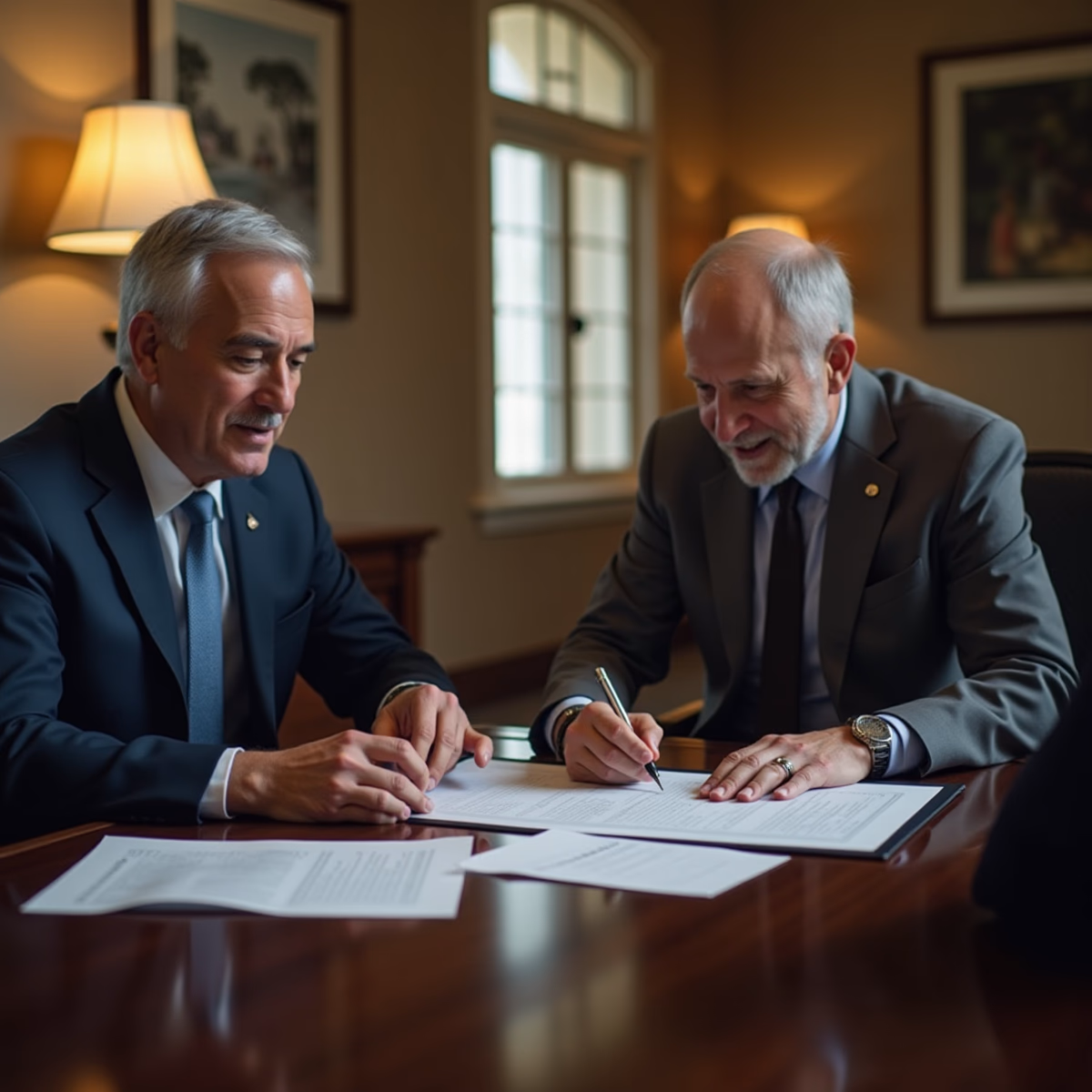
Success in probate court depends less on the size of the estate and more on the accuracy of the petition and the behavior of the fiduciary. Whether the issue is a forgotten asset, a contested creditor claim, or a disagreement among siblings, understanding the procedural triggers for court intervention is the best defense against prolonged administration.
To protect against specific family risks, review heir disputes without a will, check for left-out heirs issues, and be vigilant for signs of financial abuse concerns.
A stable probate administration outcome usually follows from clarity, consistency, and readiness for court review, especially when multiple stakeholders and competing interpretations are involved. When documentation supports enforcement and timelines are respected, families are less likely to face preventable escalation.
Verified Authority on California Probate Administration
-
Executor Powers (The IAEA): California Probate Code § 10400 (Independent Administration)
The Independent Administration of Estates Act (IAEA) is the engine of a modern probate. It allows personal representatives with “Full Authority” to sell real estate and pay bills without constant court approval. Without IAEA authority, every major action requires a separate court petition and order. -
Statutory Executor Fees: California Probate Code § 10800 (Compensation)
Executor fees in California are not arbitrary. They are calculated on the gross value of the probate estate: 4% of the first $100k, 3% of the next $100k, 2% of the next $800k, and 1% of the next $9 million. This often surprises heirs when the estate has high asset value but high debt (low equity). -
Creditor Claim Deadlines: California Probate Code § 9100 (Statute of Limitations)
The primary benefit of formal probate is the “clean break” from debts. Creditors generally have four months from the issuance of Letters to file a formal claim. If they miss this deadline, the debt is usually legally unenforceable against the estate or the heirs. -
Probate Value Threshold ($208,850): California Probate Code § 13100 (Small Estate Limit)
Effective April 1, 2025, estates valued under $208,850 may qualify for summary procedures (like a Small Estate Affidavit) instead of formal probate. Note that this limit is adjusted for inflation every three years. -
Mandatory Publication: California Probate Code § 8120 (Notice to Creditors)
Before the court can appoint an executor, a Notice of Petition to Administer Estate must be published in a newspaper of general circulation in the city where the decedent resided. This publication serves as constructive notice to unknown creditors and potential heirs. -
The Probate Referee: California Probate Code § 8900 (Appraisal)
You cannot simply guess the value of the estate’s assets. The court appoints a neutral Probate Referee to appraise all non-cash assets (real estate, stocks, business interests). Their appraisal is required before the estate can be distributed or closed.
|
Attorney Advertising, Legal Disclosure & Authorship
ATTORNEY ADVERTISING.
This content is provided for general informational and educational purposes only and does not constitute legal, financial, or tax advice. Under the California Rules of Professional Conduct and State Bar advertising regulations, this material may be considered attorney advertising. Reading this content does not create an attorney-client relationship or any professional advisory relationship. Laws vary by jurisdiction and are subject to change, including recent 2026 developments under California’s AB 2016 and evolving federal estate and reporting requirements. You should consult a qualified attorney or advisor regarding your specific circumstances before taking action.
Responsible Attorney:
Steven F. Bliss, California Attorney (Bar No. 147856).
Local Office:
Escondido Probate Law720 N Broadway 107 Escondido, CA 92025 (760) 884-4044
Escondido Probate Law is a practice location and trade name used by Steven F. Bliss, Esq., a California-licensed attorney.
About the Author & Legal Review Process
This article was researched and drafted by the Legal Editorial Team of the Law Firm of Steven F. Bliss, Esq.,
a collective of attorneys, legal writers, and paralegals dedicated to translating complex legal concepts into clear, accurate guidance.
Legal Review:
This content was reviewed and approved by Steven F. Bliss, a California-licensed attorney (Bar No. 147856). Mr. Bliss concentrates his practice in estate planning and estate administration, advising clients on proactive planning strategies and representing fiduciaries in probate and trust administration proceedings when formal court involvement becomes necessary.
With more than 35 years of experience in California estate planning and estate administration,
Mr. Bliss focuses on structuring enforceable estate plans, guiding fiduciaries through court-supervised proceedings, resolving creditor and notice issues, and coordinating asset management to support compliant, timely distributions and reduce fiduciary risk. |