|
Legal & Tax Disclosure
ATTORNEY ADVERTISING.
This article is provided for general informational purposes only and does not constitute legal, financial, or tax advice. Reading this content does not create an attorney-client or professional advisory relationship. Laws vary by jurisdiction and are subject to change. You should consult a qualified professional regarding your specific circumstances. |
I recently had a call with David, absolutely devastated. He’d painstakingly crafted a codicil to his trust, intending to leave a significant portion of his estate to a local animal shelter – a cause very dear to him. He signed it, witnessed it, and thought he was done. But his son, furious at being disinherited, challenged the amendment in probate court, claiming lack of capacity. David had meticulously documented everything, even video recordings of his rationale. Still, the judge ordered mediation. David hadn’t budgeted for another legal expense, and frankly, the thought of facing his son in a neutral setting filled him with dread. The cost of fighting this challenge, even with a seemingly solid case, could easily exceed $25,000.
As an estate planning attorney and CPA with over 35 years of experience here in Escondido, I see this scenario play out far too often. People assume a properly executed trust amendment is ironclad. They don’t realize how easily a determined challenger can stall proceedings, racking up legal fees and causing immense emotional distress. Court-ordered mediation isn’t a magic bullet, but it’s often a crucial – and surprisingly effective – step in resolving these disputes. And understanding the process before you’re thrust into it can significantly improve your outcome.
What Triggers Court-Ordered Mediation?
Typically, mediation is ordered after preliminary pleadings are filed – the initial paperwork outlining each side’s position. Judges are increasingly encouraging (and in some cases, requiring) mediation in trust and estate litigation, recognizing its potential to conserve judicial resources and, more importantly, offer parties a chance to resolve disputes amicably. Common triggers include contests to trust validity, disputes over trustee actions (like accounting or distributions), and challenges to amendments or codicils. It’s not uncommon to see mediation ordered even before any formal discovery (information gathering) takes place.
How Does the Mediation Process Work?
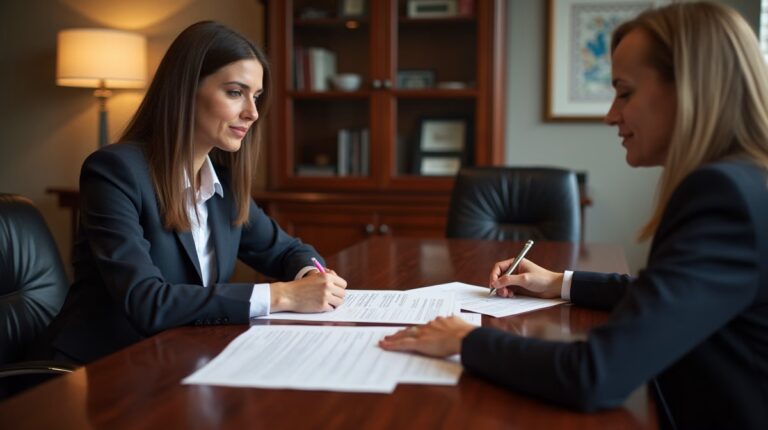
The court will appoint a qualified mediator – typically an attorney with expertise in trust and estate law – or the parties can agree on a mutually acceptable mediator. The mediator’s role isn’t to decide the case, but to facilitate a settlement discussion. The process usually unfolds in a few stages. First, there’s a joint session where each party (and their attorney) presents a brief overview of their position. This is followed by separate, private caucuses where the mediator meets individually with each side. These caucuses are confidential; the mediator won’t share anything you say with the opposing party without your permission.
During the caucuses, the mediator explores the strengths and weaknesses of each case, identifies underlying interests, and helps brainstorm potential solutions. It’s a lot like negotiation, but with a neutral third party guiding the conversation. The mediator might suggest compromises, reality-check expectations, and help parties understand the potential costs and risks of continuing to litigate.
What if the Beneficiary Claims Undue Influence?
This is a particularly common and complex area. If the challenger alleges undue influence – that the senior was coerced into changing their trust – the mediator will pay close attention to the circumstances surrounding the amendment. Probate Code § 21380 is critical here. If a care custodian (nurse, friend, or helper) is named as a beneficiary in a trust amendment drafted during their service, this code creates a presumption of fraud, shifting the burden of proof entirely onto them to prove they didn’t coerce the senior. Mediation allows for a deeper dive into the relationship between the senior and the caregiver, looking for evidence of control, isolation, or manipulation. Digital evidence, like texts and emails, can be crucial, but access to that information often requires specific RUFADAA authority (Probate Code § 870). Without it, subpoenaing those records can be legally blocked.
What About Disputes Over Missing Assets?
Frequently, a beneficiary will claim the trustee isn’t disclosing all the assets. This can be a major headache, leading to extensive discovery and potentially a full-blown trial. However, for deaths on or after April 1, 2025, if the dispute involves a home valued up to $750,000 that isn’t titled in the trust, a ‘Petition for Succession’ under AB 2016 (Probate Code § 13151) may be a faster resolution than a full Heggstad trial. It’s important to distinguish this as a “Petition” – a Judge’s Order – not an “Affidavit.” We often explore this option in mediation if the situation fits the criteria. Conversely, if the missing assets are substantial and a full accounting is needed, beneficiaries can petition under Probate Code § 16420 for remedies including removal of the trustee and surcharge (personal repayment) if misappropriation is suspected.
What Happens if We Reach an Agreement?
If mediation is successful, the parties will sign a written settlement agreement outlining the terms of the resolution. This agreement is then submitted to the court for approval. Once approved, it becomes a legally binding order. Even if a full settlement isn’t reached, partial agreements can be incredibly valuable, narrowing the issues for trial and reducing litigation costs.
What if Mediation Fails?
Mediation isn’t always successful. If the parties can’t reach an agreement, the case will proceed to litigation. However, even a failed mediation can be beneficial. It forces each side to realistically assess their case, identify potential weaknesses, and prepare more effectively for trial. Furthermore, Probate Code § 16061.7 is a constant concern; once a trustee serves the mandatory § 16061.7 Notification, a strict 120-day clock begins; if a beneficiary fails to file a contest within this window, they are essentially barred from challenging the trust’s validity forever.
As a CPA as well as an attorney, I’m particularly attuned to the tax implications of settlement agreements. Understanding the potential step-up in basis for inherited assets and minimizing capital gains taxes is crucial. Proper valuation of assets is also key. This is an area where having an attorney with financial expertise can provide a significant advantage.
What determines whether a California trust settlement remains private or erupts into public litigation?

Success in trust administration depends on more than just the document; it requires active management of assets, precise accounting to beneficiaries, and careful navigation of tax rules. Whether dealing with a blended family or complex real estate, understanding the mechanics of trust law is the only way to ensure the grantor’s wishes survive scrutiny.
To prevent family friction during administration, trustees must adhere to the rules in trust administration, while beneficiaries should monitor actions to prevent the issues highlighted in common trust pitfalls, ensuring the trusts is enforced correctly.
Ultimately, the success of a trust depends on the details—proper funding, clear terms, and a trustee willing to follow the rules. By anticipating friction points and documenting every step of the administration, fiduciaries can protect the estate and themselves from liability.
Verified Authority on California Trust Litigation & Disputes
-
The 120-Day Rule (Probate Code § 16061.7): California Probate Code § 16061.7
The most critical statute in trust litigation. It establishes the 120-day deadline for contesting a trust after the notification is mailed. Missing this deadline usually ends the case before it starts. -
Caregiver Presumption (Probate Code § 21380): California Probate Code § 21380
This statute protects seniors by presuming that gifts to care custodians are the result of fraud or undue influence. It is the primary weapon used to overturn “deathbed amendments” that favor a caregiver over family. -
No-Contest Clauses (Probate Code § 21311): California Probate Code § 21311
Defines the strict limits on enforcing penalty clauses. It explains that a beneficiary can only be disinherited for suing if they lacked “probable cause” to bring the lawsuit. -
Petition for Instructions (Probate Code § 17200): California Probate Code § 17200
The “gateway” statute for most trust litigation. It allows a trustee or beneficiary to petition the court for instructions regarding the internal affairs of the trust, from interpreting terms to removing a trustee. -
Asset Recovery “Backup” (AB 2016): California Probate Code § 13151 (Petition for Succession)
Effective April 1, 2025, this statute provides a streamlined path (Judge’s Order) to resolve disputes over ownership of a primary residence valued up to $750,000, often avoiding costly Heggstad litigation. -
Digital Discovery (RUFADAA): California Probate Code § 870 (RUFADAA)
Essential for modern litigation. This act governs who can access a decedent’s digital communications—often the “smoking gun” evidence in undue influence or capacity trials.
|
Attorney Advertising, Legal Disclosure & Authorship
ATTORNEY ADVERTISING.
This content is provided for general informational and educational purposes only and does not constitute legal, financial, or tax advice. Under the California Rules of Professional Conduct and State Bar advertising regulations, this material may be considered attorney advertising. Reading this content does not create an attorney-client relationship or any professional advisory relationship. Laws vary by jurisdiction and are subject to change, including recent 2026 developments under California’s AB 2016 and evolving federal estate and reporting requirements. You should consult a qualified attorney or advisor regarding your specific circumstances before taking action.
Responsible Attorney:
Steven F. Bliss, California Attorney (Bar No. 147856).
Local Office:
Escondido Probate Law720 N Broadway 107 Escondido, CA 92025 (760) 884-4044
Escondido Probate Law is a practice location and trade name used by Steven F. Bliss, Esq., a California-licensed attorney.
About the Author & Legal Review Process
This article was researched and drafted by the Legal Editorial Team of the Law Firm of Steven F. Bliss, Esq.,
a collective of attorneys, legal writers, and paralegals dedicated to translating complex legal concepts into clear, accurate guidance.
Legal Review:
This content was reviewed and approved by Steven F. Bliss, a California-licensed attorney (Bar No. 147856). Mr. Bliss concentrates his practice in estate planning and estate administration, advising clients on proactive planning strategies and representing fiduciaries in probate and trust administration proceedings when formal court involvement becomes necessary.
With more than 35 years of experience in California estate planning and estate administration,
Mr. Bliss focuses on structuring enforceable estate plans, guiding fiduciaries through court-supervised proceedings, resolving creditor and notice issues, and coordinating asset management to support compliant, timely distributions and reduce fiduciary risk. |