|
Legal & Tax Disclosure
ATTORNEY ADVERTISING.
This article is provided for general informational purposes only and does not constitute legal, financial, or tax advice. Reading this content does not create an attorney-client or professional advisory relationship. Laws vary by jurisdiction and are subject to change. You should consult a qualified professional regarding your specific circumstances. |
Emily received a devastating call last week: her mother, despite being otherwise healthy, suffered a sudden stroke and was incapacitated. Emily had been designated as her mother’s Guardian through a Durable Power of Attorney executed years prior, granting her authority to manage her mother’s finances and healthcare. But when Emily tried to access her mother’s brokerage account to pay for assisted living, she hit an immediate roadblock. The financial institution demanded strict Court Orders—orders a simple Power of Attorney wouldn’t provide. This delay, and the associated legal fees, are rapidly eating away at Emily’s mother’s limited savings.
The experience underscores a crucial point: a Guardianship, while valuable, is often insufficient protection for comprehensive estate planning. As an Estate Planning Attorney and CPA with over 35 years of experience here in Escondido, I’ve seen countless situations like Emily’s. People often assume that having a Guardian in place addresses all their needs, but that’s rarely the case. A Guardianship is a court-supervised process, activated after incapacity, focusing on ongoing management of affairs. A properly drafted Trust, however, is a proactive tool that can avoid Guardianship altogether.
What Are the Limitations of a Guardianship?

A Guardianship, established under the California Probate Code, grants a designated individual (the Guardian) the legal authority to make decisions on behalf of an incapacitated person (the Ward). This authority can encompass financial, healthcare, and even personal care decisions. However, the process is inherently reactive. It requires a court determination of incapacity, a formal petition, and ongoing court oversight. Furthermore, a Guardianship doesn’t address the disposition of assets after death. It simply manages them during the Ward’s lifetime.
How Does a Trust Differ from a Guardianship?
Unlike a Guardianship, a Trust is established before incapacity, allowing you to dictate exactly how and when your assets are managed and distributed. A Trust avoids the public record and court supervision associated with Guardianship. You name a Trustee—someone you trust implicitly—to manage your assets according to your specific instructions, even if you become unable to do so yourself. This preemptive control is a massive advantage, particularly concerning accounts held outside the Trust that might become inaccessible as Emily discovered.
Why is a CPA Advantage Crucial When Considering a Trust?
As a CPA as well as an attorney, I understand the tax implications of estate planning decisions that many attorneys simply overlook. A properly structured Trust can minimize estate taxes, capitalize on the step-up in basis for appreciated assets, and avoid potentially devastating capital gains taxes. The OBBBA (One Big Beautiful Bill Act) made the higher Federal Estate Tax Exemption permanent, raising it to $15 million per person effective January 1, 2026, effectively eliminating the “sunset” risk for most families. However, strategic planning is still essential to maximize benefits, and a CPA’s expertise is invaluable in this process. For example, accurate asset valuation is critical for funding the Trust and ensuring compliance with tax regulations.
What About Digital Assets?
Today’s estate planning must address digital assets – online accounts, cryptocurrency, photos, and intellectual property. The RUFADAA (Revised Uniform Fiduciary Access to Digital Assets Act), codified in California Probate Code §§ 870–884, provides a framework for accessing these assets. However, it requires explicit “written direction” from the decedent in their Will, Trust, or via online tools (like Google’s Inactive Account Manager). Without clear instructions, accessing these assets can be incredibly difficult, potentially resulting in lost funds and irreplaceable memories.
What if I Have Minor Children?
If you have minor children, a Trust is even more critical. A Guardianship can address their immediate care, but a Trust allows you to control how and when assets are distributed to them as they mature. Furthermore, the Inheritance rules under California Probate Code Section 13100 require estates with a gross value exceeding $208,850 to undergo formal probate. A Trust sidesteps this costly and time-consuming process, ensuring your children receive their inheritance efficiently and according to your wishes. Consider also the FERPA (Family Educational Rights and Privacy Act) implications if a trustee needs access to school records for a minor. The “Uninterrupted Scholars Act” provides avenues for access, but proper documentation within the Trust is key. The Independent Administration of Estates Act (IAEA) allows an executor with “Full Authority” to administer an estate without court confirmation, but this authority must be specifically granted.
Understanding this specific rule is helpful, but it is ultimately the strength of your underlying Will that protects your legacy.
In my Escondido practice, I frequently see “perfect” asset plans unravel because the base estate documents could not survive a court challenge.
To protect your family from unnecessary conflict, you must understand how judges evaluate the enforceability of your Will:
What makes a California will legally enforceable when it matters most?
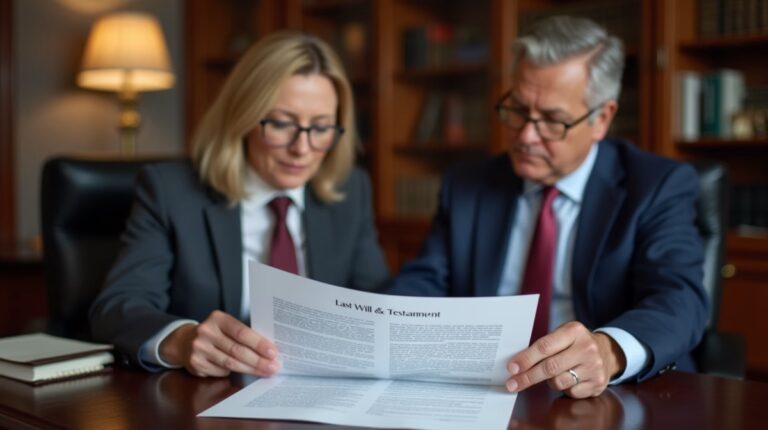
In California, a last will and testament is reviewed under probate standards that focus on intent, capacity, and execution. Clear drafting reduces ambiguity, limits misinterpretation, and helps families avoid unnecessary conflict during estate administration.
To distribute property effectively, you must define what is in the estate, clarify beneficiary roles, and understand how estate liabilities impact the final distribution.
When a will is drafted with California probate review in mind, it becomes a stabilizing roadmap rather than a source of conflict. Clear intent, proper authority, and compliant execution protect both families and estates.
Official Legal Mandates and Resources for California Guardianship
-
Mandatory Judicial Forms:
Judicial Council of California – Guardianship Forms (GC Series)
Access the complete library of “GC” (Guardianship and Conservatorship) forms required for filing a petition in California. In 2026, this remains the official source for mandatory background screening forms and the specific notices required for relatives under the Probate Code. -
Self-Help Procedural Guide:
California Courts – Guardianship Self-Help
An official judicial resource providing step-by-step instructions for families seeking legal custody. This guide explains the critical 2026 distinctions between Guardianship of the Person (physical care and health) and Guardianship of the Estate (financial management of the minor’s assets). -
Acknowledgment of Fiduciary Duties:
Duties of Guardian (Form GC-248)
The mandatory Judicial Council document that every prospective guardian must sign. It acknowledges your legal obligations regarding the minor’s education, health, and welfare, and establishes your ongoing accountability to the California Probate Court. -
Statutory Authority:
California Probate Code § 1500 (Guardianship)
The definitive statutory authority governing the appointment of guardians. This code stipulates that a parent or third party can only be appointed if it is proven—under the “Clear and Convincing” evidence standard—that parental custody would be detrimental to the child’s best interests.
|
Attorney Advertising, Legal Disclosure & Authorship
ATTORNEY ADVERTISING.
This content is provided for general informational and educational purposes only and does not constitute legal, financial, or tax advice. Under the California Rules of Professional Conduct and State Bar advertising regulations, this material may be considered attorney advertising. Reading this content does not create an attorney-client relationship or any professional advisory relationship. Laws vary by jurisdiction and are subject to change, including recent 2026 developments under California’s AB 2016 and evolving federal estate and reporting requirements. You should consult a qualified attorney or advisor regarding your specific circumstances before taking action.
Responsible Attorney:
Steven F. Bliss, California Attorney (Bar No. 147856).
Local Office:
Escondido Probate Law720 N Broadway 107 Escondido, CA 92025 (760) 884-4044
Escondido Probate Law is a practice location and trade name used by Steven F. Bliss, Esq., a California-licensed attorney.
About the Author & Legal Review Process
This article was researched and drafted by the Legal Editorial Team of the Law Firm of Steven F. Bliss, Esq.,
a collective of attorneys, legal writers, and paralegals dedicated to translating complex legal concepts into clear, accurate guidance.
Legal Review:
This content was reviewed and approved by Steven F. Bliss, a California-licensed attorney (Bar No. 147856). Mr. Bliss concentrates his practice in estate planning and estate administration, advising clients on proactive planning strategies and representing fiduciaries in probate and trust administration proceedings when formal court involvement becomes necessary.
With more than 35 years of experience in California estate planning and estate administration,
Mr. Bliss focuses on structuring enforceable estate plans, guiding fiduciaries through court-supervised proceedings, resolving creditor and notice issues, and coordinating asset management to support compliant, timely distributions and reduce fiduciary risk. |