|
Legal & Tax Disclosure
ATTORNEY ADVERTISING.
This article is provided for general informational purposes only and does not constitute legal, financial, or tax advice. Reading this content does not create an attorney-client or professional advisory relationship. Laws vary by jurisdiction and are subject to change. You should consult a qualified professional regarding your specific circumstances. |
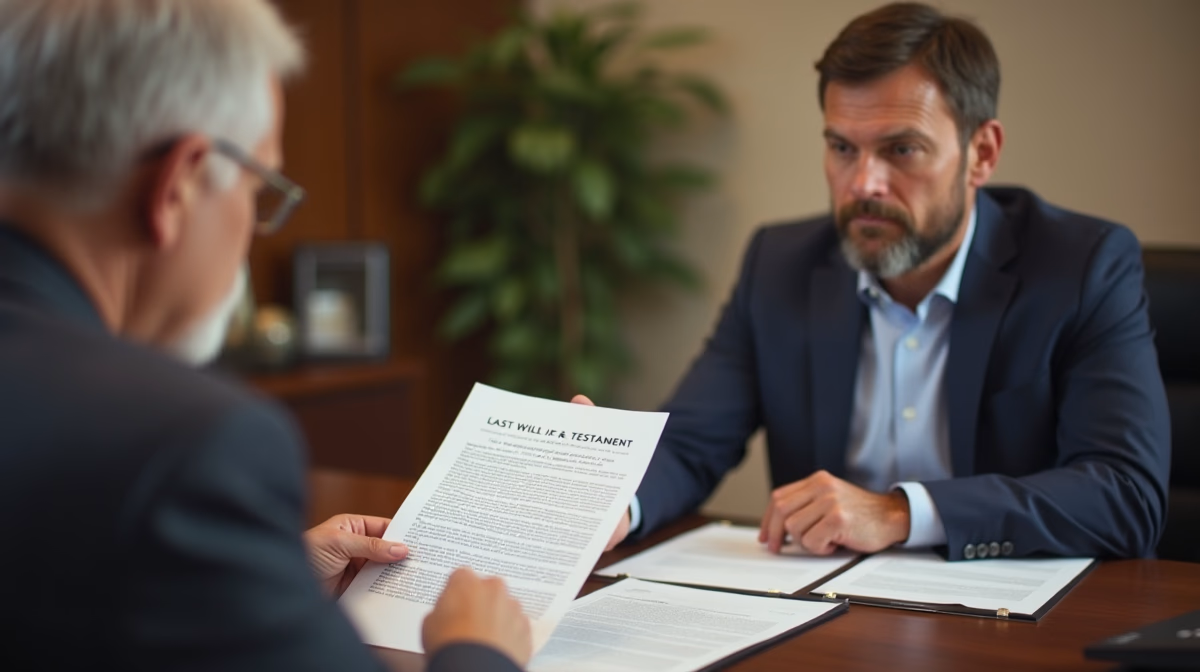
It started with a frantic phone call. Emily’s brother, David, had died unexpectedly. She knew he had a will, had even seen a draft years ago, but now his widow, Esperanza, was stonewalling the family. Emily feared Esperanza was changing the terms or, worse, claiming there was no will at all. This kind of situation – a lost or contested will – can easily cost families $10,000 in legal fees simply to find and validate the document, and that’s before even getting to the issue of whether its contents are being followed.
As an Estate Planning Attorney and CPA with over 35 years of experience, I’ve seen this scenario play out countless times. Often, it comes down to a misunderstanding of rights and procedures. While you can’t simply demand a copy of the will, California law provides mechanisms to obtain it, and to ensure the estate is administered properly.
What Rights Do Beneficiaries Have to a Will?

The short answer is, beneficiaries do not have an automatic legal right to see the original will before it’s admitted to probate. However, the executor (or administrator, if there’s no will) has a legal duty to safeguard the will and follow its instructions. Once the executor files the will with the court, it becomes a public record. But what happens before that point?
You have the right to petition the court to compel the executor to provide a copy. Probate Code § 8250 allows any “interested person” – generally anyone who would benefit under the will, or who might benefit if there were no will – to request the court to order the executor to produce the document for review.
More importantly, as a potential beneficiary, you’re entitled to notice of the probate proceedings. This notice should inform you of the executor’s appointment and the timeline for filing any objections. This is your first step to ensuring your rights are protected.
What if the Executor Refuses to Cooperate?
This is where things get tricky. If the executor is unresponsive or refuses to provide information, you may need to file a petition with the court.
- Petition for Formal Notice: A formal request to the court to compel the executor to notify you of the proceedings.
- Petition for Inventory and Appraisal: This asks the court to order the executor to provide a detailed list of all assets in the estate.
- Petition to Compel Accounting: Under Probate Code § 16060 & § 16062, you can petition the court to force the executor to provide a full accounting of all estate transactions.
These petitions require specific legal procedures and can be complex, which is why seeking legal counsel is critical.
How Does a CPA’s Expertise Help in These Situations?
One of the biggest advantages I bring to these cases, as both an attorney and a CPA, is the ability to quickly identify potential financial irregularities. A will might be valid, but the way the assets are being managed – or even valued – could be detrimental to the beneficiaries. Step-up in basis, capital gains implications, and accurate valuation are key considerations. A CPA’s eye for detail can uncover hidden assets or improper distributions that would be missed by a lawyer alone. It’s about more than just the will itself; it’s about ensuring the estate is handled fairly and efficiently, minimizing tax liabilities, and maximizing the inheritance for the beneficiaries.
What if the Will Has Already Been Lost or Destroyed?
If the original will is lost or destroyed, it doesn’t necessarily mean it’s invalid. California law allows for “lost will” petitions. However, these are notoriously difficult to prove, requiring convincing evidence of the will’s existence and contents. A copy of the will, even an unsigned draft, can be helpful, but the burden of proof is high.
Protecting Your Inheritance: The Importance of Early Action
Don’t delay in addressing concerns about a will. The longer you wait, the more complicated – and expensive – the situation can become. A proactive approach, guided by experienced legal counsel, can save you significant time, money, and emotional distress.
What causes California probate cases to spiral into delay, disputes, and extra cost?
California probate is designed to provide court-supervised transfer of property, yet cases often break down when authority is unclear, required steps are missed, or disputes arise over assets, notice, and fiduciary conduct. When the process is misunderstood, families can face avoidable delay, escalating conflict, and increased exposure to creditor issues, hearings, or litigation before the estate can close.
- Executor Authority: Secure letters testamentary if a will exists.
- No-Will Power: Obtain letters of administration if there is no will.
- Who is Involved: Clarify roles using key parties.
Ultimately, the difference between a routine distribution and a protracted legal battle often comes down to preparation. By anticipating the demands of the Probate Code and addressing potential friction points with beneficiaries and creditors upfront, fiduciaries can navigate the system with greater confidence and lower liability.
Verified Authority on California Beneficiary Rights
-
Statutory Notification Window (The “120-Day Rule”): California Probate Code § 16061.7
This is the most critical statute for beneficiaries. Once a trustee serves this formal notice, you have exactly 120 days to file a contest. If you miss this deadline, you are generally forever barred from challenging the validity of the trust, regardless of the evidence you have. -
Right to Accounting & Information: California Probate Code § 16060 (Duty to Inform)
Trustees have a mandatory legal duty to keep beneficiaries “reasonably informed” about the trust and its administration. Under Probate Code § 16062, most trustees must provide a formal financial accounting at least once a year. If they refuse, the court can compel them to do so. -
Inheriting Real Estate (Prop 19): California State Board of Equalization (Prop 19)
Beneficiaries must understand that inheriting a home no longer guarantees low property taxes. Under Prop 19, to avoid reassessment to current market value, the child must make the home their primary residence within one year of the parent’s death. -
No-Contest Clause Enforceability: California Probate Code § 21311
Fear of disinheritance often stops beneficiaries from fighting for their rights. However, this statute clarifies that a No-Contest clause is only enforceable if the contest is brought without “probable cause.” If you have a reasonable basis for your claim, your inheritance is likely safe. -
Recovering Trust Assets (Heggstad): California Probate Code § 850 (Heggstad Petition)
If a beneficiary finds that a parent intended an asset to be in the trust but failed to sign the deed or change the account title, a Section 850 Petition allows the court to “transfer” that asset into the trust without a full probate proceeding. -
Removal of a Bad Trustee: California Probate Code § 15642
Beneficiaries have the right to petition for the removal of a trustee who is unfit. Grounds for removal include excessive compensation, inability to manage finances, or “excessive hostility” toward beneficiaries that interferes with the trust’s administration.
|
Attorney Advertising, Legal Disclosure & Authorship
ATTORNEY ADVERTISING.
This content is provided for general informational and educational purposes only and does not constitute legal, financial, or tax advice. Under the California Rules of Professional Conduct and State Bar advertising regulations, this material may be considered attorney advertising. Reading this content does not create an attorney-client relationship or any professional advisory relationship. Laws vary by jurisdiction and are subject to change, including recent 2026 developments under California’s AB 2016 and evolving federal estate and reporting requirements. You should consult a qualified attorney or advisor regarding your specific circumstances before taking action.
Responsible Attorney:
Steven F. Bliss, California Attorney (Bar No. 147856).
Local Office:
Escondido Probate Law720 N Broadway 107 Escondido, CA 92025 (760) 884-4044 Escondido Probate Law 3914 Murphy Canyon Rd Escondido, CA 92123 (858) 278-2800
Escondido Probate Law is a practice location and trade name used by Steven F. Bliss, Esq., a California-licensed attorney.
About the Author & Legal Review Process
This article was researched and drafted by the Legal Editorial Team of the Law Firm of Steven F. Bliss, Esq.,
a collective of attorneys, legal writers, and paralegals dedicated to translating complex legal concepts into clear, accurate guidance.
Legal Review:
This content was reviewed and approved by Steven F. Bliss, a California-licensed attorney (Bar No. 147856). Mr. Bliss concentrates his practice in estate planning and estate administration, advising clients on proactive planning strategies and representing fiduciaries in probate and trust administration proceedings when formal court involvement becomes necessary.
With more than 35 years of experience in California estate planning and estate administration,
Mr. Bliss focuses on structuring enforceable estate plans, guiding fiduciaries through court-supervised proceedings, resolving creditor and notice issues, and coordinating asset management to support compliant, timely distributions and reduce fiduciary risk. |