|
Legal & Tax Disclosure
ATTORNEY ADVERTISING.
This article is provided for general informational purposes only and does not constitute legal, financial, or tax advice. Reading this content does not create an attorney-client or professional advisory relationship. Laws vary by jurisdiction and are subject to change. You should consult a qualified professional regarding your specific circumstances. |
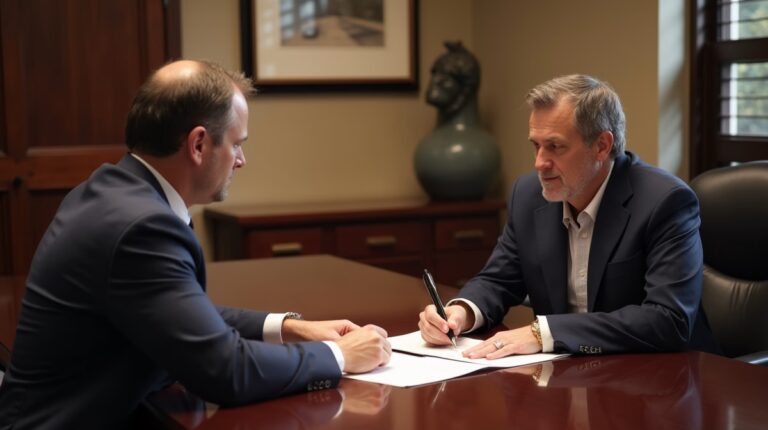
I recently met with Dale, whose family established an irrevocable trust over a decade ago. He’d assumed it was a ‘set it and forget it’ arrangement, but now wants to make significant donations to his favorite wildlife conservation charities. Unfortunately, the original trust document lacked the necessary flexibility. Because the trust was inflexible, a direct donation was impossible without triggering substantial tax implications and potentially violating the original intent of the trust. He faced a potential cost of over $30,000 in penalties and legal fees to amend it, a painful outcome when his goal was selfless generosity.
The good news is that irrevocable trusts can be designed to accommodate charitable giving, but it requires careful planning upfront. The key is to incorporate provisions that anticipate future philanthropic desires. We often build in what are called “discretionary powers” for the trustee, allowing them to distribute funds to qualified charities at their discretion, within a specified framework. These powers can be limited by amount, frequency, or the type of charity supported.
What are the tax benefits of charitable donations from an irrevocable trust?

Donations to qualified 501(c)(3) organizations are generally deductible for income tax purposes, subject to certain limitations. However, the rules for trusts are more complex than for individual donations. The trust itself may be able to claim the deduction, reducing its taxable income. However, the beneficiaries don’t receive a direct tax benefit. We meticulously plan these deductions to maximize the benefit to the trust and avoid unintended consequences. As a CPA as well as an attorney, I’m uniquely positioned to ensure these donations are structured for optimal tax efficiency. A proper understanding of capital gains and step-up in basis is critical.
How can I modify an existing trust to allow for charitable donations?
Modifying an irrevocable trust is notoriously difficult, but not always impossible. Under Probate Code § 15403, an irrevocable trust can be modified if all beneficiaries consent, provided the change doesn’t defeat a ‘material purpose’ of the trust. This requires a formal petition to the court and potentially notification to all interested parties. However, if the trust document doesn’t allow for modification, or if beneficiaries object, there’s another avenue: Decanting (The Modern Fix). Alternatively, under the California Uniform Trust Decanting Act (Probate Code § 19501), a trustee with expanded discretion may ‘pour’ assets from an old restrictive trust into a new, modern trust without court approval, often used to fix tax errors or update beneficiary terms.
Are there other considerations when making charitable donations from a trust?
Yes. One often-overlooked consideration is the potential impact on Medi-Cal eligibility. Effective Jan 1, 2026, California fully reinstated the asset test ($130,000 for individuals) and the 30-month look-back period; transferring assets into an irrevocable trust now triggers this penalty period, delaying eligibility for nursing home coverage. Additionally, if the trust beneficiaries are eligible for government benefits, charitable donations could impact their eligibility. Finally, always confirm the charity is a qualified 501(c)(3) organization to ensure the donation is tax-deductible. We have over 35 years of experience navigating these complexities, so clients can pursue their charitable goals with confidence.
What separates a successful California trust distribution from a costly battle over interpretation and accounting?
Success in trust administration depends on more than just the document; it requires active management of assets, precise accounting to beneficiaries, and careful navigation of tax rules. Whether dealing with a blended family or complex real estate, understanding the mechanics of trust law is the only way to ensure the grantor’s wishes survive scrutiny.
- Disputes: Prepare for potential contesting a trust if terms are vague.
- The Duty: Follow strict trust administration to avoid liability.
- The Legacy: Create philanthropic trust options for tax efficiency.
California trust planning is most effective when the structure is matched to the specific family goal and assets are fully funded into the trust name. When administration is handled with transparency and adherence to the Probate Code, the trust can fulfill its promise of privacy and efficiency.
Verified Authority on Irrevocable Trust Administration
-
Trust Decanting (Probate Code § 19501): California Uniform Trust Decanting Act
The modern statute allowing a trustee to “fix” a broken irrevocable trust. It permits moving assets into a new trust with better administrative terms or tax provisions without going to court. -
Medi-Cal Look-Back (2026 Rules): California DHCS Medi-Cal Asset Limits
Official guidance on the reinstated 30-month look-back period and the new asset limit of $130,000 (individual) effective January 1, 2026. Critical for anyone using an irrevocable trust for long-term care planning. -
Spendthrift Protection (Probate Code § 15300): California Probate Code § 15300
The legal shield that makes an irrevocable trust “irrevocable.” This statute validates clauses that prevent creditors, lawsuits, and ex-spouses from attaching trust assets before they reach the beneficiary. -
Estate Tax Exemption (OBBBA): IRS Estate Tax Guidelines
Reflects the OBBBA permanent increase to a $15 million per person exemption (effective Jan 1, 2026). This high threshold shifts the focus of most irrevocable trusts from tax savings to asset protection. -
Missed Asset Recovery (AB 2016): California Probate Code § 13151 (Petition for Succession)
If an asset was intended for the trust but legally left out, this statute (effective April 1, 2025) allows for a “Petition for Succession” for assets up to $750,000, bypassing full probate. -
Digital Asset Access (RUFADAA): California Probate Code § 870 (RUFADAA)
Mandatory for irrevocable trusts holding crypto or digital rights. Without specific RUFADAA language, a trustee may be legally blocked from accessing or managing these modern assets.
|
Attorney Advertising, Legal Disclosure & Authorship
ATTORNEY ADVERTISING.
This content is provided for general informational and educational purposes only and does not constitute legal, financial, or tax advice. Under the California Rules of Professional Conduct and State Bar advertising regulations, this material may be considered attorney advertising. Reading this content does not create an attorney-client relationship or any professional advisory relationship. Laws vary by jurisdiction and are subject to change, including recent 2026 developments under California’s AB 2016 and evolving federal estate and reporting requirements. You should consult a qualified attorney or advisor regarding your specific circumstances before taking action.
Responsible Attorney:
Steven F. Bliss, California Attorney (Bar No. 147856).
Local Office:
Escondido Probate Law720 N Broadway 107 Escondido, CA 92025 (760) 884-4044
Escondido Probate Law is a practice location and trade name used by Steven F. Bliss, Esq., a California-licensed attorney.
About the Author & Legal Review Process
This article was researched and drafted by the Legal Editorial Team of the Law Firm of Steven F. Bliss, Esq.,
a collective of attorneys, legal writers, and paralegals dedicated to translating complex legal concepts into clear, accurate guidance.
Legal Review:
This content was reviewed and approved by Steven F. Bliss, a California-licensed attorney (Bar No. 147856). Mr. Bliss concentrates his practice in estate planning and estate administration, advising clients on proactive planning strategies and representing fiduciaries in probate and trust administration proceedings when formal court involvement becomes necessary.
With more than 35 years of experience in California estate planning and estate administration,
Mr. Bliss focuses on structuring enforceable estate plans, guiding fiduciaries through court-supervised proceedings, resolving creditor and notice issues, and coordinating asset management to support compliant, timely distributions and reduce fiduciary risk. |