|
Legal & Tax Disclosure
ATTORNEY ADVERTISING.
This article is provided for general informational purposes only and does not constitute legal, financial, or tax advice. Reading this content does not create an attorney-client or professional advisory relationship. Laws vary by jurisdiction and are subject to change. You should consult a qualified professional regarding your specific circumstances. |
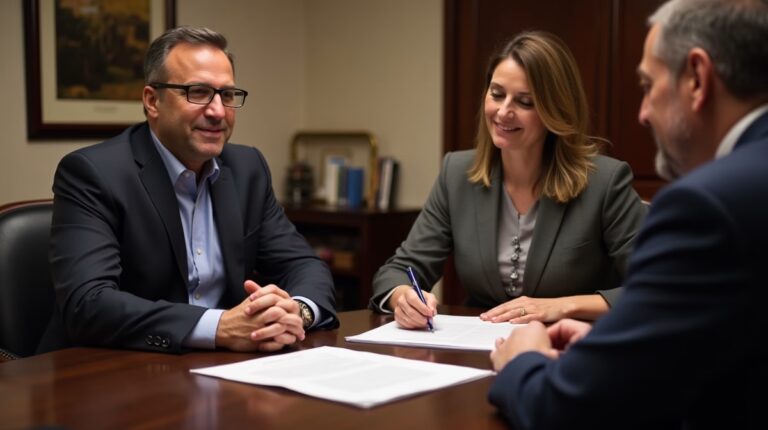
I’ve seen it happen too many times. David, a successful physician, meticulously drafted his trust, intending to leave a significant portion of his estate to cancer research. He printed it, gathered the witnesses, and… the ink was the wrong color. Sounds trivial, right? It invalidated the entire document. Weeks of work, thousands of dollars in legal fees, gone because of a technicality. This highlights a critical misunderstanding about trust execution in California – it’s not just what you say in the trust, but how you sign it that matters.
What are the specific signing requirements for a California Trust?

California law dictates strict requirements for validly executing a trust. While commonly understood, these rules are frequently missed. It’s not enough to simply “sign” the trust document. You must satisfy all prerequisites to avoid potential legal challenges and ensure your wishes are honored. As an Estate Planning Attorney and CPA with over 35 years of experience, I’ve helped countless clients navigate these complex rules, focusing not only on the legal structure but also on the tax implications – particularly maximizing the step-up in basis for inherited assets.
The core requirements are threefold: signature, witnessing, and, in some cases, notarization. Let’s break down each component. The trust must be signed by the grantor – the person creating the trust. This signature must be in blue ink, and must not be a stamp or electronic signature. It’s a seemingly small detail, but one that consistently trips people up.
Do I need witnesses to sign my trust in California?
Yes. California requires that the grantor’s signature be witnessed by at least two individuals, each of whom must be present at the same time and witness either the signing of the trust or the grantor’s acknowledgement of the signature. The witnesses must also sign the trust, attesting that they witnessed the grantor’s signature. Importantly, these witnesses cannot be beneficiaries of the trust. This prevents any appearance of undue influence or conflict of interest.
However, the rules change if you’re creating a revocable living trust where you serve as the trustee. In that scenario, you can utilize a “self-declaration” by signing an affidavit that attests to its validity. However, this doesn’t negate the requirement for witnesses should another individual become trustee at any point.
When is notarization required for a California Trust?
Notarization isn’t always required for a basic revocable living trust, but it’s highly recommended – and essential in certain circumstances. A notarial act adds an extra layer of verification, confirming the identity of the grantor and ensuring the signature is genuine. This can be particularly valuable in preventing challenges to the trust’s validity, especially if family members are likely to contest it.
Specifically, notarization is required when the trust contains a testamentary trust provision. A testamentary trust is a trust created within your revocable living trust that only becomes effective upon your death. This effectively acts like a will, and therefore is subject to the same stringent execution requirements – including notarization.
What happens if my trust isn’t properly signed or witnessed?
If your trust fails to meet the legal requirements for signing and witnessing, it can be deemed invalid. This means your assets will be distributed according to California’s intestate succession laws (as if you died without a trust), potentially resulting in unintended consequences and a lengthy, costly probate process. This is especially devastating when charitable giving is involved, as the intended beneficiaries may receive nothing.
For example, if you intend to fund a Charitable Remainder Trust (CRT) or Charitable Lead Trust (CLT) – allowing you to bypass capital gains tax on appreciated assets – an improperly executed trust can unravel those tax benefits. My CPA background allows me to anticipate and mitigate these issues, ensuring your charitable giving is both impactful and tax-efficient.
What about digital assets and charitable trusts?
With the increasing prevalence of digital assets, it’s crucial to address their disposition in your trust. Without specific RUFADAA language (Probate Code § 870) in the Charitable Trust, service providers can legally block a trustee from accessing digital accounts or cryptocurrency intended for charitable distribution. We must explicitly authorize the trustee to manage these assets, including obtaining necessary passwords and access credentials.
What if the charity named in my trust closes before my death?
If a named charity ceases to operate, California courts apply the Cy Pres Doctrine to redirect assets to a comparable charitable cause, provided the trust doesn’t name a specific successor. This ensures your philanthropic intent is still honored, even if the original beneficiary is no longer viable.
- Signature Color: Always use blue ink.
- Witnesses: Two disinterested witnesses are required.
- Notarization: Mandatory for testamentary trusts; highly recommended for all trusts.
- Digital Assets: Include specific RUFADAA language for access.
What causes California trust administration to fail due to poor funding, vague terms, or trustee misconduct?
California trusts are designed to bypass probate and maintain privacy, yet they often fail when assets are not properly funded, trustee duties are ignored, or ambiguous terms trigger disputes. Even with a signed trust document, families can face court battles if the “operations manual” of the trust isn’t followed strictly under the Probate Code.
- Locking it Down: Explore permanent trust structures for asset shielding.
- Will Integration: Understand trusts created by will.
- Policy Management: Utilize an ILIT strategies for estate taxes.
A stable trust administration relies on the trustee’s ability to balance investment duties, beneficiary communication, and tax compliance. When these elements are managed proactively, families can avoid the emotional and financial drain of litigation.
Verified Authority on California Charitable Trust Administration
-
Business Interest Compliance (FinCEN): FinCEN – Beneficial Ownership Information (BOI)
As of March 2025, domestic U.S. LLCs are exempt from mandatory BOI reporting under the Corporate Transparency Act; however, trustees managing foreign-registered entities within a Charitable Trust must still file updates within 30 days to avoid fines of $500/day. -
Charitable Trust Formation: California Probate Code § 15200 (Creation of Trust)
This statute governs the legal creation of fiduciary relationships for charitable purposes. It enables donors to support causes—such as education or scientific research—that align with their values through structured giving, ensuring precision and continuity that casual donations lack. -
Digital Asset Access (RUFADAA): California Probate Code § 870 (RUFADAA)
Without specific RUFADAA language (Probate Code § 870) in your Charitable Trust or Will, service providers like Coinbase and Google can legally deny your trustee access to digital assets, potentially stalling the funding of charitable causes. -
Federal Estate Tax (OBBBA): IRS Estate Tax Guidelines
The 2026 “Sunset” was averted by the OBBBA (One Big Beautiful Bill Act), which permanently increased the Federal Estate Tax Exemption to $15 million per person effective Jan 1, 2026, directly impacting how charitable structures are used to shield high-value estates from taxation. -
Primary Residence Succession (AB 2016): California Probate Code § 13151 (Petition for Succession)
When transferring property to a charity, you must distinguish between the Small Estate Affidavit (real property <$69,625) and AB 2016. For deaths on or after April 1, 2025, a residence up to $750,000 qualifies for a ‘Petition for Succession’. This is a “Petition” that requires a Judge’s Order, NOT an “Affidavit.” Note that other assets must remain below the $208,850 limit. -
Property Tax Reassessment (Prop 19): California State Board of Equalization (Prop 19)
Under Prop 19, heirs (or charities in specific scenarios) can only keep a low tax base if requirements regarding primary residency and value limits are met within one year; this is vital to evaluate when gifting real estate through a Charitable Trust. -
Registry of Charitable Trusts: California Attorney General – Registry of Charitable Trusts
Trustees of charitable trusts must comply with annual reporting obligations under California Government Code § 12585. This resource serves as the oversight portal to ensure proper use of assets and to avoid self-dealing or deviation from the donor’s original intent. -
Small Estate Threshold (Bank Accounts/Cash): California Probate Code § 13100 (Personal Property)
If combined “probate assets” (excluding the AB 2016 residence) exceed $208,850 (as of April 1, 2025), they are subject to formal probate; a Will alone does not allow you to bypass this limit for the purpose of funding a Charitable Trust.
|
Attorney Advertising, Legal Disclosure & Authorship
ATTORNEY ADVERTISING.
This content is provided for general informational and educational purposes only and does not constitute legal, financial, or tax advice. Under the California Rules of Professional Conduct and State Bar advertising regulations, this material may be considered attorney advertising. Reading this content does not create an attorney-client relationship or any professional advisory relationship. Laws vary by jurisdiction and are subject to change, including recent 2026 developments under California’s AB 2016 and evolving federal estate and reporting requirements. You should consult a qualified attorney or advisor regarding your specific circumstances before taking action.
Responsible Attorney:
Steven F. Bliss, California Attorney (Bar No. 147856).
Local Office:
Escondido Probate Law720 N Broadway 107 Escondido, CA 92025 (760) 884-4044
Escondido Probate Law is a practice location and trade name used by Steven F. Bliss, Esq., a California-licensed attorney.
About the Author & Legal Review Process
This article was researched and drafted by the Legal Editorial Team of the Law Firm of Steven F. Bliss, Esq.,
a collective of attorneys, legal writers, and paralegals dedicated to translating complex legal concepts into clear, accurate guidance.
Legal Review:
This content was reviewed and approved by Steven F. Bliss, a California-licensed attorney (Bar No. 147856). Mr. Bliss concentrates his practice in estate planning and estate administration, advising clients on proactive planning strategies and representing fiduciaries in probate and trust administration proceedings when formal court involvement becomes necessary.
With more than 35 years of experience in California estate planning and estate administration,
Mr. Bliss focuses on structuring enforceable estate plans, guiding fiduciaries through court-supervised proceedings, resolving creditor and notice issues, and coordinating asset management to support compliant, timely distributions and reduce fiduciary risk. |