|
Legal & Tax Disclosure
ATTORNEY ADVERTISING.
This article is provided for general informational purposes only and does not constitute legal, financial, or tax advice. Reading this content does not create an attorney-client or professional advisory relationship. Laws vary by jurisdiction and are subject to change. You should consult a qualified professional regarding your specific circumstances. |
Alan was devastated. His mother, just weeks before passing, had inexplicably gifted her entire antique coin collection—valued at over $100,000—to her recently hired caregiver, Ben. Alan had a strong suspicion Ben had manipulated his mother, isolating her from family and exploiting her declining mental state. Alan feared, rightly so, that Ben was a predator, and the gift was simply a way to steal from his mother’s estate. He’s now facing a potentially crippling loss, and the legal battle ahead seems daunting.
The situation is unfortunately common. California law offers recourse, but proving “bad faith” asset taking requires meticulous documentation and a strategic legal approach. As an estate planning attorney and CPA with over 35 years of experience, I’ve seen these scenarios play out countless times. The good news is that you don’t have to accept this injustice passively.
What Evidence Do I Need to Prove Undue Influence?
Establishing undue influence isn’t a simple task. It’s not enough to simply believe someone took advantage of your loved one. You need concrete evidence demonstrating the caregiver exerted improper pressure that overrode your mother’s free will. This includes:
-
Medical Records: Evidence of diminished capacity – diagnoses of dementia, Alzheimer’s, or other conditions affecting mental acuity. Look for physician’s notes documenting fluctuations in mental state.
Financial Records: Track the timing of the gift. Was it shortly after Ben began caregiving? Were large, unexplained transactions made? A forensic accounting review can be crucial.
Communications: Emails, texts, or handwritten notes revealing Ben’s control over your mother’s decisions or attempts to isolate her from family.
Witness Testimony: Statements from friends, family, or other caregivers who observed Ben’s behavior and its impact on your mother.
What Does “Presumption of Invalidity” Mean for Gifts to Caregivers?
California’s Probate Code § 21380 creates a “presumption of invalidity” for gifts to caregivers. This is a game-changer. It means the burden of proof shifts to Ben to prove he did not coerce your mother into making the gift. He must demonstrate, by “clear and convincing evidence,” that your mother acted freely and voluntarily. This is a high legal standard, significantly increasing his challenge. However, it’s not an automatic win for Alan. Ben can rebut the presumption with evidence showing, for example, your mother was of sound mind, sought independent legal counsel, or had a long-standing relationship with Ben predating the caregiving arrangement.
Can I Recover the Assets Even After My Mother’s Passing?
Yes. Even if the gift was made before your mother’s death, you can pursue legal action after probate begins. The key is filing a timely Probate Code § 859 petition with the court. This statute is a powerful weapon: “…if a person uses undue influence, fraud, or bad faith to take estate assets, the court can order them to return the property PLUS pay a penalty of twice the value of the assets recovered. This ‘double damages’ statute is the most powerful weapon in probate litigation.”
This means Ben could be forced to return the coin collection and pay Alan double its value as a penalty. The court can also disqualify Ben from inheriting anything under the will and impose other sanctions.
How Does My Background as a CPA Help My Case?
As a CPA, I understand the nuances of asset valuation and transfer. This is critical. We can trace the flow of funds, establish the “fair market value” of the gifted assets, and identify any capital gains implications. This isn’t just about recovering the coins; it’s about ensuring the estate receives proper credit for them, minimizing tax liabilities, and pursuing all available legal avenues. A proper step-up in basis calculation, for instance, is essential if the estate is ultimately entitled to the assets. We also bring a layer of financial scrutiny that many attorneys simply lack.
How do enforcement rules in California probate court shape outcomes for heirs and fiduciaries?
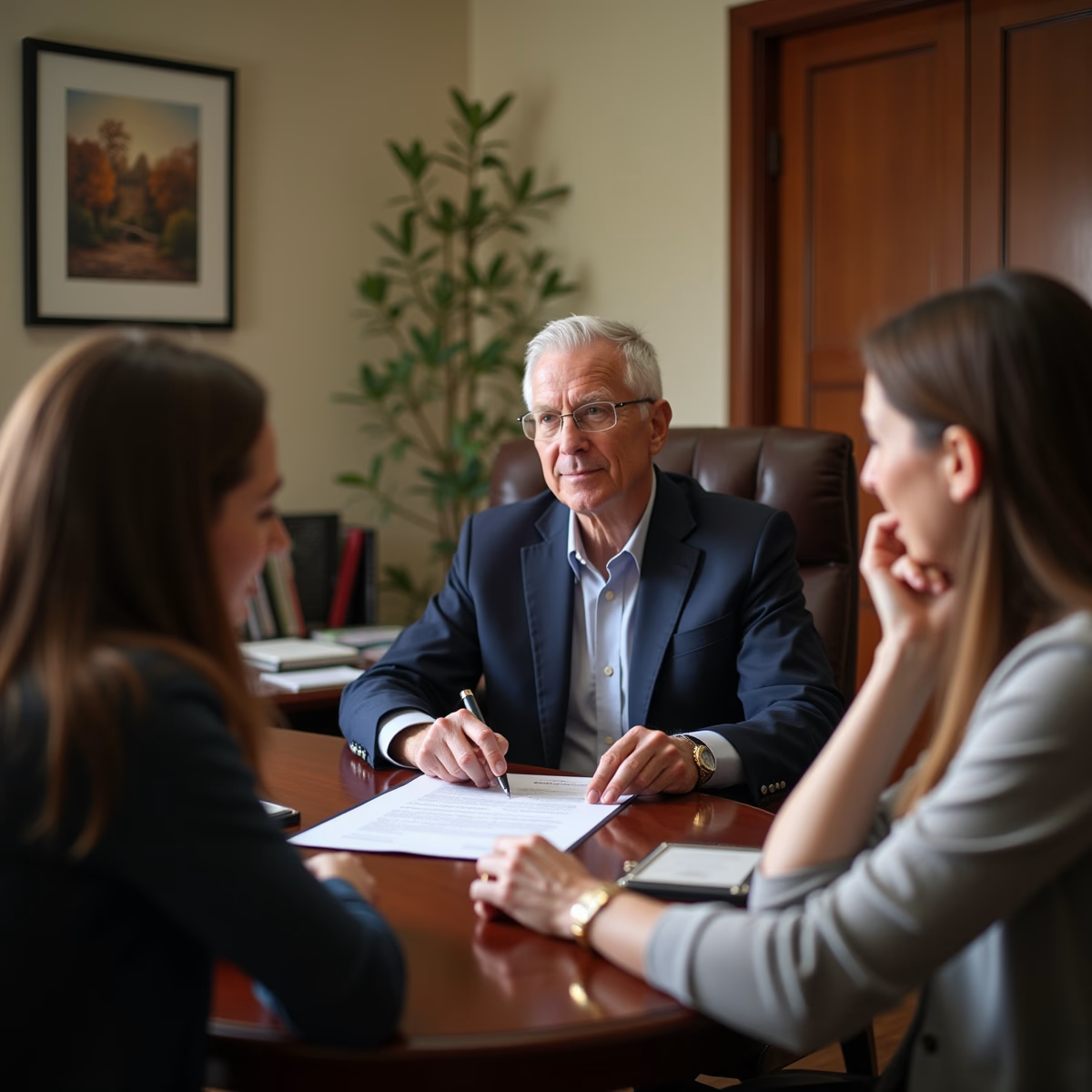
Success in probate court depends less on the size of the estate and more on the accuracy of the petition and the behavior of the fiduciary. Whether the issue is a forgotten asset, a contested creditor claim, or a disagreement among siblings, understanding the procedural triggers for court intervention is the best defense against prolonged administration.
| Final Stage | Consideration |
|---|---|
| Wrap Up | Execute final distribution and closing. |
| Taxes | Address probate tax implications. |
| Judgments | Review remedies and outcomes. |
A stable probate administration outcome usually follows from clarity, consistency, and readiness for court review, especially when multiple stakeholders and competing interpretations are involved. When documentation supports enforcement and timelines are respected, families are less likely to face preventable escalation.
Verified Authority on California Probate Litigation
-
Double Damages (Bad Faith Taking): California Probate Code § 859
The “nuclear option” of probate litigation. If the court finds that a person has in bad faith wrongfully taken, concealed, or disposed of property belonging to the estate, the judge may assess liability for twice the value of the property, in addition to recovering the asset itself. -
Grounds for Removal of Executor: California Probate Code § 8502
This statute lists the specific legal reasons a judge can fire a Personal Representative. Common grounds include wasting or mismanaging assets, neglecting the estate (moving too slow), or having an incurable conflict of interest with the beneficiaries. -
The “850 Petition” (Title Disputes): California Probate Code § 850
Probate litigation often revolves around ownership. This powerful petition allows the probate court to solve title disputes without filing a separate civil lawsuit. It is used when an asset is titled to a third party but belongs to the estate (or vice versa). -
Presumption of Undue Influence (Caregivers): California Probate Code § 21380
To prevent elder abuse, California law makes it incredibly difficult for paid caregivers to inherit from their patients. The law presumes the gift was the result of undue influence, forcing the caregiver to prove their innocence in court, often requiring a “Certificate of Independent Review.” -
Civil Discovery Rules Apply: California Probate Code § 1000
Probate is not just administrative; it is a court of law. This code section confirms that the standard rules of civil practice apply. This means litigators can use interrogatories, depositions, and demands for production of documents to build their case against a rogue executor. -
Extraordinary Fees (Litigation Costs): California Probate Code § 10811
Litigation is not covered by the standard statutory fee. Attorneys can petition the court for “extraordinary fees” for litigation services (e.g., defending a will contest or recovering stolen property). These fees are billed hourly and must be approved by the judge.
|
Attorney Advertising, Legal Disclosure & Authorship
ATTORNEY ADVERTISING.
This content is provided for general informational and educational purposes only and does not constitute legal, financial, or tax advice. Under the California Rules of Professional Conduct and State Bar advertising regulations, this material may be considered attorney advertising. Reading this content does not create an attorney-client relationship or any professional advisory relationship. Laws vary by jurisdiction and are subject to change, including recent 2026 developments under California’s AB 2016 and evolving federal estate and reporting requirements. You should consult a qualified attorney or advisor regarding your specific circumstances before taking action.
Responsible Attorney:
Steven F. Bliss, California Attorney (Bar No. 147856).
Local Office:
Escondido Probate Law720 N Broadway 107 Escondido, CA 92025 (760) 884-4044
Escondido Probate Law is a practice location and trade name used by Steven F. Bliss, Esq., a California-licensed attorney.
About the Author & Legal Review Process
This article was researched and drafted by the Legal Editorial Team of the Law Firm of Steven F. Bliss, Esq.,
a collective of attorneys, legal writers, and paralegals dedicated to translating complex legal concepts into clear, accurate guidance.
Legal Review:
This content was reviewed and approved by Steven F. Bliss, a California-licensed attorney (Bar No. 147856). Mr. Bliss concentrates his practice in estate planning and estate administration, advising clients on proactive planning strategies and representing fiduciaries in probate and trust administration proceedings when formal court involvement becomes necessary.
With more than 35 years of experience in California estate planning and estate administration,
Mr. Bliss focuses on structuring enforceable estate plans, guiding fiduciaries through court-supervised proceedings, resolving creditor and notice issues, and coordinating asset management to support compliant, timely distributions and reduce fiduciary risk. |