|
Legal & Tax Disclosure
ATTORNEY ADVERTISING.
This article is provided for general informational purposes only and does not constitute legal, financial, or tax advice. Reading this content does not create an attorney-client or professional advisory relationship. Laws vary by jurisdiction and are subject to change. You should consult a qualified professional regarding your specific circumstances. |
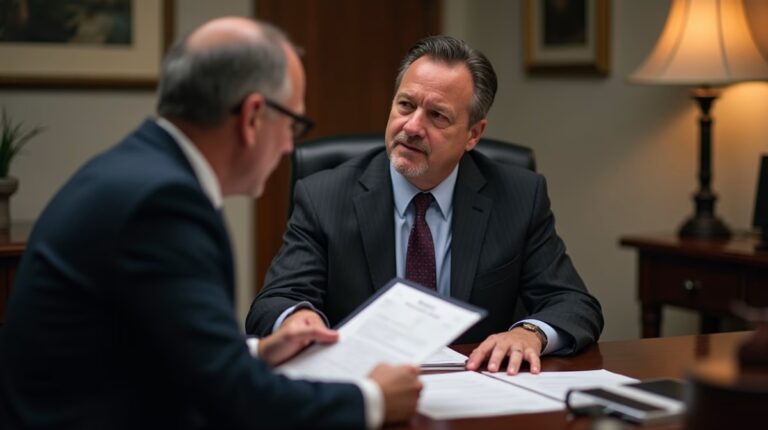
Emily nearly lost everything. Her father, a savvy real estate investor, passed away unexpectedly, leaving a meticulously drafted Will naming her both Executor and a significant beneficiary of his estate – a rental property valued at $450,000. However, a disgruntled sibling contested the Will, claiming Emily was unduly influencing her father, and, more crucially, that her dual role created a conflict of interest. While the court ultimately upheld the Will, the legal battle cost Emily over $35,000 in attorney’s fees, draining a substantial portion of her inheritance before she even saw a dime. This scenario, sadly, is far too common.
As an Estate Planning Attorney and CPA with over 35 years of experience here in Escondido, I often advise clients about the intricacies of selecting an Executor. The short answer to whether an Executor can also be a beneficiary is yes, absolutely. However, it’s rarely a simple “yes,” and understanding the potential pitfalls is crucial.
The core issue revolves around fiduciary duty. An Executor has a legal and ethical obligation to act in the best interests of all beneficiaries, even – and especially – if they are also a beneficiary themselves. This means impartiality, transparency, and diligent management of the estate. Any actions that could be perceived as self-dealing, prioritizing personal gain over the collective benefit of the estate, can lead to legal challenges, removal of the Executor, and potential liability.
California law doesn’t prohibit a beneficiary from serving as Executor, but it does require strict adherence to these standards. Courts will scrutinize these arrangements more closely, and the burden of proof falls on the Executor to demonstrate they have acted fairly and responsibly. For example, if the estate owns a business, the Executor-beneficiary must ensure the valuation is independent and at fair market value – that’s where my CPA background is invaluable. A non-arm’s length transaction, or a sale below market value to benefit the Executor personally, is a red flag that can invalidate the entire estate plan.
What Conflicts Can Arise When an Executor is Also a Beneficiary?

The most common conflicts stem from disagreements with other beneficiaries regarding asset distribution, the sale of property, or estate expenses. Let’s say Glenn inherits a collection of antique cars along with his brother, and Glenn is also the Executor. If Glenn decides to purchase one of the cars for himself at a price significantly below its appraised value, his brother can rightfully challenge that decision, alleging a breach of fiduciary duty. The court may then require Glenn to repurchase the car at full market value, plus any associated legal fees. This is even more complex with business assets; as of January 1, 2026, non-exempt LLCs must comply with FinCEN’s Beneficial Ownership Information (BOI) reporting; executors and beneficiaries managing inherited entities must file updated reports within 30 days of ownership changes to avoid significant civil penalties.
How Can an Executor-Beneficiary Mitigate Risk?
Proactive steps can significantly reduce the likelihood of disputes.
- Maintain meticulous records: Document every decision, expense, and communication related to the estate.
- Obtain independent appraisals: Use qualified, unbiased professionals to value assets.
- Seek court approval for significant transactions: Especially when dealing with complex assets or potential conflicts.
- Communicate openly with all beneficiaries: Transparency builds trust and can preempt challenges.
- Consider waiving commissions: Although permitted, accepting commissions while also a beneficiary can create the appearance of self-interest.
What About Digital Assets and the New Laws?
The increasing prevalence of digital assets adds another layer of complexity. Executors are now responsible for locating, securing, and distributing digital accounts, cryptocurrency, and online photos. However, under California’s RUFADAA (Probate Code § 870), beneficiaries and executors are legally barred from accessing digital accounts, photos, and crypto-wallets unless the decedent explicitly granted authority in their Will, Trust, or via an ‘online tool’. This necessitates clear instructions and access permissions within the estate plan. Furthermore, if assets without valid beneficiaries may trigger probate if the total value of personal property exceeds $208,850 (for deaths occurring on or after April 1, 2025); a Will alone does not bypass this limit.
Ultimately, while an Executor can also be a beneficiary, careful planning and diligent execution are paramount. It’s not a decision to be taken lightly, and consulting with an experienced attorney – and ideally one with a CPA background – can prevent costly legal battles and ensure a smooth estate administration. For deaths on or after April 1, 2025, a primary residence worth $750,000 or less (gross value) may qualify for a simplified transfer under AB 2016 (Probate Code § 13151), bypassing formal probate. And remember, effective January 1, 2026, California has reinstated asset limits ($130,000 for individuals) for non-MAGI Medi-Cal programs, meaning an inheritance could immediately disqualify a beneficiary from aged or disabled aid.
Strategic planning for this specific asset is important, but it must be supported by a Will that can withstand California judicial review.
Too often, families resolve one specific issue but leave their broader estate vulnerable to litigation due to poor Will drafting.
To protect your family from unnecessary conflict, you must understand how judges evaluate the enforceability of your Will:
What standards do California judges use to determine a will’s true meaning?
In California, a last will and testament is reviewed under probate standards that focus on intent, capacity, and execution. Clear drafting reduces ambiguity, limits misinterpretation, and helps families avoid unnecessary conflict during estate administration.
- Preparation: Review estate planning regularly.
- Law: Check statutory rules.
- Parties: Update testator details.
For California residents, understanding how intent, authority, and compliance interact is one of the most effective ways to protect family harmony and estate integrity. A will that anticipates probate scrutiny is far more likely to be honored as written and far less likely to become the source of unnecessary conflict.
Official Resources for Probate, Legal Standards, and Tax Rules
-
Probate / Beneficiaries:
San Diego Superior Court – Probate Division:
Provides essential Escondido-specific “Local Rules” (Division IV) and forms effective January 1, 2026, including Rule 4.4.5 for remote appearances, mandatory e-filing protocols for Escondido County, and the calendar for the Central Courthouse. -
Legal Standards:
State Bar of California:
The official regulatory agency for California’s 270,000+ attorneys; use this portal to verify a lawyer’s license status, check for a history of disciplinary actions, and access the 2026 guidelines for ethical attorney-client fee agreements. -
Tax / Estate Tax:
IRS Estate Tax Guidelines:
The authoritative federal resource for estate and gift tax filing; this page reflects the 2026 “OBBBA” permanent exemption of $15 million per individual, which replaced the scheduled 2026 “tax cliff” from previous legislation. -
Self-Help / Forms:
California Courts – Wills, Estates, and Probate:
The Judicial Council’s primary self-help center offering standardized forms for 2026, including the updated $208,850 “Small Estate Affidavit” and the $750,000 “Primary Residence” simplified transfer procedure (AB 2016).
|
Attorney Advertising, Legal Disclosure & Authorship
ATTORNEY ADVERTISING.
This content is provided for general informational and educational purposes only and does not constitute legal, financial, or tax advice. Under the California Rules of Professional Conduct and State Bar advertising regulations, this material may be considered attorney advertising. Reading this content does not create an attorney-client relationship or any professional advisory relationship. Laws vary by jurisdiction and are subject to change, including recent 2026 developments under California’s AB 2016 and evolving federal estate and reporting requirements. You should consult a qualified attorney or advisor regarding your specific circumstances before taking action.
Responsible Attorney:
Steven F. Bliss, California Attorney (Bar No. 147856).
Local Office:
Escondido Probate Law720 N Broadway 107 Escondido, CA 92025 (760) 884-4044
Escondido Probate Law is a practice location and trade name used by Steven F. Bliss, Esq., a California-licensed attorney.
About the Author & Legal Review Process
This article was researched and drafted by the Legal Editorial Team of the Law Firm of Steven F. Bliss, Esq.,
a collective of attorneys, legal writers, and paralegals dedicated to translating complex legal concepts into clear, accurate guidance.
Legal Review:
This content was reviewed and approved by Steven F. Bliss, a California-licensed attorney (Bar No. 147856). Mr. Bliss concentrates his practice in estate planning and estate administration, advising clients on proactive planning strategies and representing fiduciaries in probate and trust administration proceedings when formal court involvement becomes necessary.
With more than 35 years of experience in California estate planning and estate administration,
Mr. Bliss focuses on structuring enforceable estate plans, guiding fiduciaries through court-supervised proceedings, resolving creditor and notice issues, and coordinating asset management to support compliant, timely distributions and reduce fiduciary risk. |