|
Legal & Tax Disclosure
ATTORNEY ADVERTISING.
This article is provided for general informational purposes only and does not constitute legal, financial, or tax advice. Reading this content does not create an attorney-client or professional advisory relationship. Laws vary by jurisdiction and are subject to change. You should consult a qualified professional regarding your specific circumstances. |
David opened a notice from the nursing home’s attorney threatening a lien on his mother’s house—just three weeks after her passing—and realized the unpaid bill totaled $85,000. It’s a terrifying scenario, and unfortunately, one I see far too often in my 35+ years practicing as both an Estate Planning Attorney and a Certified Public Accountant. The reality is, California law does allow a nursing home to pursue recovery of unpaid debts, potentially reaching your most valuable asset: your home. But it’s rarely as simple as an immediate foreclosure. Let’s break down the ways this can happen and, more importantly, how proactive planning can protect your family.
How Can a Nursing Home Make a Claim Against My House?

Generally, a nursing home asserts a claim against an estate, not directly against you as an individual (unless you’ve personally guaranteed the care). When your mother (or a loved one) receives skilled nursing care, the facility accumulates a debt. Upon their death, the nursing home initiates the formal claims process outlined in Probate Code §§ 9000–9399, submitting a detailed proof of debt to the estate’s executor or administrator. If the claim is valid, it becomes a priority obligation of the estate.
What is California’s Priority Order for Paying Debts?
California’s law establishes a strict order of payment, mandated by Probate Code § 11420. Secured debts (like mortgages or car loans) take precedence. Next come administrative expenses of the estate – executor fees, attorney’s fees, and court costs. Then come funeral expenses, followed by family allowances (payments to surviving spouses and children during probate). Nursing home debts fall into a later category of unsecured debts, meaning they’re paid after those higher-priority claims are satisfied. This doesn’t mean the nursing home won’t pursue recovery, but it does mean other debts will be addressed first.
What if the Estate Doesn’t Have Enough Assets to Cover All Debts?
This is where your house comes into play. If the estate lacks sufficient cash or other liquid assets to cover all claims, the nursing home can petition the probate court to force the sale of estate property – including your mother’s house – to satisfy the debt. However, several factors can complicate this process. Liens are often recorded against the property, and the executor has a fiduciary duty to maximize the estate’s value, which could involve challenging the amount of the claim or exploring alternative settlement options.
Can My Spouse Be Held Personally Liable for the Nursing Home Debt?
This is a very common concern, and the answer is complex. California is a community property state governed by Family Code § 910. Debts incurred during the marriage are generally community debts, meaning both spouses are responsible. However, for care received by only one spouse, the liability is capped. Probate Code §§ 13550–13554 outline a specific statutory framework. Essentially, the surviving spouse isn’t automatically on the hook for the full amount of the debt; their personal assets are generally protected beyond the community property. But improperly commingled funds or certain guarantees can change this drastically.
What About Small Estate Procedures and Protecting the House?
If the total value of your mother’s estate (excluding her home) is below the Probate Code § 13100 threshold of $208,850 for deaths on/after April 1, 2025, a simplified small estate process may be available. This allows for a more streamlined transfer of assets, potentially avoiding formal probate and creditor claims. However, even with a small estate, the nursing home can still pursue a claim outside of probate, though the process becomes more limited. Ultimately, it is important to remember that the one-year lawsuit deadline set by CCP § 366.2 applies regardless of whether probate is formally opened.
How Can I Proactively Protect My House From Nursing Home Claims?
The best defense is a strong offense. As both an attorney and a CPA, I strongly advise my clients to engage in proactive estate planning long before a potential nursing home stay becomes necessary. This includes exploring long-term care insurance, creating a living trust to avoid probate, and strategically structuring assets to minimize potential creditor exposure. Understanding the step-up in basis rules and capital gains implications with real estate valuation is critical in these situations – things a CPA is uniquely qualified to advise on. A well-drafted estate plan can significantly reduce the risk of losing your house to cover healthcare debts, providing peace of mind for you and your family.
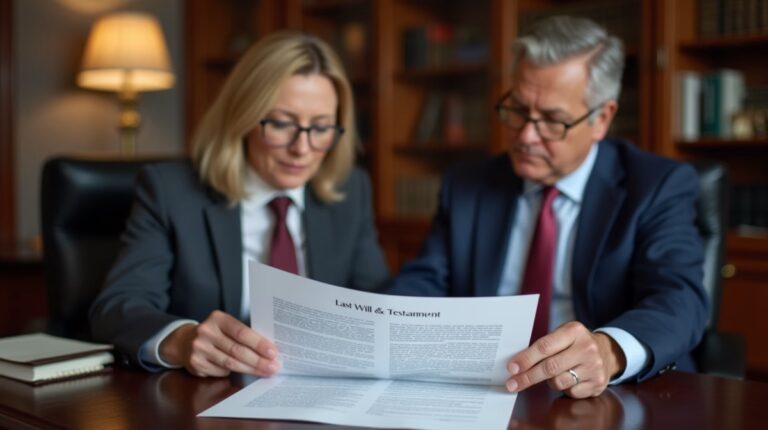
While addressing this specific concern is vital, your entire estate plan relies on the enforceability of your Last Will and Testament.
As a dual-licensed CPA and Attorney, I warn clients that specific asset strategies are useless if the core Will fails to meet probate standards.
To protect your family from unnecessary conflict, you must understand how judges evaluate the enforceability of your Will:
What makes a California will legally enforceable when it matters most?
In California, a last will and testament operates within a probate system that emphasizes intent, clarity, and procedural compliance. When properly drafted, a will does more than distribute property—it creates legally enforceable instructions that guide courts, fiduciaries, and beneficiaries through administration with fewer disputes and less uncertainty.
- Ambiguity: Avoid vague terms that trigger interpretation fights.
- Incapacity: verify legal capacity at signing.
- Errors: check for missing amendments often.
For California residents, understanding how intent, authority, and compliance interact is one of the most effective ways to protect family harmony and estate integrity. A will that anticipates probate scrutiny is far more likely to be honored as written and far less likely to become the source of unnecessary conflict.
Controlling California Statutes on Estate Debts and Creditor Claims
-
Debt Priority:
California Probate Code § 11420
Establishes the mandatory statutory order in which estate debts must be paid before any distributions to beneficiaries. -
Probate Creditor Claims:
California Probate Code §§ 9000–9399
Governs how creditor claims must be formally filed in probate and why informal demands, letters, or invoices are legally ineffective. -
Creditor Lawsuit Deadline:
California Code of Civil Procedure § 366.2
Imposes a strict one-year deadline from the date of death for most creditor lawsuits, which is not tolled by probate proceedings. -
Surviving Spouse Liability:
California Probate Code §§ 13550–13554
Limits a surviving spouse’s personal liability for a decedent’s debts to the value of property received under these statutes. -
Small Estate Threshold:
California Probate Code § 13100
Sets the $208,850 small estate affidavit threshold for deaths occurring on or after April 1, 2025.
|
Attorney Advertising, Legal Disclosure & Authorship
ATTORNEY ADVERTISING.
This content is provided for general informational and educational purposes only and does not constitute legal, financial, or tax advice. Under the California Rules of Professional Conduct and State Bar advertising regulations, this material may be considered attorney advertising. Reading this content does not create an attorney-client relationship or any professional advisory relationship. Laws vary by jurisdiction and are subject to change, including recent 2026 developments under California’s AB 2016 and evolving federal estate and reporting requirements. You should consult a qualified attorney or advisor regarding your specific circumstances before taking action.
Responsible Attorney:
Steven F. Bliss, California Attorney (Bar No. 147856).
Local Office:
Escondido Probate Law720 N Broadway 107 Escondido, CA 92025 (760) 884-4044
Local Office:
Escondido Probate Law3914 Murphy Canyon Rd Escondido, CA 92123 (858) 278-2800
Escondido Probate Law is a practice location and trade name used by Steven F. Bliss, Esq., a California-licensed attorney.
About the Author & Legal Review Process
This article was researched and drafted by the Legal Editorial Team of the Law Firm of Steven F. Bliss, Esq.,
a collective of attorneys, legal writers, and paralegals dedicated to translating complex legal concepts into clear, accurate guidance.
Legal Review:
This content was reviewed and approved by Steven F. Bliss, a California-licensed attorney (Bar No. 147856). Mr. Bliss concentrates his practice in estate planning and estate administration, advising clients on proactive planning strategies and representing fiduciaries in probate and trust administration proceedings when formal court involvement becomes necessary.
With more than 35 years of experience in California estate planning and estate administration,
Mr. Bliss focuses on structuring enforceable estate plans, guiding fiduciaries through court-supervised proceedings, resolving creditor and notice issues, and coordinating asset management to support compliant, timely distributions and reduce fiduciary risk. |