|
Legal & Tax Disclosure
ATTORNEY ADVERTISING.
This article is provided for general informational purposes only and does not constitute legal, financial, or tax advice. Reading this content does not create an attorney-client or professional advisory relationship. Laws vary by jurisdiction and are subject to change. You should consult a qualified professional regarding your specific circumstances. |
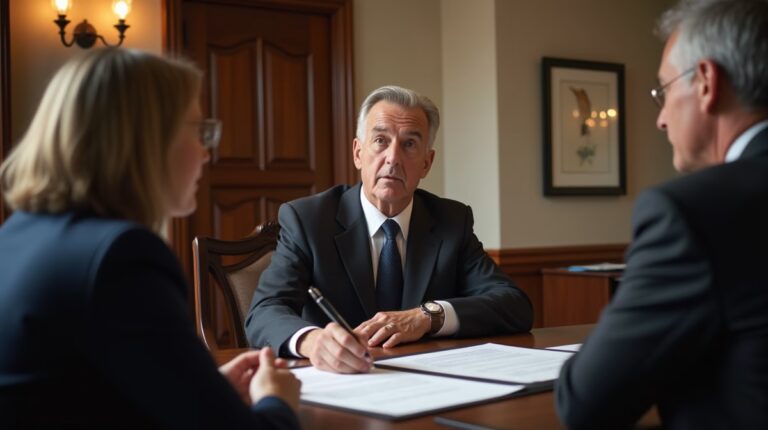
I recently met with Chris, whose mother passed away with a meticulously drafted trust. Or so he thought. Months later, a dispute erupted with his siblings over a vacation home his mother had sold five years before her death, but the trust still listed it as an asset. Chris faced a potential legal battle and unexpected costs – over $20,000 in attorney’s fees – simply because the trust hadn’t been updated to reflect her changed circumstances. This is a common scenario, and it highlights the critical importance of understanding how California law interprets settlor intent, specifically under Probate Code § 21102.
As an estate planning attorney and CPA with over 35 years of experience, I’ve seen firsthand how seemingly minor oversights can create significant problems for families. The trust document itself isn’t a magical shield against disputes. Courts delve into the actual intent of the person creating the trust—the settlor—at the time the trust was established and, crucially, throughout their lifetime.
Probate Code § 21102 establishes a strong presumption in favor of honoring the settlor’s wishes. However, that presumption isn’t absolute. The statute emphasizes that the court will consider the circumstances surrounding the trust’s creation and any subsequent amendments. What does this mean in practice? Ambiguous language, especially regarding deceased beneficiaries or assets no longer owned by the trust, can open the door to litigation.
Take Chris’s case. While the trust clearly intended to distribute his mother’s assets according to her wishes, the outdated reference to the sold vacation home created confusion. His siblings argued that the language implied she still wanted the proceeds directed in a certain way. To resolve this, we had to present evidence of the sale, her financial records, and ultimately, demonstrate her intent at the time she sold the property—that the proceeds were used for other investments.
This is where my CPA background provides a distinct advantage. The step-up in basis afforded by the sale – and the potential capital gains implications – are often key pieces of the puzzle. A clear understanding of the financial transactions surrounding the asset, as documented through tax returns and other records, can powerfully support a settlor’s intent. Simply put, a trust that doesn’t acknowledge the tax consequences of actions taken during the settlor’s life is a red flag.
Another area where Probate Code § 21102 frequently arises is with successor trustees. If a named trustee predeceases the settlor, the court will look to the trust language to determine the appropriate course of action. If the language is vague—for example, simply stating “to my children”—it can lead to disputes over who should serve as trustee. This is why carefully drafting the trust with multiple, well-defined successor trustees is essential.
What happens if a trust isn’t updated when assets are sold?

As Chris’s situation illustrates, failing to update a trust when assets are sold creates ambiguity. While Probate Code § 21102 defers to the settlor’s intent, ambiguous or outdated language regarding deceased successors or sold assets invites litigation that often overrides that original intent. You need to demonstrate what the settlor wanted at the time of the change, not simply what the outdated document says.
Can a court disregard a settlor’s written intent?
Yes, under certain circumstances. If the evidence suggests the settlor’s intent was unclear or that the trust language doesn’t accurately reflect their wishes, a court can modify the trust or even declare portions of it invalid. This is especially true if there’s evidence of undue influence or fraud during the trust’s creation or amendment.
What steps can I take to avoid disputes over settlor intent?
- Regular Reviews: Review your trust document at least every three to five years—or whenever there’s a significant life change (marriage, divorce, birth of a child, sale of a major asset).
- Accurate Asset Listing: Maintain a current list of all assets held within the trust.
- Backup Trustees: Name multiple successor trustees with clear instructions for appointment.
- Document Intent: Keep detailed records of any changes made to your assets or estate plan, including the reasoning behind those changes.
How do California trustee duties and funding rules shape the outcome for beneficiaries?
The advantage of a California trust is control and continuity, but this relies entirely on accurate funding and disciplined administration. Without clear asset titles and strict adherence to fiduciary standards, a private trust can quickly become a subject of public litigation over mismanagement, capacity, or undue influence.
To close a trust administration smoothly, the trustee must complete the steps of trust settlement, ensure no pending beneficiary claims exist, and distribute assets according to the revocable living trust.
California trust planning is most effective when the structure is matched to the specific family goal and assets are fully funded into the trust name. When administration is handled with transparency and adherence to the Probate Code, the trust can fulfill its promise of privacy and efficiency.
Verified Authority on California Trust Pitfalls & Maintenance
-
Trust Funding Verification: California Probate Code § 15200 (Asset Transfer)
The primary statute confirming that a trust requires property to be valid. Use this to verify that your real estate deeds and bank accounts have been correctly retitled to the trust’s name. -
Real Estate Succession (AB 2016): California Probate Code § 13151 (Petition for Succession)
Specific guidance for the 2025/2026 process. It outlines how a primary residence worth $750,000 or less can be transferred via a court-approved Petition rather than a full probate. -
Trustee Duty to Account: California Probate Code § 16062 (Annual Reporting)
Trustees must provide an annual report to beneficiaries. Failure to do so is one of the top triggers for trust litigation in California. -
Digital Legacy (RUFADAA): California Probate Code § 870 (Digital Assets)
The authoritative resource on the Revised Uniform Fiduciary Access to Digital Assets Act. It explains why your trust must explicitly grant access to digital records and cryptocurrency. -
Successor Trustee Appointment: California Probate Code § 15660 (Vacancy in Trustee)
Outlines what happens when a trust lacks a successor. This resource highlights the importance of naming multiple backup fiduciaries to avoid court-appointed public administrators. -
Small Estate Personal Property: California Probate Code § 13100 (Affidavits)
Statutory limits for the $208,850 threshold (effective April 1, 2025). Use this for non-real estate assets like bank accounts and vehicles that were accidentally left out of the trust.
|
Attorney Advertising, Legal Disclosure & Authorship
ATTORNEY ADVERTISING.
This content is provided for general informational and educational purposes only and does not constitute legal, financial, or tax advice. Under the California Rules of Professional Conduct and State Bar advertising regulations, this material may be considered attorney advertising. Reading this content does not create an attorney-client relationship or any professional advisory relationship. Laws vary by jurisdiction and are subject to change, including recent 2026 developments under California’s AB 2016 and evolving federal estate and reporting requirements. You should consult a qualified attorney or advisor regarding your specific circumstances before taking action.
Responsible Attorney:
Steven F. Bliss, California Attorney (Bar No. 147856).
Local Office:
Escondido Probate Law720 N Broadway 107 Escondido, CA 92025 (760) 884-4044
Escondido Probate Law is a practice location and trade name used by Steven F. Bliss, Esq., a California-licensed attorney.
About the Author & Legal Review Process
This article was researched and drafted by the Legal Editorial Team of the Law Firm of Steven F. Bliss, Esq.,
a collective of attorneys, legal writers, and paralegals dedicated to translating complex legal concepts into clear, accurate guidance.
Legal Review:
This content was reviewed and approved by Steven F. Bliss, a California-licensed attorney (Bar No. 147856). Mr. Bliss concentrates his practice in estate planning and estate administration, advising clients on proactive planning strategies and representing fiduciaries in probate and trust administration proceedings when formal court involvement becomes necessary.
With more than 35 years of experience in California estate planning and estate administration,
Mr. Bliss focuses on structuring enforceable estate plans, guiding fiduciaries through court-supervised proceedings, resolving creditor and notice issues, and coordinating asset management to support compliant, timely distributions and reduce fiduciary risk. |