|
Legal & Tax Disclosure
ATTORNEY ADVERTISING.
This article is provided for general informational purposes only and does not constitute legal, financial, or tax advice. Reading this content does not create an attorney-client or professional advisory relationship. Laws vary by jurisdiction and are subject to change. You should consult a qualified professional regarding your specific circumstances. |
Emily just received notice that her mother’s probate case is being challenged. Not because of the will itself, but because of the declaration she signed verifying the document was the original. She’d been so careful, or so she thought, but now faces potential criminal charges and significant legal fees. The cost of a mistake here isn’t just money; it’s her reputation and peace of mind.
As an Estate Planning Attorney and CPA with over 35 years of experience, I’ve seen this happen far too often. People underestimate the seriousness of declarations made under penalty of perjury, particularly in probate filings. It’s not about intentionally lying; it’s about being absolutely certain of the facts you’re attesting to.
What Exactly Does “Under Penalty of Perjury” Mean?
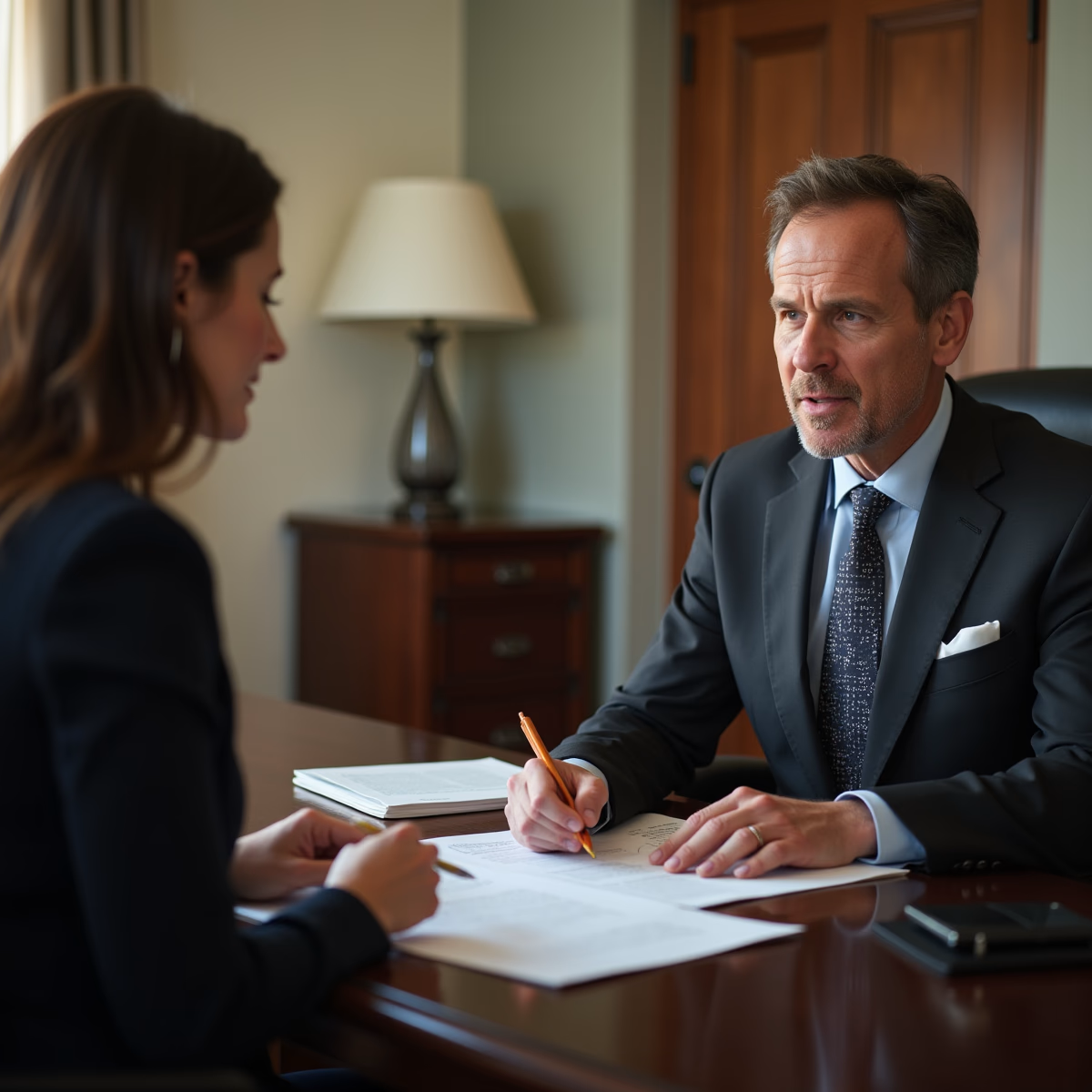
When you sign a document stating “under penalty of perjury,” you are essentially swearing to the truthfulness of its contents as if you were in a courtroom taking an oath. California Penal Code Section 147(1) defines perjury as knowingly making a false statement regarding a material fact, with the intent to deceive. A declaration under penalty of perjury carries the same legal weight as sworn testimony. While most probate filings don’t require a live court appearance, that doesn’t diminish the severity of the declaration.
Why Does This Come Up in Probate So Often?
Several common probate documents require this declaration. The most frequent are declarations verifying the original will, declarations regarding service of notice on heirs, and declarations detailing the assets of the estate. People often assume these are just “forms,” but they’re legally binding statements. A common mistake involves relying on memory when declaring the authenticity of the will. Did you actually see your parent sign it? Can you definitively state it hasn’t been altered? These questions require honest, verifiable answers.
What Happens if You Make a Mistake?
The consequences can be severe. Criminal prosecution for perjury carries potential jail time and fines. Even if criminal charges aren’t filed, a judge can impose sanctions, including monetary penalties and potentially dismissing the probate case, forcing it to be refiled with added expenses and delays. More subtly, a false declaration can create credibility issues, damaging your standing with the court and hindering the overall probate process.
The Original Will and the 30-Day Rule
Probate Code § 8200 mandates that anyone possessing the original Will of a deceased person has a legal duty to file it with the Court Clerk within 30 days of learning of the death. If the original is lost, you must declare that fact and prove its contents with witness testimony. A false statement about the original’s existence or contents – even an honest mistake – is a declaration under penalty of perjury. The danger here is a claimant appearing and producing a different will, one that disinherits beneficiaries you believed were entitled to assets.
What About Photocopies?
You cannot simply submit a photocopy of a Will to the court. If the original is truly lost, Probate Code § 8223 requires a declaration explaining the loss and presenting evidence – typically witness testimony – to establish the Will’s contents. Don’t assume a signed copy is sufficient; the court needs assurance the original hasn’t been tampered with.
How Can I Protect Myself?
-
Review Carefully: Before signing any probate document, read it thoroughly. Don’t rush. If you’re unsure about any statement, seek legal advice.
Verify Information: Don’t rely on assumptions or incomplete memories. Double-check dates, names, and facts against supporting documentation.
Document Everything: Keep copies of all relevant documents, including the original Will (if available), and any correspondence related to the probate process.
Seek Legal Counsel: Consulting with an experienced probate attorney can help you navigate the complexities of the process and ensure your declarations are accurate and legally sound. As a CPA as well, I can also help address issues of valuation and step-up in basis, which can often come into question during probate.
My firm has helped countless families navigate these challenges. The peace of mind knowing you’ve complied with the law, and protected your family’s inheritance, is invaluable. Don’t let a simple mistake turn a difficult time into a legal nightmare.
What failures trigger contested proceedings and court intervention in California probate administration?
California probate is designed to provide court-supervised transfer of property, yet cases often break down when authority is unclear, required steps are missed, or disputes arise over assets, notice, and fiduciary conduct. When the process is misunderstood, families can face avoidable delay, escalating conflict, and increased exposure to creditor issues, hearings, or litigation before the estate can close.
California probate is most manageable when authority is documented early, assets are classified correctly, and procedure is followed consistently from petition through closing. When the process is approached with realistic expectations about notice, claims, accounting, and dispute risk, the estate is more likely to move toward closure without avoidable conflict or delay.
Verified Authority on the Petition for Probate
-
The Petition (Form DE-111): California Probate Code § 8000 (Grounds for Filing)
This is the document that starts it all. Under Section 8000, any interested person may file this petition to request the court admit a will to probate and appoint a personal representative. Without this filing, the court has no jurisdiction to act. -
Duty to File the Will: California Probate Code § 8200 (Custodian Duty)
Holding onto the original Will is a liability. The law requires the custodian to deliver the Will to the Superior Court Clerk within 30 days of the death. Hiding or destroying a Will to prevent probate is a serious legal violation. -
Priority for Appointment: California Probate Code § 8461 (Intestacy Hierarchy)
When there is no Will, the court does not choose the “best” person; it follows a rigid statutory list. The Surviving Spouse has top priority, followed by children, then grandchildren. Understanding this hierarchy helps predict who will win a contested appointment. -
Probate Bond Requirements: California Probate Code § 8482 (Bond Amount)
The bond acts as an insurance policy to protect beneficiaries from a dishonest executor. The petition must state the estimated value of the estate so the judge can set the bond amount—typically the value of personal property plus one year’s estimated income. -
Independent Administration (IAEA): California Probate Code § 10400
The box you check here matters. Requesting “Full Authority” under the IAEA allows the executor to manage the estate efficiently (e.g., selling a house) without constant court hearings. Requesting “Limited Authority” forces the estate into a slower, court-supervised process. -
Proving a Lost Will: California Probate Code § 8223
If the original Will cannot be found, the law presumes the decedent destroyed it with the intent to revoke it. To overcome this presumption, the petitioner must provide clear and convincing evidence that the Will was merely lost, not revoked.
|
Attorney Advertising, Legal Disclosure & Authorship
ATTORNEY ADVERTISING.
This content is provided for general informational and educational purposes only and does not constitute legal, financial, or tax advice. Under the California Rules of Professional Conduct and State Bar advertising regulations, this material may be considered attorney advertising. Reading this content does not create an attorney-client relationship or any professional advisory relationship. Laws vary by jurisdiction and are subject to change, including recent 2026 developments under California’s AB 2016 and evolving federal estate and reporting requirements. You should consult a qualified attorney or advisor regarding your specific circumstances before taking action.
Responsible Attorney:
Steven F. Bliss, California Attorney (Bar No. 147856).
Local Office:
Escondido Probate Law720 N Broadway 107 Escondido, CA 92025 (760) 884-4044
Escondido Probate Law is a practice location and trade name used by Steven F. Bliss, Esq., a California-licensed attorney.
About the Author & Legal Review Process
This article was researched and drafted by the Legal Editorial Team of the Law Firm of Steven F. Bliss, Esq.,
a collective of attorneys, legal writers, and paralegals dedicated to translating complex legal concepts into clear, accurate guidance.
Legal Review:
This content was reviewed and approved by Steven F. Bliss, a California-licensed attorney (Bar No. 147856). Mr. Bliss concentrates his practice in estate planning and estate administration, advising clients on proactive planning strategies and representing fiduciaries in probate and trust administration proceedings when formal court involvement becomes necessary.
With more than 35 years of experience in California estate planning and estate administration,
Mr. Bliss focuses on structuring enforceable estate plans, guiding fiduciaries through court-supervised proceedings, resolving creditor and notice issues, and coordinating asset management to support compliant, timely distributions and reduce fiduciary risk. |