|
Legal & Tax Disclosure
ATTORNEY ADVERTISING.
This article is provided for general informational purposes only and does not constitute legal, financial, or tax advice. Reading this content does not create an attorney-client or professional advisory relationship. Laws vary by jurisdiction and are subject to change. You should consult a qualified professional regarding your specific circumstances. |
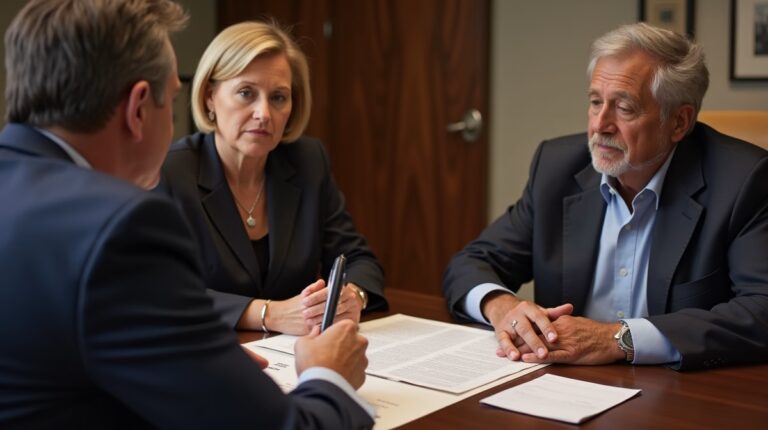
I recently spoke with a client, David, who was frantic. He’d moved to Arizona six years ago, but still maintained his primary care physician here in Escondido. David’s mother had passed away unexpectedly, and his estranged brother was contesting the validity of the codicil to her estate plan, claiming she hadn’t been of sound mind when she signed it. The brother was arguing David shouldn’t inherit anything because his move to Arizona allegedly disrupted his mother’s estate plan. David was facing a potential loss of over $300,000, and the legal battle was already costing him a fortune in attorney’s fees. He assumed simply living in another state would be enough to change his mother’s estate planning assumptions. It wasn’t.
As an Estate Planning Attorney and CPA with over 35 years of experience, I frequently encounter situations like David’s. People assume that a physical relocation automatically changes their domicile, or legal residence, for estate planning and tax purposes. This is a dangerous misconception. While the location of your doctor is one factor, it’s far from the determining one. California’s Franchise Tax Board (FTB) doesn’t operate on a simple “183-day rule.” Spending less than 183 days in California does not automatically terminate residency; the FTB uses the ‘Closest Connection’ test (evaluating 19 factors like your primary doctor and social ties) to determine domicile.
What Does California Consider When Determining Domicile?

The FTB examines a complex web of connections to ascertain your true, fixed, and permanent home. This goes beyond just how much time you spend within the state’s borders. They’ll scrutinize where you’ve established the core aspects of your life. This includes:
- Location of your primary residence: Where do you intend to return, even if you are temporarily elsewhere?
- Driver’s License and Vehicle Registration: Have you updated these to reflect your new state?
- Voter Registration: Where are you registered to vote?
- Bank Accounts: Where are the majority of your financial accounts located?
- Employment: Where do you work?
- Social Ties: Where are your close family and friends?
It’s the totality of these connections that paint a picture of your domicile, and it’s rarely a simple calculation.
Why is Domicile Important for Estate Planning?
Your domicile is crucial for several reasons related to estate planning. It determines which state’s laws govern the distribution of your assets, the validity of your will or trust, and the application of any state estate taxes. In David’s case, his mother’s estate plan was likely drafted assuming California law would apply, and his move to Arizona complicated things significantly.
How Does Domicile Affect Taxes?
Domicile has significant tax implications. California is a high-tax state, and even if you’ve moved, you may still be subject to California income tax on certain types of income. The FTB will use Form 4600 (Residency Questionnaire) to scrutinize your life, including the location of your dentist, the registration of your pets, and where you keep your safe deposit boxes. As a CPA, I understand how these factors impact your tax liability and can help you navigate the complexities. For example, properly documenting a change of domicile can minimize your California tax burden, while neglecting to do so can result in unexpected tax bills and penalties. Understanding the ‘step-up in basis’ of inherited assets is also vital – maintaining a proper California domicile for the beneficiary can maximize the tax benefits.
What About Real Estate and Probate?
The rules for transferring real estate assets upon death can be particularly complex. For deaths on or after April 1, 2025, a primary residence valued up to $750,000 qualifies for a ‘Petition for Succession’ under AB 2016 (Probate Code § 13151). This is a simplified process compared to traditional probate, but it requires a Petition that requires a Judge’s Order, NOT an “Affidavit.” However, you must remember that to qualify, the decedent’s other non-real estate assets (cash, stocks, etc.) must typically remain below the separate $208,850 Small Estate limit. Be aware that the Small Estate Affidavit (strictly for real property <$69,625, used for timeshares/vacant land) is a separate process entirely.
The OBBBA and Federal Estate Tax
It’s also important to be aware of federal estate tax considerations. The 2026 ‘Sunset’ was averted by the One Big Beautiful Bill Act (OBBBA), which permanently increased the Federal Estate Tax Exemption to $15 million per person effective Jan 1, 2026. While this significantly reduces the number of estates subject to federal estate tax, proper planning is still essential to maximize tax efficiency.
Understanding this specific rule is helpful, but it is ultimately the strength of your underlying Will that protects your legacy.
As a dual-licensed CPA and Attorney, I warn clients that specific asset strategies are useless if the core Will fails to meet probate standards.
Below is a guide to the specific standards California judges use to determine if your estate plan is valid:
What does a California probate court look for when interpreting testamentary intent?
In California, a last will and testament is reviewed under probate standards that focus on intent, capacity, and execution. Clear drafting reduces ambiguity, limits misinterpretation, and helps families avoid unnecessary conflict during estate administration.
| Key Element | Why It Matters |
|---|---|
| Clear Wishes | Precise language lowers ambiguity disputes. |
| Formal Validity | Compliance shields the will from technical challenges. |
| Assigned Control | Defined roles reduce conflict. |
For California residents, understanding how intent, authority, and compliance interact is one of the most effective ways to protect family harmony and estate integrity. A will that anticipates probate scrutiny is far more likely to be honored as written and far less likely to become the source of unnecessary conflict.
Controlling Legal Standards for Establishing Domicile and Residency
-
Residency Guidelines: FTB Pub 1031 (Guidelines for Determining Resident Status)
This is the primary resource for the “Closest Connection” test. In 2026, it details how the FTB evaluates 19 factors—including the location of your healthcare providers and social ties—to determine if your presence in the state is “permanent” or merely “transitory.” -
Voter Registration: California Secretary of State – Voter Registration
Updating your voting address is a critical indicator of intent. For the June 2, 2026, Primary Election, the deadline to register online is May 18, 2026. This serves as a public declaration of your primary home. -
Federal Estate Tax: IRS Estate Tax Overview
While domicile determines state tax, this resource outlines federal guidelines. It reflects the 2026 OBBBA update, which permanently set the federal estate tax exemption at $15 million per person ($30 million for couples), indexed for inflation. -
Proof of Residency: California DMV – REAL ID Checklist
Since the federal enforcement deadline passed in 2025, a REAL ID is mandatory for domestic flights. This page lists the specific residency documents (e.g., utility bills, tax returns) that the state accepts as proof of a permanent California address.
|
Attorney Advertising, Legal Disclosure & Authorship
ATTORNEY ADVERTISING.
This content is provided for general informational and educational purposes only and does not constitute legal, financial, or tax advice. Under the California Rules of Professional Conduct and State Bar advertising regulations, this material may be considered attorney advertising. Reading this content does not create an attorney-client relationship or any professional advisory relationship. Laws vary by jurisdiction and are subject to change, including recent 2026 developments under California’s AB 2016 and evolving federal estate and reporting requirements. You should consult a qualified attorney or advisor regarding your specific circumstances before taking action.
Responsible Attorney:
Steven F. Bliss, California Attorney (Bar No. 147856).
Local Office:
Escondido Probate Law720 N Broadway 107 Escondido, CA 92025 (760) 884-4044
Escondido Probate Law is a practice location and trade name used by Steven F. Bliss, Esq., a California-licensed attorney.
About the Author & Legal Review Process
This article was researched and drafted by the Legal Editorial Team of the Law Firm of Steven F. Bliss, Esq.,
a collective of attorneys, legal writers, and paralegals dedicated to translating complex legal concepts into clear, accurate guidance.
Legal Review:
This content was reviewed and approved by Steven F. Bliss, a California-licensed attorney (Bar No. 147856). Mr. Bliss concentrates his practice in estate planning and estate administration, advising clients on proactive planning strategies and representing fiduciaries in probate and trust administration proceedings when formal court involvement becomes necessary.
With more than 35 years of experience in California estate planning and estate administration,
Mr. Bliss focuses on structuring enforceable estate plans, guiding fiduciaries through court-supervised proceedings, resolving creditor and notice issues, and coordinating asset management to support compliant, timely distributions and reduce fiduciary risk. |