|
Legal & Tax Disclosure
ATTORNEY ADVERTISING.
This article is provided for general informational purposes only and does not constitute legal, financial, or tax advice. Reading this content does not create an attorney-client or professional advisory relationship. Laws vary by jurisdiction and are subject to change. You should consult a qualified professional regarding your specific circumstances. |
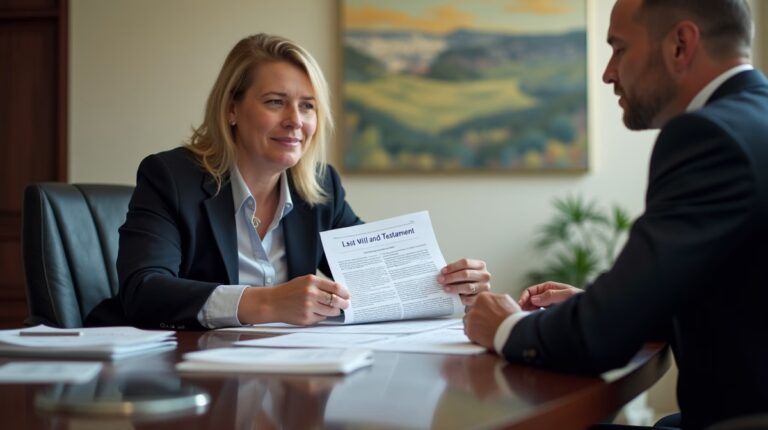
I recently spoke with Emily, a client frantic because her husband, David, passed away without a valid codicil to his trust. He’d attempted to make changes – scribbled notes on the original document, a draft witnessed improperly – but none of it held up. The cost? A protracted, expensive probate battle, and Emily’s family fighting amongst themselves. It’s a heartbreaking scenario, and one I see far too often when clients delay updating essential estate planning documents.
Why Does Domicile Matter for Estate Planning?

Establishing and maintaining clear domicile is foundational to a smooth estate administration. California, with its unique probate rules and potential for high asset values, requires meticulous attention to detail. Many people assume simply spending less than 183 days in California terminates residency, but that’s a dangerous misconception. The Franchise Tax Board (FTB) utilizes the “Closest Connection” test – evaluating up to 19 factors like your primary doctor, club memberships, and even where you keep your safe deposit boxes – to determine your true domicile.
What Documents Prove California Residency?
It’s not about a single document, but a pattern of consistent actions. Here’s what we advise clients to review and update, particularly if they’ve spent significant time outside the state or have dual residences:
- Driver’s License/Identification Card: This is the most immediate indicator. Ensure it reflects your current Escondido address.
- Vehicle Registration: Keep your vehicle registration current with your California address.
- Voter Registration: Register to vote in California and participate in elections.
- Federal & State Tax Returns: Your tax returns should consistently show your Escondido address as your primary residence.
- Bank & Financial Account Statements: Update addresses on all banking and investment accounts.
- Insurance Policies (Health, Auto, Home): Ensure policies reflect your Escondido address.
- Healthcare Directives & Powers of Attorney: These documents should clearly state your California address.
- Trust Documents & Will: Your estate planning documents must accurately reflect your current domicile. This is where outdated information can cause significant problems.
How a CPA Can Help with Domicile & Estate Tax Planning
As both an Estate Planning Attorney and a CPA with over 35 years of experience, I can tell you that the tax implications of domicile are significant. A proper understanding of step-up in basis – the adjustment to the cost basis of inherited assets – is crucial. This is particularly true for real estate. For deaths on or after April 1, 2025, the rules regarding real estate are changing dramatically with the implementation of AB 2016. A primary residence valued up to $750,000 now qualifies for a Petition for Succession under Probate Code § 13151. This is a Petition requiring a Judge’s Order, not a simple affidavit like the Small Estate Affidavit (for property under $69,625). However, remember that to qualify, the decedent’s other non-real estate assets must typically remain below the separate $208,850 limit. My CPA expertise ensures we maximize these benefits and minimize potential capital gains taxes.
What About Snowbirds and Part-Time Residents?
Many of my clients are “snowbirds” who split their time between California and another state. This creates complexities. The FTB won’t simply accept a claim of less than 183 days in California. Auditors will use Form 4600 (Residency Questionnaire) to scrutinize your life – the location of your dentist, the registration of your pets, and where you keep your safe deposit boxes. It’s vital to proactively document your California connections. Furthermore, the One Big Beautiful Bill Act (OBBBA) permanently increased the Federal Estate Tax Exemption to $15 million per person effective Jan 1, 2026, providing significant relief to many estates.
Protecting Your Legacy: Updating Your Documents
Don’t let Emily’s story be yours. Regularly reviewing and updating your estate planning documents—especially your domicile information—is a critical step in protecting your assets and ensuring your wishes are honored. Ignoring this can lead to unnecessary legal battles, increased taxes, and profound emotional distress for your loved ones. Even if you believe everything is in order, a periodic review is a wise investment.
Solving the immediate legal issue is only the first step; ensuring your foundational documents hold up in court is the next.
In my 32 years of practice in Riverside County, I have seen many estate plans fail not because of specific asset errors, but because the underlying Will was ambiguous.
Below is a guide to the specific standards California judges use to determine if your estate plan is valid:
What standards do California judges use to determine a will’s true meaning?
In California, a last will and testament operates within a probate system that emphasizes intent, clarity, and procedural compliance. When properly drafted, a will does more than distribute property—it creates legally enforceable instructions that guide courts, fiduciaries, and beneficiaries through administration with fewer disputes and less uncertainty.
To distribute property effectively, you must define estate assets, clarify who inherits, and understand how debts and taxes impact the final distribution.
For California residents, understanding how intent, authority, and compliance interact is one of the most effective ways to protect family harmony and estate integrity. A will that anticipates probate scrutiny is far more likely to be honored as written and far less likely to become the source of unnecessary conflict.
Controlling Legal Standards for Establishing Domicile and Residency
-
Residency Guidelines: FTB Pub 1031 (Guidelines for Determining Resident Status)
This is the primary resource for the “Closest Connection” test. In 2026, it details how the FTB evaluates 19 factors—including the location of your healthcare providers and social ties—to determine if your presence in the state is “permanent” or merely “transitory.” -
Voter Registration: California Secretary of State – Voter Registration
Updating your voting address is a critical indicator of intent. For the June 2, 2026, Primary Election, the deadline to register online is May 18, 2026. This serves as a public declaration of your primary home. -
Federal Estate Tax: IRS Estate Tax Overview
While domicile determines state tax, this resource outlines federal guidelines. It reflects the 2026 OBBBA update, which permanently set the federal estate tax exemption at $15 million per person ($30 million for couples), indexed for inflation. -
Proof of Residency: California DMV – REAL ID Checklist
Since the federal enforcement deadline passed in 2025, a REAL ID is mandatory for domestic flights. This page lists the specific residency documents (e.g., utility bills, tax returns) that the state accepts as proof of a permanent California address.
|
Attorney Advertising, Legal Disclosure & Authorship
ATTORNEY ADVERTISING.
This content is provided for general informational and educational purposes only and does not constitute legal, financial, or tax advice. Under the California Rules of Professional Conduct and State Bar advertising regulations, this material may be considered attorney advertising. Reading this content does not create an attorney-client relationship or any professional advisory relationship. Laws vary by jurisdiction and are subject to change, including recent 2026 developments under California’s AB 2016 and evolving federal estate and reporting requirements. You should consult a qualified attorney or advisor regarding your specific circumstances before taking action.
Responsible Attorney:
Steven F. Bliss, California Attorney (Bar No. 147856).
Local Office:
Escondido Probate Law720 N Broadway 107 Escondido, CA 92025 (760) 884-4044
Escondido Probate Law is a practice location and trade name used by Steven F. Bliss, Esq., a California-licensed attorney.
About the Author & Legal Review Process
This article was researched and drafted by the Legal Editorial Team of the Law Firm of Steven F. Bliss, Esq.,
a collective of attorneys, legal writers, and paralegals dedicated to translating complex legal concepts into clear, accurate guidance.
Legal Review:
This content was reviewed and approved by Steven F. Bliss, a California-licensed attorney (Bar No. 147856). Mr. Bliss concentrates his practice in estate planning and estate administration, advising clients on proactive planning strategies and representing fiduciaries in probate and trust administration proceedings when formal court involvement becomes necessary.
With more than 35 years of experience in California estate planning and estate administration,
Mr. Bliss focuses on structuring enforceable estate plans, guiding fiduciaries through court-supervised proceedings, resolving creditor and notice issues, and coordinating asset management to support compliant, timely distributions and reduce fiduciary risk. |