|
Legal & Tax Disclosure
ATTORNEY ADVERTISING.
This article is provided for general informational purposes only and does not constitute legal, financial, or tax advice. Reading this content does not create an attorney-client or professional advisory relationship. Laws vary by jurisdiction and are subject to change. You should consult a qualified professional regarding your specific circumstances. |
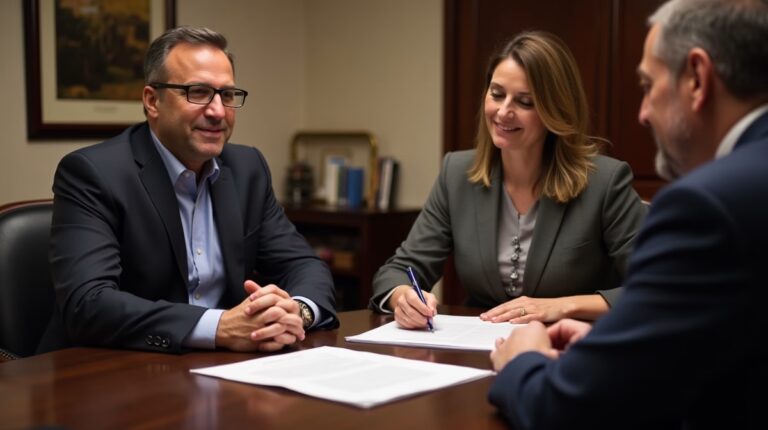
I recently had a client, Dale, come to me absolutely distraught. He’d created an irrevocable trust years ago, and life had changed dramatically. His daughter, whom he originally named as sole beneficiary, was now facing serious financial difficulties, and he wanted to redirect assets to protect them from her creditors. Unfortunately, the trust instrument didn’t allow for amendment. He’d heard about “trust protectors” and wanted to know if he could simply add one to his existing trust to grant someone the power to make these changes. The problem, and it’s a common one, is that an irrevocable trust is, well, irrevocable. But that doesn’t always mean it’s completely inflexible.
The ability to add a trust protector to an existing irrevocable trust depends heavily on the trust’s specific language and California law. It’s not as simple as pulling out a pen and adding a name to the document. If the trust already contains a broad power of appointment granted to the grantor (Dale, in this case), it might be possible to exercise that power to benefit another beneficiary or even create a new trust. However, this is a very nuanced area, and triggering that power improperly can have unintended tax consequences, particularly impacting the step-up in basis. As a CPA as well as an attorney with over 35 years of experience, I always look at these changes through both a legal and tax lens.
More frequently, achieving this flexibility requires a more complex strategy. We need to determine if the trust’s terms allow for any modifications, even limited ones. Under Probate Code § 15403, an irrevocable trust can be modified if all beneficiaries consent, provided the change doesn’t defeat a ‘material purpose’ of the trust. This can be a viable option if all beneficiaries are agreeable and the desired changes aren’t too substantial. However, getting unanimous consent isn’t always realistic.
What if all beneficiaries don’t agree to the changes?

If unanimous consent is unavailable, Decanting offers a powerful solution. Alternatively, under the California Uniform Trust Decanting Act (Probate Code § 19501), a trustee with expanded discretion may ‘pour’ assets from an old restrictive trust into a new, modern trust without court approval, often used to fix tax errors or update beneficiary terms. Decanting essentially creates a new trust with updated terms while avoiding the complexities and costs of a full trust reformation. This is especially useful when addressing unforeseen circumstances like creditor issues or changes in tax law. However, the original trust must have discretion built in that allows for the trustee to take this action.
What about Medi-Cal planning with irrevocable trusts?
Adding a trust protector to an existing trust can be particularly sensitive when the trust is intended for Medi-Cal asset protection. Effective Jan 1, 2026, California fully reinstated the asset test ($130,000 for individuals) and the 30-month look-back period; transferring assets into an irrevocable trust now triggers this penalty period, delaying eligibility for nursing home coverage. Any modifications made to the trust, including the addition of a trust protector with expansive powers, could be scrutinized as a constructive transfer, potentially jeopardizing eligibility. Careful planning and documentation are essential.
How can a trust protector help even after creation?
Even if a trust protector can’t be added retroactively, establishing a mechanism for a trust protector in future trusts is incredibly valuable. A trust protector can oversee the trust administration, remove and replace trustees, modify administrative provisions, and even address changes in tax law or beneficiary circumstances. To shield assets from a beneficiary’s creditors (including divorce settlements), the trust must include a valid Spendthrift Clause under Probate Code § 15300, which legally prevents creditors from attaching the assets before they are distributed. This is something we routinely include in the trusts we draft.
For Dale, we ultimately pursued a decanting strategy, creating a new trust that allowed for greater flexibility in managing assets for his daughter’s benefit while carefully considering the potential tax implications. It wasn’t a simple fix, but it allowed him to achieve his goals and protect his family’s future. The key is proactive planning and understanding the intricacies of California trust law.
What failures trigger court intervention and contests in California trust administration?
The advantage of a California trust is control and continuity, but this relies entirely on accurate funding and disciplined administration. Without clear asset titles and strict adherence to fiduciary standards, a private trust can quickly become a subject of public litigation over mismanagement, capacity, or undue influence.
To manage complex legacy goals, you can secure privacy for public figures with blind trusts, or preserve wealth across multiple generations by establishing a multi-generational trust that resists dilution over time.
Ultimately, the success of a trust depends on the details—proper funding, clear terms, and a trustee willing to follow the rules. By anticipating friction points and documenting every step of the administration, fiduciaries can protect the estate and themselves from liability.
Verified Authority on Irrevocable Trust Administration
-
Trust Decanting (Probate Code § 19501): California Uniform Trust Decanting Act
The modern statute allowing a trustee to “fix” a broken irrevocable trust. It permits moving assets into a new trust with better administrative terms or tax provisions without going to court. -
Medi-Cal Look-Back (2026 Rules): California DHCS Medi-Cal Asset Limits
Official guidance on the reinstated 30-month look-back period and the new asset limit of $130,000 (individual) effective January 1, 2026. Critical for anyone using an irrevocable trust for long-term care planning. -
Spendthrift Protection (Probate Code § 15300): California Probate Code § 15300
The legal shield that makes an irrevocable trust “irrevocable.” This statute validates clauses that prevent creditors, lawsuits, and ex-spouses from attaching trust assets before they reach the beneficiary. -
Estate Tax Exemption (OBBBA): IRS Estate Tax Guidelines
Reflects the OBBBA permanent increase to a $15 million per person exemption (effective Jan 1, 2026). This high threshold shifts the focus of most irrevocable trusts from tax savings to asset protection. -
Missed Asset Recovery (AB 2016): California Probate Code § 13151 (Petition for Succession)
If an asset was intended for the trust but legally left out, this statute (effective April 1, 2025) allows for a “Petition for Succession” for assets up to $750,000, bypassing full probate. -
Digital Asset Access (RUFADAA): California Probate Code § 870 (RUFADAA)
Mandatory for irrevocable trusts holding crypto or digital rights. Without specific RUFADAA language, a trustee may be legally blocked from accessing or managing these modern assets.
|
Attorney Advertising, Legal Disclosure & Authorship
ATTORNEY ADVERTISING.
This content is provided for general informational and educational purposes only and does not constitute legal, financial, or tax advice. Under the California Rules of Professional Conduct and State Bar advertising regulations, this material may be considered attorney advertising. Reading this content does not create an attorney-client relationship or any professional advisory relationship. Laws vary by jurisdiction and are subject to change, including recent 2026 developments under California’s AB 2016 and evolving federal estate and reporting requirements. You should consult a qualified attorney or advisor regarding your specific circumstances before taking action.
Responsible Attorney:
Steven F. Bliss, California Attorney (Bar No. 147856).
Local Office:
Escondido Probate Law720 N Broadway 107 Escondido, CA 92025 (760) 884-4044
Escondido Probate Law is a practice location and trade name used by Steven F. Bliss, Esq., a California-licensed attorney.
About the Author & Legal Review Process
This article was researched and drafted by the Legal Editorial Team of the Law Firm of Steven F. Bliss, Esq.,
a collective of attorneys, legal writers, and paralegals dedicated to translating complex legal concepts into clear, accurate guidance.
Legal Review:
This content was reviewed and approved by Steven F. Bliss, a California-licensed attorney (Bar No. 147856). Mr. Bliss concentrates his practice in estate planning and estate administration, advising clients on proactive planning strategies and representing fiduciaries in probate and trust administration proceedings when formal court involvement becomes necessary.
With more than 35 years of experience in California estate planning and estate administration,
Mr. Bliss focuses on structuring enforceable estate plans, guiding fiduciaries through court-supervised proceedings, resolving creditor and notice issues, and coordinating asset management to support compliant, timely distributions and reduce fiduciary risk. |