|
Legal & Tax Disclosure
ATTORNEY ADVERTISING.
This article is provided for general informational purposes only and does not constitute legal, financial, or tax advice. Reading this content does not create an attorney-client or professional advisory relationship. Laws vary by jurisdiction and are subject to change. You should consult a qualified professional regarding your specific circumstances. |
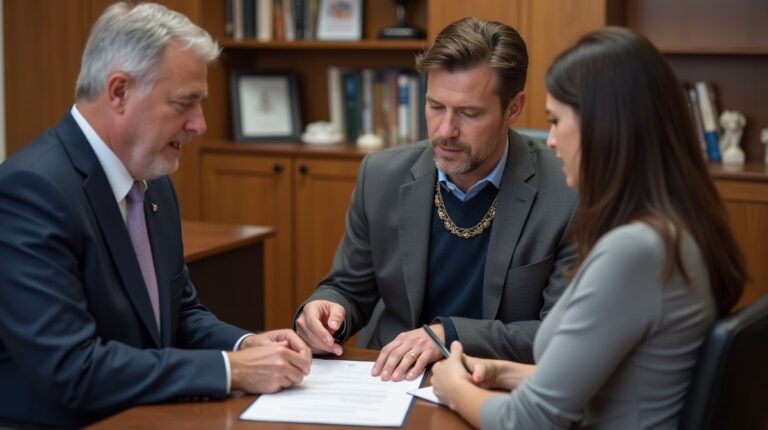
I recently had a client, Emily, call me in tears. Her father had just passed, leaving the vast majority of his estate – a successful landscaping business and substantial real estate – to a new “friend” he’d met only six months prior. Emily described a man who’d essentially moved into her father’s home in the last few weeks of his life, isolating him from family and making all his decisions. The Will was drafted quickly, bypassing Emily and her siblings, and it felt…wrong. Unfortunately, Emily discovered a hastily-added codicil, witnessed by the “friend” and a neighbor who admitted under questioning they hadn’t actually seen her father sign it. Losing that inheritance was devastating, but the legal fees to fight it – easily exceeding $50,000 – felt like a second blow.
Undue influence is a legal challenge to a Will (or Trust) arguing that the testator’s (the person making the Will) wishes weren’t their own, but rather the product of another’s coercion. It’s more than just persuasion; it’s a deprivation of free will. It’s a fact-intensive inquiry, and often requires substantial evidence to prove. As an Estate Planning Attorney and CPA with over 35 years of experience, I’ve seen many instances where a seemingly valid Will masks a deeply problematic situation. My CPA background is crucial here; understanding the economic realities of a sudden shift in estate distribution is often the first clue.
How is Undue Influence Different from Simple Persuasion?
A testator is allowed to make gifts, even unequal ones, to whomever they choose. A friendly suggestion or even strong encouragement isn’t enough to invalidate a Will. Undue influence, however, exists when a person substitutes their will for the testator’s. The key factors courts consider include:
- Confidential Relationship: Was there a pre-existing relationship of trust and confidence between the testator and the alleged influencer? This could be a caretaker, attorney, family member, or close friend.
- Weakened Condition of the Testator: Was the testator susceptible to influence due to age, illness, isolation, or medication?
- Active Procurements of the Influence: Did the influencer actively seek to control the testator, isolating them from others or controlling access to information?
- Unnatural Disposition: Does the Will deviate significantly from the testator’s prior intentions or from what would be expected given their relationships and assets?
What Evidence is Needed to Prove Undue Influence?
Proving undue influence is rarely easy. Direct evidence – like an admission of coercion – is uncommon. Instead, courts rely on circumstantial evidence. This includes:
- Testimony from family and friends: Witnesses who can attest to the testator’s prior intentions and the influencer’s behavior.
- Medical records: Documentation of the testator’s physical or mental condition.
- Financial records: Evidence of unusual transactions or transfers of funds to the influencer.
- The Will itself: A Will drafted entirely by the influencer, or with minimal input from the testator, raises red flags.
California Probate Code § 6112 is particularly relevant here; an ‘interested witness’ (a beneficiary) triggers a legal presumption of duress or fraud. Unless there are two other disinterested witnesses, the beneficiary may lose their gift, taking only what they would have received under intestacy rules.
What if There are Mistakes in the Execution of the Will?
Even if undue influence isn’t proven, errors in the execution of the Will can invalidate it. California law requires specific formalities: the testator must sign the Will in the presence of two disinterested witnesses who also sign in the testator’s presence. Probate Code § 6110(c)(2) states that the court may validate a signature-defective Will if there is ‘clear and convincing evidence’ of the testator’s intent; however, this requires a costly court petition and is not a guaranteed safety net. A missing signature, improperly dated Will, or witnesses who don’t recall signing it are all grounds for challenge.
How Does a Self-Proving Affidavit Help?
A properly executed Probate Code § 8220 self-proving affidavit can streamline the probate process by eliminating the need to locate and testify the witnesses. However, it doesn’t eliminate the risk of a challenge based on undue influence or improper execution. It simply makes it easier to establish the validity of the Will if no issues arise.
What About Digital Assets and Online Accounts?
As more of our lives exist online, the question of access to digital assets – email, social media, cryptocurrency – becomes increasingly important. RUFADAA 2.0 (SB 1458), effective 2025, California law (CPC § 871) was expanded to grant fiduciaries power over digital accounts; however, you must still grant explicit RUFADAA powers in your Will or Trust to bypass federal privacy blocks. Otherwise, your executor may be unable to access these crucial assets.
What Happens if the Will is Invalidated?
If a Will is invalidated, the deceased’s assets are distributed according to California’s intestate succession laws – meaning the estate passes to heirs as defined by the state, regardless of any unfulfilled wishes. However, if a Will is invalidated, assets fall under intestacy; however, for deaths on or after April 1, 2025, estates with personal property under $208,850 (per CPC § 13100) may still bypass full probate via affidavit. This can lead to unintended consequences and family disputes.
Understanding this specific rule is helpful, but it is ultimately the strength of your underlying Will that protects your legacy.
Too often, families resolve one specific issue but leave their broader estate vulnerable to litigation due to poor Will drafting.
Below is a guide to the specific standards California judges use to determine if your estate plan is valid:
What does a California probate court look for when interpreting testamentary intent?

In California, a last will and testament operates within a probate system that emphasizes intent, clarity, and procedural compliance. When properly drafted, a will does more than distribute property—it creates legally enforceable instructions that guide courts, fiduciaries, and beneficiaries through administration with fewer disputes and less uncertainty.
| Core Focus | Why It Matters |
|---|---|
| Clear Wishes | Precise language lowers ambiguity disputes. |
| Compliance | Proper execution strengthens enforceability. |
| Assigned Control | Proper designation prevents power struggles. |
For California residents, understanding how intent, authority, and compliance interact is one of the most effective ways to protect family harmony and estate integrity. A will that anticipates probate scrutiny is far more likely to be honored as written and far less likely to become the source of unnecessary conflict.
Resources for Legal Standards & Probate Procedure
-
Escondido Local Rules: San Diego Superior Court – Probate Division
Access the essential “Local Rules” (Division IV) effective January 1, 2026. This includes mandatory e-filing procedures, current Probate Examiner notes, and Local Rule 4.4.5 regarding remote appearance requirements (via MS Teams) for non-evidentiary hearings. -
Attorney Verification: State Bar of California
The official regulatory body for California attorneys. Use this to verify a lawyer’s “Certified Specialist” status in Estate Planning or to access 2026 guidelines on the ethical handling of Client Trust Accounts (IOLTA). -
Self-Help & Forms: California Courts – Wills, Estates, and Probate
The Judicial Council’s official portal. It includes the updated 2026 forms for the $208,850 personal property threshold and the $750,000 “Primary Residence” simplified transfer procedure (AB 2016). -
Federal Estate Tax: IRS Estate Tax Guidelines
The authoritative federal resource for estate and gift tax filing. It reflects the 2026 “OBBBA” permanent exemption of $15 million per individual, replacing the previously scheduled Tax Cuts and Jobs Act (TCJA) sunset.
|
Attorney Advertising, Legal Disclosure & Authorship
ATTORNEY ADVERTISING.
This content is provided for general informational and educational purposes only and does not constitute legal, financial, or tax advice. Under the California Rules of Professional Conduct and State Bar advertising regulations, this material may be considered attorney advertising. Reading this content does not create an attorney-client relationship or any professional advisory relationship. Laws vary by jurisdiction and are subject to change, including recent 2026 developments under California’s AB 2016 and evolving federal estate and reporting requirements. You should consult a qualified attorney or advisor regarding your specific circumstances before taking action.
Responsible Attorney:
Steven F. Bliss, California Attorney (Bar No. 147856).
Local Office:
Escondido Probate Law720 N Broadway 107 Escondido, CA 92025 (760) 884-4044
Escondido Probate Law is a practice location and trade name used by Steven F. Bliss, Esq., a California-licensed attorney.
About the Author & Legal Review Process
This article was researched and drafted by the Legal Editorial Team of the Law Firm of Steven F. Bliss, Esq.,
a collective of attorneys, legal writers, and paralegals dedicated to translating complex legal concepts into clear, accurate guidance.
Legal Review:
This content was reviewed and approved by Steven F. Bliss, a California-licensed attorney (Bar No. 147856). Mr. Bliss concentrates his practice in estate planning and estate administration, advising clients on proactive planning strategies and representing fiduciaries in probate and trust administration proceedings when formal court involvement becomes necessary.
With more than 35 years of experience in California estate planning and estate administration,
Mr. Bliss focuses on structuring enforceable estate plans, guiding fiduciaries through court-supervised proceedings, resolving creditor and notice issues, and coordinating asset management to support compliant, timely distributions and reduce fiduciary risk. |