|
Legal & Tax Disclosure
ATTORNEY ADVERTISING.
This article is provided for general informational purposes only and does not constitute legal, financial, or tax advice. Reading this content does not create an attorney-client or professional advisory relationship. Laws vary by jurisdiction and are subject to change. You should consult a qualified professional regarding your specific circumstances. |
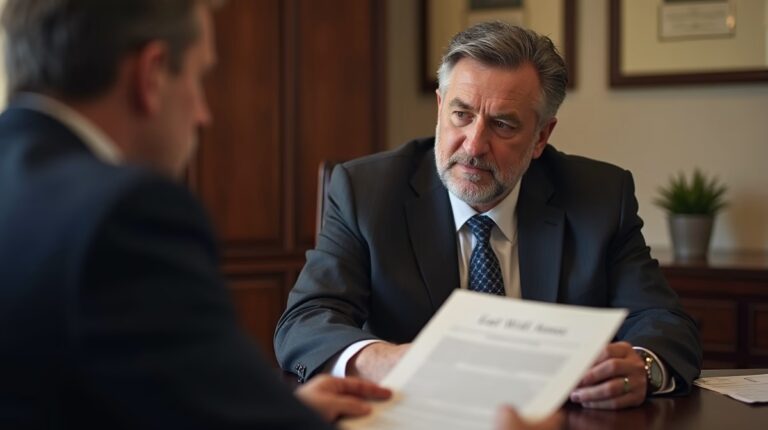
I recently had a client, Dax, whose mother passed away leaving a fairly straightforward estate. He’d diligently prepared all the probate documents, meticulously followed the court’s instructions, and felt confident heading into the first hearing. But the judge didn’t approve the petition. Confused and frustrated, Dax asked what happened. The Probate Examiner had issued a report stating the petition was “Recommended for Approval,” yet the judge still needed more information. Dax had lost valuable time and incurred unnecessary legal fees simply because he didn’t understand what that phrase actually means.
As an estate planning attorney and CPA with over 35 years of experience here in Escondido, I’ve seen this happen countless times. Clients misinterpret this status, assuming it’s a green light, when it’s really just the first step in a multi-layered process. Let me explain.
What Does “Recommended for Approval” Actually Signify?
“Recommended for Approval” is a designation given by the Probate Examiner – a court employee whose job is to review initial probate filings for basic completeness and compliance with the law. Think of them as a first-level filter. They aren’t deciding the case; they’re simply checking for obvious errors or omissions. If your petition passes this initial review, the Examiner will submit a report to the judge with that recommendation.
However, a “Recommended for Approval” status doesn’t guarantee your petition will be approved. The judge still makes the final decision, and they will do so based on all the evidence presented, potential objections, and the overall merits of the case.
The Examiner’s review is largely clerical. They’re looking to see if you’ve included the necessary forms, if they’re properly signed, and if the basic information appears consistent. They are not conducting a full legal analysis or investigating the facts of the estate. A recommendation doesn’t mean your petition is legally sound; it just means it’s technically complete enough to proceed.
Why Does the Judge Still Need to Review?
The judge’s review is far more comprehensive. They must ensure that the petition complies with all applicable probate laws, that proper notice was given to all interested parties (Probate Code § 1220 – if you missed a hearing because you weren’t told about it, the order may be void. The petitioner has a strict duty to mail the Notice of Hearing (Form DE-120) to all interested persons at least 15 days prior. A ‘Proof of Service’ missing from the file will stop the hearing immediately.), and that the proposed actions are fair and equitable to all heirs and beneficiaries.
- Objections: Even with a “Recommended for Approval,” another party can file an objection, forcing the judge to consider opposing viewpoints.
- Evidence: The judge needs to evaluate any evidence supporting the petition, such as a will, trust documents, or appraisals of assets. (Probate Code § 1022 – standard probate hearings are generally not ‘live witness’ events. An affidavit or verified petition is received as evidence. If you want to put a witness on the stand to testify, the judge will typically continue the matter to a set ‘Evidentiary Hearing’ or trial date.)
- Clarity and Ambiguity: If the petition is unclear or ambiguous, the judge will likely request further clarification.
What About Those “Probate Notes” the Judge Keeps Asking About?
This is where things often get delayed. Most hearing delays are caused by uncleared ‘Probate Notes.’ You cannot simply explain the issue to the judge in court; you MUST file a verified ‘Supplement to Petition’ in writing at least 2-3 court days before the hearing to satisfy the Probate Examiner. These notes are questions or concerns raised by the Examiner that need to be addressed in writing before the hearing. They can range from minor discrepancies in dates to requests for additional documentation. Ignoring these notes is a surefire way to have your petition continued.
What Can I Do to Ensure Approval?
- Thorough Preparation: Carefully review all the court instructions and ensure you’ve completed every form accurately and completely.
- Address Probate Notes Immediately: Don’t delay in responding to any notes from the Examiner.
- Anticipate Potential Issues: Consider any potential objections or questions the judge might have and address them proactively in your petition.
- Prepare a Proposed Order: (California Rule of Court 3.1312 – the judge generally does not write the order for you. The prevailing party is responsible for preparing the ‘Proposed Order’ and lodging it with the court before the hearing. If the judge grants your petition but there is no Order in the file to sign, you leave with nothing.) Having a draft order ready to submit can significantly expedite the process.
As a CPA as well as an attorney, I bring a unique perspective to probate matters. I understand the tax implications of estate administration, particularly the crucial concept of step-up in basis and its impact on capital gains. This knowledge allows me to structure petitions in a way that minimizes tax liabilities for my clients.
Finally, remember that probate law can be complex. Don’t hesitate to seek legal counsel if you’re unsure about any aspect of the process. Especially if you face an objection (Probate Code § 1043 – you do not need to file a lawyer-written brief to stop a petition at the first hearing. You can appear and object orally. The court must then pause and give you a continuance (usually 30 days) to file your written objection.) or need to appear remotely (Code of Civil Procedure § 367.75 – while the ’emergency’ rules have evolved, California law now permanently allows for remote appearances in probate hearings, provided you give notice. However, the judge retains discretion to require specific personal appearances for evidentiary hearings or trials.).
What determines whether a California probate estate closes smoothly or turns into litigation?

The path through California probate is rarely a straight line; it requires precise adherence to statutory deadlines, accurate asset characterization, and strict fiduciary compliance. Without a clear roadmap, what begins as a standard administrative proceeding can quickly dissolve into a costly battle over interpretation, valuation, and beneficiary rights.
- Options: Explore alternatives to probate.
- Nuance: Check specific considerations.
- Daily Tasks: Manage administering a probate estate.
California probate is most manageable when authority is documented early, assets are classified correctly, and procedure is followed consistently from petition through closing. When the process is approached with realistic expectations about notice, claims, accounting, and dispute risk, the estate is more likely to move toward closure without avoidable conflict or delay.
Verified Authority on California Probate Hearings
-
Oral Objections (The “Stop” Button): California Probate Code § 1043
This is the most important statute for beneficiaries. It grants an interested person the right to appear at the hearing and object orally to the petition. Once an oral objection is made, the court generally must continue the hearing to allow time for written objections to be filed. -
Remote Appearances (Zoom/CourtCall): California Code of Civil Procedure § 367.75
Modern probate hearings are often hybrid. This code section governs the right to appear remotely. While convenient, note that the court can typically require a physical appearance for “evidentiary” hearings where witness credibility is being judged. -
Affidavits as Evidence: California Probate Code § 1022
Unlike criminal court, probate hearings rely heavily on paper. A verified petition or an affidavit is admissible as evidence in an uncontested probate hearing. This is why “clearing your notes” in writing is more important than your oral argument. -
Notice of Hearing Requirements: California Probate Code § 1220
The court’s jurisdiction depends on this. The petitioner must mail notice of the hearing at least 15 days in advance to all interested parties. If the “Proof of Service” is not filed or is defective, the judge cannot legally hold the hearing. -
Lodging the Proposed Order: California Rules of Court 3.1312
A common rookie mistake is showing up without the paperwork. The “Proposed Order” (the document the judge signs) should generally be lodged with the court before the hearing. If the judge approves your petition but has nothing to sign, your Letters cannot be issued. -
Proving the Will (Witnesses): California Probate Code § 8220
If a Will is contested, or if it is not “self-proving” (lacking a proper attestation clause), the court may require the testimony of a subscribing witness at the hearing to prove the Will is authentic.
|
Attorney Advertising, Legal Disclosure & Authorship
ATTORNEY ADVERTISING.
This content is provided for general informational and educational purposes only and does not constitute legal, financial, or tax advice. Under the California Rules of Professional Conduct and State Bar advertising regulations, this material may be considered attorney advertising. Reading this content does not create an attorney-client relationship or any professional advisory relationship. Laws vary by jurisdiction and are subject to change, including recent 2026 developments under California’s AB 2016 and evolving federal estate and reporting requirements. You should consult a qualified attorney or advisor regarding your specific circumstances before taking action.
Responsible Attorney:
Steven F. Bliss, California Attorney (Bar No. 147856).
Local Office:
Escondido Probate Law720 N Broadway 107 Escondido, CA 92025 (760) 884-4044
Escondido Probate Law is a practice location and trade name used by Steven F. Bliss, Esq., a California-licensed attorney.
About the Author & Legal Review Process
This article was researched and drafted by the Legal Editorial Team of the Law Firm of Steven F. Bliss, Esq.,
a collective of attorneys, legal writers, and paralegals dedicated to translating complex legal concepts into clear, accurate guidance.
Legal Review:
This content was reviewed and approved by Steven F. Bliss, a California-licensed attorney (Bar No. 147856). Mr. Bliss concentrates his practice in estate planning and estate administration, advising clients on proactive planning strategies and representing fiduciaries in probate and trust administration proceedings when formal court involvement becomes necessary.
With more than 35 years of experience in California estate planning and estate administration,
Mr. Bliss focuses on structuring enforceable estate plans, guiding fiduciaries through court-supervised proceedings, resolving creditor and notice issues, and coordinating asset management to support compliant, timely distributions and reduce fiduciary risk. |