|
Legal & Tax Disclosure
ATTORNEY ADVERTISING.
This article is provided for general informational purposes only and does not constitute legal, financial, or tax advice. Reading this content does not create an attorney-client or professional advisory relationship. Laws vary by jurisdiction and are subject to change. You should consult a qualified professional regarding your specific circumstances. |
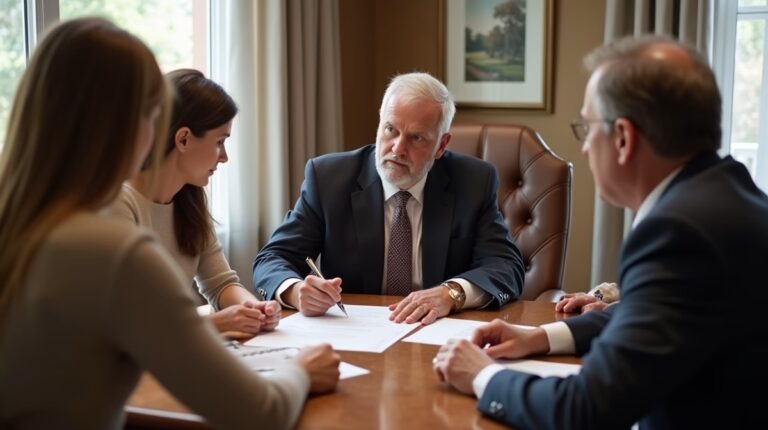
Glenn was devastated. His mother, Eleanor, had meticulously updated her estate plan – a new Will, a comprehensive Trust, Powers of Attorney, everything. But a seemingly minor oversight, a forgotten codicil amending the Trust, invalidated the entire document after her passing. Because Glenn had assisted her with some of the paperwork, the court questioned whether his involvement created undue influence. It cost his family nearly $30,000 in legal fees and a year of agonizing probate just to prove his good intentions.
A Disclaimer of Interest is a powerful tool used in estate planning to proactively address potential conflicts that can arise when a beneficiary is also involved in the creation or administration of a governing document. It’s a statement, typically filed with the probate court, asserting that the beneficiary received no undue benefit from their participation in the drafting, execution, or implementation of the Will, Trust, or other estate planning instrument.
As an Estate Planning Attorney and CPA with over 35 years of experience, I’ve seen countless situations where a well-executed Disclaimer of Interest can save families significant time, expense, and emotional turmoil. Many clients assume that simply being named as a beneficiary is enough, but that’s often not the case. If you actively helped your loved one prepare their estate plan, a Disclaimer of Interest should be seriously considered.
When Would I Need a Disclaimer of Interest?

The need for a Disclaimer of Interest most commonly arises in these situations:
- Drafting Assistance: If you assisted in writing, researching, or organizing the documents. This includes providing input on beneficiaries, asset distribution, or even just proofreading.
- Witnessing: If you were a witness to the signing of the Will or Trust. While not always invalidating, it can create scrutiny.
- Execution Assistance: If you facilitated the signing process, such as scheduling appointments or ensuring proper notarization.
- Power of Attorney Involvement: If you acted as the agent under a Power of Attorney and were involved in making estate planning decisions.
Why is a Disclaimer of Interest Important?
The core concern is undue influence. Probate courts are obligated to ensure that a Will or Trust reflects the true wishes of the decedent, not the desires of someone who might have exerted pressure or control. If you were closely involved in the planning process, a court might question whether you benefited unfairly from your participation. This can lead to costly litigation, delays in asset distribution, and even the invalidation of the entire estate plan.
How Does a Disclaimer of Interest Work?
A Disclaimer of Interest is a sworn statement, typically filed with the probate court. It affirms that you:
- Did not unduly influence the decedent.
- Received no financial benefit beyond your designated inheritance.
- Had no control over the creation or execution of the document.
- Were not responsible for the decedent’s estate planning decisions.
It’s not a guarantee against all challenges, but it creates a strong presumption of good faith and can significantly deter potential litigation. As a CPA, I understand the nuances of estate valuation and the potential for perceived benefit. A properly drafted Disclaimer of Interest should address any concerns about capital gains implications or step-up in basis related to your involvement. For deaths on or after April 1, 2025, a primary residence worth $750,000 or less (gross value) may qualify for a simplified transfer under AB 2016 (Probate Code § 13151), bypassing formal probate.
What if I’m the Executor of the Estate?
The need for a Disclaimer of Interest is even more critical if you’re also serving as the Executor. As Executor, you have a fiduciary duty to manage the estate impartially and in the best interests of all beneficiaries. If you were also involved in drafting the Will, it creates a heightened risk of conflict. As of January 1, 2026, non-exempt LLCs must comply with FinCEN’s Beneficial Ownership Information (BOI) reporting; executors and beneficiaries managing inherited entities must file updated reports within 30 days of ownership changes to avoid significant civil penalties.
Digital Assets and Disclaimers?
Don’t overlook the increasing importance of digital assets. Under California’s RUFADAA (Probate Code § 870), beneficiaries and executors are legally barred from accessing digital accounts, photos, and crypto-wallets unless the decedent explicitly granted authority in their Will, Trust, or via an ‘online tool’. If you assisted your loved one with organizing or managing their digital assets, a Disclaimer of Interest can also help protect against claims of undue influence regarding access and control.
What if the Estate is Small?
While a Disclaimer of Interest might seem less important for smaller estates, it’s still a valuable precaution. Assets without valid beneficiaries may trigger probate if the total value of personal property exceeds $208,850 (for deaths occurring on or after April 1, 2025); a Will alone does not bypass this limit. Even a seemingly simple estate can be subject to legal challenges, and a Disclaimer of Interest can help streamline the process and minimize potential disputes.
While addressing this specific concern is vital, your entire estate plan relies on the enforceability of your Last Will and Testament.
Too often, families resolve one specific issue but leave their broader estate vulnerable to litigation due to poor Will drafting.
Below is a guide to the specific standards California judges use to determine if your estate plan is valid:
What does a California probate court look for when interpreting testamentary intent?
In California, a last will and testament operates within a probate system that emphasizes intent, clarity, and procedural compliance. When properly drafted, a will does more than distribute property—it creates legally enforceable instructions that guide courts, fiduciaries, and beneficiaries through administration with fewer disputes and less uncertainty.
- Planning: Review estate planning regularly.
- Validation: Check legal requirements.
- People: Update testator details.
When a will is drafted with California probate review in mind, it becomes a stabilizing roadmap rather than a source of conflict. Clear intent, proper authority, and compliant execution protect both families and estates.
Official Resources for Probate, Legal Standards, and Tax Rules
-
Probate / Beneficiaries:
San Diego Superior Court – Probate Division:
Provides essential Escondido-specific “Local Rules” (Division IV) and forms effective January 1, 2026, including Rule 4.4.5 for remote appearances, mandatory e-filing protocols for Escondido County, and the calendar for the Central Courthouse. -
Legal Standards:
State Bar of California:
The official regulatory agency for California’s 270,000+ attorneys; use this portal to verify a lawyer’s license status, check for a history of disciplinary actions, and access the 2026 guidelines for ethical attorney-client fee agreements. -
Tax / Estate Tax:
IRS Estate Tax Guidelines:
The authoritative federal resource for estate and gift tax filing; this page reflects the 2026 “OBBBA” permanent exemption of $15 million per individual, which replaced the scheduled 2026 “tax cliff” from previous legislation. -
Self-Help / Forms:
California Courts – Wills, Estates, and Probate:
The Judicial Council’s primary self-help center offering standardized forms for 2026, including the updated $208,850 “Small Estate Affidavit” and the $750,000 “Primary Residence” simplified transfer procedure (AB 2016).
|
Attorney Advertising, Legal Disclosure & Authorship
ATTORNEY ADVERTISING.
This content is provided for general informational and educational purposes only and does not constitute legal, financial, or tax advice. Under the California Rules of Professional Conduct and State Bar advertising regulations, this material may be considered attorney advertising. Reading this content does not create an attorney-client relationship or any professional advisory relationship. Laws vary by jurisdiction and are subject to change, including recent 2026 developments under California’s AB 2016 and evolving federal estate and reporting requirements. You should consult a qualified attorney or advisor regarding your specific circumstances before taking action.
Responsible Attorney:
Steven F. Bliss, California Attorney (Bar No. 147856).
Local Office:
Escondido Probate Law720 N Broadway 107 Escondido, CA 92025 (760) 884-4044
Escondido Probate Law is a practice location and trade name used by Steven F. Bliss, Esq., a California-licensed attorney.
About the Author & Legal Review Process
This article was researched and drafted by the Legal Editorial Team of the Law Firm of Steven F. Bliss, Esq.,
a collective of attorneys, legal writers, and paralegals dedicated to translating complex legal concepts into clear, accurate guidance.
Legal Review:
This content was reviewed and approved by Steven F. Bliss, a California-licensed attorney (Bar No. 147856). Mr. Bliss concentrates his practice in estate planning and estate administration, advising clients on proactive planning strategies and representing fiduciaries in probate and trust administration proceedings when formal court involvement becomes necessary.
With more than 35 years of experience in California estate planning and estate administration,
Mr. Bliss focuses on structuring enforceable estate plans, guiding fiduciaries through court-supervised proceedings, resolving creditor and notice issues, and coordinating asset management to support compliant, timely distributions and reduce fiduciary risk. |