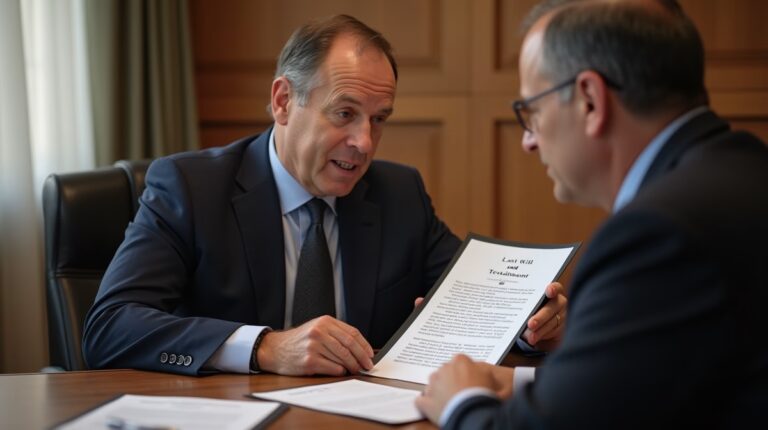
|
Legal & Tax Disclosure
ATTORNEY ADVERTISING.
This article is provided for general informational purposes only and does not constitute legal, financial, or tax advice. Reading this content does not create an attorney-client or professional advisory relationship. Laws vary by jurisdiction and are subject to change. You should consult a qualified professional regarding your specific circumstances. |
As an estate planning attorney and CPA with over 35 years of experience here in Escondido, I’ve seen firsthand how quickly a well-intentioned trust can become a source of intense family conflict—and expensive litigation. Recently, I had a client, Wayne, who meticulously crafted a trust to provide for his children and grandchildren. He even included specific instructions for the distribution of a valuable vintage car collection. Unfortunately, Wayne failed to adequately communicate the why behind these decisions. After his passing, a simple disagreement over who would receive the 1967 Mustang escalated into a full-blown lawsuit, costing the family nearly $75,000 in legal fees, and fracturing relationships that may never heal. Professional mediation could have addressed those underlying concerns for a fraction of the cost.
What are the Common Trust Disputes That Lead to Litigation?

Trust litigation often arises from misunderstandings, perceived unfairness, or a lack of transparency.
- Beneficiary Concerns about Trustee Actions: Often, beneficiaries suspect mismanagement of assets, self-dealing, or a breach of fiduciary duty. Even if the trustee is acting appropriately, simply appearing to do so isn’t enough.
- Ambiguous Trust Language: Vague or poorly worded trust provisions are a breeding ground for disputes. What one person interprets as clear, another may see as open to multiple interpretations.
- Conflicts Among Beneficiaries: Sibling rivalries, differing financial needs, or simply personality clashes can quickly poison the atmosphere and lead to accusations and legal action.
- Challenges to the Trust’s Validity: Claims of undue influence, lack of capacity, or fraudulent inducement can derail even the most carefully drafted trust.
How Does Mediation Differ From Litigation?
Litigation is, by its nature, adversarial. It’s a win-lose proposition where a judge or jury ultimately decides the outcome. Mediation, on the other hand, is a collaborative process facilitated by a neutral third party. The mediator doesn’t impose a solution; instead, they help the parties reach a mutually acceptable agreement. This is particularly crucial in trust disputes, where preserving family relationships is often as important as the financial outcome. A skilled mediator can facilitate open communication, identify underlying interests, and guide the parties toward a resolution that respects everyone’s needs.
What are the Benefits of Mediating Trust Disputes?
The advantages of mediation are numerous.
- Cost Savings: Mediation is significantly less expensive than litigation. Legal fees, court costs, and expert witness fees can quickly add up, while mediation typically involves a single, fixed fee for the mediator’s services.
- Time Efficiency: Mediation can often be completed in a matter of days or weeks, whereas litigation can drag on for months or even years.
- Confidentiality: Mediation proceedings are confidential, protecting the family’s privacy. Court records, on the other hand, are public.
- Relationship Preservation: Unlike litigation, mediation encourages communication and cooperation, fostering a more amicable resolution.
- Control Over the Outcome: In mediation, the parties have control over the final agreement. In litigation, the outcome is determined by a judge or jury.
As a CPA, I see the benefit of maintaining control of the financial outcome because that ensures better tax planning for beneficiaries.
When is Mediation Most Effective in Trust Disputes?
Mediation is not a silver bullet, but it’s most effective when all parties are willing to participate in good faith and are open to compromise. It’s particularly well-suited for disputes involving:
- Disagreements over the interpretation of trust provisions.
- Concerns about the trustee’s administration of the trust.
- Conflicts among beneficiaries regarding the distribution of assets.
- Challenges to the trust’s validity based on relatively straightforward facts.
However, even in cases where litigation seems inevitable, mediation can still be valuable as a way to narrow the issues and potentially reach a settlement before trial. And remember, even with the best mediation, complex issues regarding trust duration are governed by USRAP (Probate Code § 21205), limiting a Dynasty Trust’s existence to 90 years unless specific provisions are drafted.
What About Digital Assets and Business Interests within the Trust?
Today’s trusts often include digital assets and business interests, adding layers of complexity. Without specific RUFADAA language, accessing digital wallets can be impossible, and for business entities, the FinCEN 2025 Exemption doesn’t apply to foreign-registered entities, requiring prompt BOI reporting. Mediation can help address these practical issues and ensure a smooth transfer of these assets. Furthermore, for deaths on or after April 1, 2025, beneficiaries may be able to utilize AB 2016 (Probate Code § 13151) via a Petition to transfer a primary residence up to $750,000 outside the trust, avoiding probate, but this is different than the Small Estate Affidavit (<$69,625). Understanding these nuances is critical and mediation allows for the discussion of these options.
What separates a successful California trust distribution from a costly battle over interpretation and accounting?
Success in trust administration depends on more than just the document; it requires active management of assets, precise accounting to beneficiaries, and careful navigation of tax rules. Whether dealing with a blended family or complex real estate, understanding the mechanics of trust law is the only way to ensure the grantor’s wishes survive scrutiny.
- Safety: Review blind trusts.
- Specifics: Check testamentary trusts.
- Growth: Manage long-term trust assets.
California trust planning is most effective when the structure is matched to the specific family goal and assets are fully funded into the trust name. When administration is handled with transparency and adherence to the Probate Code, the trust can fulfill its promise of privacy and efficiency.
Verified Authority on California Dynasty Trust Administration
-
Trust Duration Limits (USRAP): California Probate Code § 21205 (90-Year Rule)
The governing statute for the Uniform Statutory Rule Against Perpetuities. Unlike states that allow “forever” trusts, California generally limits a Dynasty Trust’s validity to 90 years, requiring careful drafting to avoid premature termination. -
GST Tax Exemption (OBBBA): IRS Generation-Skipping Transfer Tax
Detailed guidelines reflecting the OBBBA update. Effective January 1, 2026, the GST Tax Exemption is permanently set at $15 million per person, allowing for massive tax-free wealth transfer to grandchildren if allocated correctly. -
Property Tax Reassessment (Prop 19): California State Board of Equalization (Prop 19)
Crucial for Dynasty Trusts holding real estate. Prop 19 severely limits the ability to pass low property tax bases to grandchildren, often triggering reassessment to current market value upon the child’s death. -
Primary Residence Succession (AB 2016): California Probate Code § 13151 (Petition for Succession)
If a residence intended for the trust was accidentally left out, this statute (effective April 1, 2025) allows a “Petition for Succession” for homes valued up to $750,000, avoiding a full probate proceeding. -
Digital Asset Access (RUFADAA): California Probate Code § 870 (RUFADAA)
The authoritative resource on digital assets. Without specific RUFADAA language in the Dynasty Trust, multi-generational access to crypto wallets and digital archives can be legally blocked by service providers. -
Business & LLC Compliance (FinCEN): FinCEN – Beneficial Ownership Information (BOI)
While domestic U.S. LLCs in the trust are now exempt (as of March 2025), trustees managing foreign-registered entities must still comply with strict 30-day reporting windows to avoid federal penalties.
|
Attorney Advertising, Legal Disclosure & Authorship
ATTORNEY ADVERTISING.
This content is provided for general informational and educational purposes only and does not constitute legal, financial, or tax advice. Under the California Rules of Professional Conduct and State Bar advertising regulations, this material may be considered attorney advertising. Reading this content does not create an attorney-client relationship or any professional advisory relationship. Laws vary by jurisdiction and are subject to change, including recent 2026 developments under California’s AB 2016 and evolving federal estate and reporting requirements. You should consult a qualified attorney or advisor regarding your specific circumstances before taking action.
Responsible Attorney:
Steven F. Bliss, California Attorney (Bar No. 147856).
Local Office:
Escondido Probate Law720 N Broadway 107 Escondido, CA 92025 (760) 884-4044
Escondido Probate Law is a practice location and trade name used by Steven F. Bliss, Esq., a California-licensed attorney.
About the Author & Legal Review Process
This article was researched and drafted by the Legal Editorial Team of the Law Firm of Steven F. Bliss, Esq.,
a collective of attorneys, legal writers, and paralegals dedicated to translating complex legal concepts into clear, accurate guidance.
Legal Review:
This content was reviewed and approved by Steven F. Bliss, a California-licensed attorney (Bar No. 147856). Mr. Bliss concentrates his practice in estate planning and estate administration, advising clients on proactive planning strategies and representing fiduciaries in probate and trust administration proceedings when formal court involvement becomes necessary.
With more than 35 years of experience in California estate planning and estate administration,
Mr. Bliss focuses on structuring enforceable estate plans, guiding fiduciaries through court-supervised proceedings, resolving creditor and notice issues, and coordinating asset management to support compliant, timely distributions and reduce fiduciary risk. |