|
Legal & Tax Disclosure
ATTORNEY ADVERTISING.
This article is provided for general informational purposes only and does not constitute legal, financial, or tax advice. Reading this content does not create an attorney-client or professional advisory relationship. Laws vary by jurisdiction and are subject to change. You should consult a qualified professional regarding your specific circumstances. |
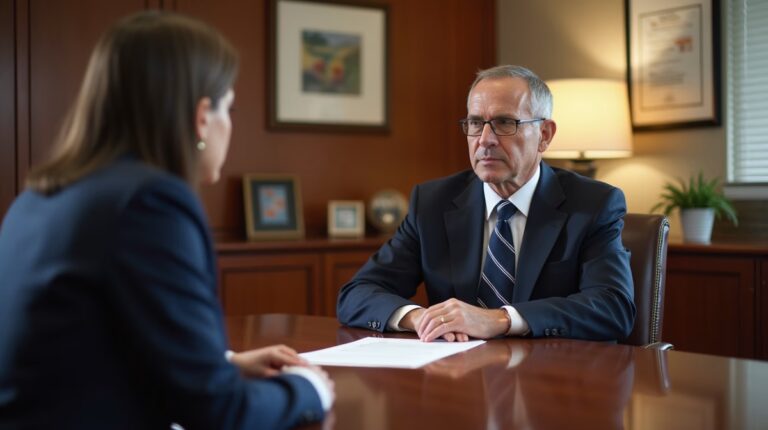
Emily just received a notice from the court, but it wasn’t the formal judgment she expected. It was a document called a “Minute Order,” and she’s understandably confused. She spent $5,000 on a codicil to her trust, leaving everything to her children equally, but it was never filed properly. Now, her brother, David, is challenging the trust, claiming it’s invalid. The initial hearing resulted in a Minute Order that essentially continued the case, and Emily is terrified she’s losing control, despite having a seemingly valid codicil.
A Minute Order is the official written record of a court hearing, created by the court clerk. It’s not the final ruling—it’s a snapshot of what happened in court. Think of it as the court’s running notes. It details the appearances, motions made, evidence presented, and the judge’s tentative rulings. It’s crucial to understand that a Minute Order is often preliminary and subject to change.
What does a Minute Order actually contain?

The specifics can vary by county and judge, but generally, you can expect to see:
- Case Information: The case name, number, and hearing date.
- Appearances: Who attended the hearing (attorneys, parties, witnesses).
- Motions: Any requests made to the court (e.g., motion to continue, motion to compel discovery).
- Evidence Presented: A brief summary of the documents or testimony offered.
- Tentative Rulings: The judge’s preliminary decisions on those motions.
- Court’s Order: The judge’s final instructions for the next steps.
These orders are typically available online within 24-48 hours after the hearing. However, don’t rely on a website alone. Always confirm with the court clerk for official confirmation.
Why are Minute Orders often misleading?
Emily’s anxiety stems from the fact that the Minute Order simply continued the case. This doesn’t mean David won; it means the judge needs more time to review the evidence. It’s important to remember that a judge’s tentative ruling (often outlined in the Minute Order) is just that – tentative.
What is the difference between a Tentative Ruling and a Final Order?
As a probate attorney & CPA with over 35 years of experience, I’ve seen countless clients misinterpret Minute Orders. The difference is critical. The California Rule of Court 3.1308 states that most California probate departments post ‘Tentative Rulings’ online 1-2 days before the hearing. If the ruling is ‘Recommended for Approval’ and no one objects, the physical hearing may be waived. This doesn’t mean it’s set in stone. A Final Order is a signed, official document issued by the judge after considering all evidence and objections. It’s legally binding and will specify the outcome of the case. In cases like Emily’s, the judge’s Final Order will determine the validity of the codicil.
What should I do if I receive a Minute Order I disagree with?
Don’t panic! First, carefully review the order and identify the specific rulings you challenge. You need to take swift action. In probate cases, the Probate Notes system is often at play; before the judge ever sees your file, a ‘Probate Examiner’ reviews it for defects and posts ‘Probate Notes’ weeks in advance. You MUST file a ‘Supplement’ to cure these defects before the hearing, or your case will be delayed for months. It’s also crucial to understand that under Probate Code § 1043, you can appear at the hearing and object orally. However, the court will typically continue the case and order you to file a written objection within a specific time (usually 30 days). Failing to file the written objection will waive your oral objection.
Finally, the Minute Order is only one piece of the puzzle. It does not define the ultimate outcome. Protecting your estate and your family requires a proactive approach and a thorough understanding of the probate process. As a CPA, I also advise clients about the potential impact of these rulings on the step-up in basis and capital gains taxes associated with their assets, as well as the proper valuation of complex holdings.
What failures trigger contested proceedings and court intervention in California probate administration?
The path through California probate is rarely a straight line; it requires precise adherence to statutory deadlines, accurate asset characterization, and strict fiduciary compliance. Without a clear roadmap, what begins as a standard administrative proceeding can quickly dissolve into a costly battle over interpretation, valuation, and beneficiary rights.
To manage the estate’s value, separate property types by learning probate assets, confirm exclusions through non-probate assets, and support valuation steps with probate inventory requirements to reduce disagreements about what is in the estate.
California probate is most manageable when authority is documented early, assets are classified correctly, and procedure is followed consistently from petition through closing. When the process is approached with realistic expectations about notice, claims, accounting, and dispute risk, the estate is more likely to move toward closure without avoidable conflict or delay.
Verified Authority on California Probate Court Operations
-
Jurisdiction & Venue: California Probate Code § 7051 (Domicile Rule)
This statute dictates strictly where the probate case must be heard. It is based on the decedent’s “domicile” (permanent legal residence), not where they died or where their property is located. Filing in the wrong county will result in the case being transferred or dismissed. -
The “850 Petition” (Title Disputes): California Probate Code § 850 (Heggstad/Title)
The Probate Court is not just for processing paperwork; it is a trial court that can determine property ownership. A Section 850 petition allows the judge to order property returned to the estate (from a thief) or transferred out of the estate (to a rightful owner) without a separate civil lawsuit. -
Oral Objections & Continuances: California Probate Code § 1043
You have a right to be heard. This code allows any interested person to appear at the hearing and object orally. The court may grant a continuance to allow you time to file a written objection. This is a critical tool for beneficiaries who find out about a hearing at the last minute. -
Appeals (What Orders are Final?): California Probate Code § 1300 (Appealable Orders)
Not every decision by a probate judge can be appealed immediately. This section lists exactly which orders are “appealable” (e.g., directing distribution, determining heirship). Understanding this list is vital for litigation strategy. -
Tentative Rulings: California Rules of Court 3.1308
In modern California probate practice, the “hearing” often happens on paper before the actual court date. This rule governs the Tentative Ruling system. Checking the tentative ruling the day before is mandatory practice; if you don’t contest it properly, the judge’s tentative decision becomes final. -
Fee Waivers: California Government Code § 68633
Probate filing fees are high (often $435+ per petition). This code authorizes the court to waive these fees for petitioners who are low-income or receiving public benefits, ensuring that access to the probate court is not limited only to the wealthy.
|
Attorney Advertising, Legal Disclosure & Authorship
ATTORNEY ADVERTISING.
This content is provided for general informational and educational purposes only and does not constitute legal, financial, or tax advice. Under the California Rules of Professional Conduct and State Bar advertising regulations, this material may be considered attorney advertising. Reading this content does not create an attorney-client relationship or any professional advisory relationship. Laws vary by jurisdiction and are subject to change, including recent 2026 developments under California’s AB 2016 and evolving federal estate and reporting requirements. You should consult a qualified attorney or advisor regarding your specific circumstances before taking action.
Responsible Attorney:
Steven F. Bliss, California Attorney (Bar No. 147856).
Local Office:
Escondido Probate Law720 N Broadway 107 Escondido, CA 92025 (760) 884-4044
Escondido Probate Law is a practice location and trade name used by Steven F. Bliss, Esq., a California-licensed attorney.
About the Author & Legal Review Process
This article was researched and drafted by the Legal Editorial Team of the Law Firm of Steven F. Bliss, Esq.,
a collective of attorneys, legal writers, and paralegals dedicated to translating complex legal concepts into clear, accurate guidance.
Legal Review:
This content was reviewed and approved by Steven F. Bliss, a California-licensed attorney (Bar No. 147856). Mr. Bliss concentrates his practice in estate planning and estate administration, advising clients on proactive planning strategies and representing fiduciaries in probate and trust administration proceedings when formal court involvement becomes necessary.
With more than 35 years of experience in California estate planning and estate administration,
Mr. Bliss focuses on structuring enforceable estate plans, guiding fiduciaries through court-supervised proceedings, resolving creditor and notice issues, and coordinating asset management to support compliant, timely distributions and reduce fiduciary risk. |