|
Legal & Tax Disclosure
ATTORNEY ADVERTISING.
This article is provided for general informational purposes only and does not constitute legal, financial, or tax advice. Reading this content does not create an attorney-client or professional advisory relationship. Laws vary by jurisdiction and are subject to change. You should consult a qualified professional regarding your specific circumstances. |
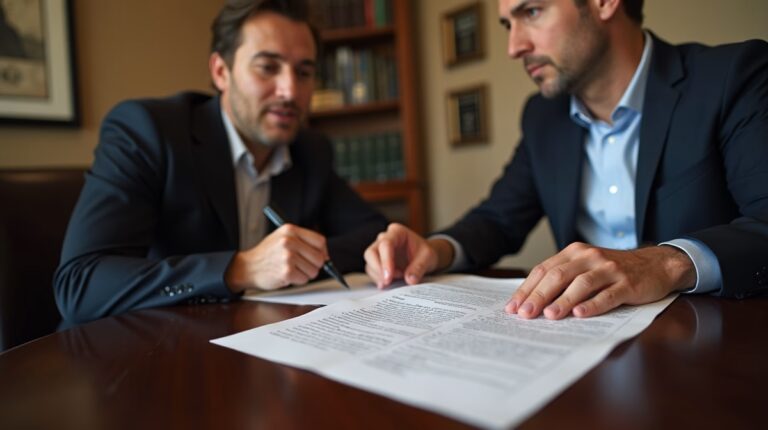
I recently met with Dale, whose estranged brother, Mark, was attempting to overturn their mother’s will. Mark claimed undue influence and a lack of testamentary capacity, and the legal fees were already exceeding $30,000. Dale’s mother had established an irrevocable trust years prior, but the bulk of her estate was still subject to the will challenge. Had more of her assets been titled within the trust, we could have avoided a significant portion of this costly battle. It’s a painful lesson in the limitations of wills alone.
An irrevocable trust doesn’t directly prevent a will contest, but it dramatically reduces the scope of one. A will contest challenges the validity of a will, aiming to have it declared unenforceable. If assets are held within a properly funded irrevocable trust, those assets are generally removed from the will’s control and are distributed according to the trust’s terms, regardless of the will’s outcome. Think of it as creating an alternate estate plan that exists outside the reach of the probate court – and therefore, most will contests.
However, this protection isn’t absolute. The will could still direct assets to the trust. This is where the contest can shift focus. Instead of challenging the entire estate plan, the challenger might contest the trust itself, alleging improper creation, lack of capacity of the grantor (the person who established the trust) when it was funded, or even undue influence during the initial trust drafting. That’s why meticulous documentation is paramount. As a CPA as well as an attorney with over 35 years of experience, I emphasize the importance of a clear, contemporaneous record of the grantor’s understanding, intent, and independent decision-making.
What happens if someone contests the trust directly?

A direct challenge to the trust is more complex and costly than a typical will contest. The challenger must demonstrate a specific legal defect in the trust’s formation or administration. Common grounds include lack of capacity, fraud, duress, or undue influence exerted on the grantor. Importantly, they also need standing – a direct financial stake in the outcome. We’ve seen cases where disgruntled beneficiaries attempt to contest solely on emotional grounds, which typically fail.
How can I best protect my trust from a challenge?
Several strategies can significantly strengthen your trust’s defenses. First, ensure the grantor has full capacity when signing the trust document and any subsequent amendments. Second, involve multiple independent advisors, like myself, to witness the signing and document the grantor’s understanding. Third, clearly articulate the grantor’s intent and the reasons for creating the trust. Fourth, and critically, fully fund the trust. A trust document is just a piece of paper if it doesn’t hold assets.
Does Prop 19 impact this protection?
Yes, potentially. Transferring a home into an irrevocable trust for children often triggers an immediate property tax reassessment under Prop 19 if the parents do not retain beneficial enjoyment or if the children do not make it their primary residence. This can cause a sudden increase in property taxes, creating a financial incentive for a beneficiary to contest the transfer. We often advise clients to maintain life estates or other provisions to retain beneficial ownership and preserve the existing tax basis.
What if assets are accidentally left out of the trust after my death?
For deaths on or after April 1, 2025, if an asset intended for the trust was accidentally left out (valued up to $750,000), it qualifies for a ‘Petition’ under AB 2016 (Probate Code § 13151). This Petition (Judge’s Order), NOT an Affidavit, allows the court to transfer the asset into the trust, preserving the original estate plan. Failing to act promptly can force the asset into probate, subjecting it to the will contest risk.
What determines whether a California trust settlement remains private or erupts into public litigation?
California trusts are designed to bypass probate and maintain privacy, yet they often fail when assets are not properly funded, trustee duties are ignored, or ambiguous terms trigger disputes. Even with a signed trust document, families can face court battles if the “operations manual” of the trust isn’t followed strictly under the Probate Code.
| Legal Foundation | Relevance |
|---|---|
| Compliance | Follow the California Probate Code for trusts. |
| Vehicle | Review revocable living trusts. |
| Roles | Identify trust roles. |
A stable trust administration relies on the trustee’s ability to balance investment duties, beneficiary communication, and tax compliance. When these elements are managed proactively, families can avoid the emotional and financial drain of litigation.
Verified Authority on Irrevocable Trust Administration
-
Trust Decanting (Probate Code § 19501): California Uniform Trust Decanting Act
The modern statute allowing a trustee to “fix” a broken irrevocable trust. It permits moving assets into a new trust with better administrative terms or tax provisions without going to court. -
Medi-Cal Look-Back (2026 Rules): California DHCS Medi-Cal Asset Limits
Official guidance on the reinstated 30-month look-back period and the new asset limit of $130,000 (individual) effective January 1, 2026. Critical for anyone using an irrevocable trust for long-term care planning. -
Spendthrift Protection (Probate Code § 15300): California Probate Code § 15300
The legal shield that makes an irrevocable trust “irrevocable.” This statute validates clauses that prevent creditors, lawsuits, and ex-spouses from attaching trust assets before they reach the beneficiary. -
Estate Tax Exemption (OBBBA): IRS Estate Tax Guidelines
Reflects the OBBBA permanent increase to a $15 million per person exemption (effective Jan 1, 2026). This high threshold shifts the focus of most irrevocable trusts from tax savings to asset protection. -
Missed Asset Recovery (AB 2016): California Probate Code § 13151 (Petition for Succession)
If an asset was intended for the trust but legally left out, this statute (effective April 1, 2025) allows for a “Petition for Succession” for assets up to $750,000, bypassing full probate. -
Digital Asset Access (RUFADAA): California Probate Code § 870 (RUFADAA)
Mandatory for irrevocable trusts holding crypto or digital rights. Without specific RUFADAA language, a trustee may be legally blocked from accessing or managing these modern assets.
|
Attorney Advertising, Legal Disclosure & Authorship
ATTORNEY ADVERTISING.
This content is provided for general informational and educational purposes only and does not constitute legal, financial, or tax advice. Under the California Rules of Professional Conduct and State Bar advertising regulations, this material may be considered attorney advertising. Reading this content does not create an attorney-client relationship or any professional advisory relationship. Laws vary by jurisdiction and are subject to change, including recent 2026 developments under California’s AB 2016 and evolving federal estate and reporting requirements. You should consult a qualified attorney or advisor regarding your specific circumstances before taking action.
Responsible Attorney:
Steven F. Bliss, California Attorney (Bar No. 147856).
Local Office:
Escondido Probate Law720 N Broadway 107 Escondido, CA 92025 (760) 884-4044
Escondido Probate Law is a practice location and trade name used by Steven F. Bliss, Esq., a California-licensed attorney.
About the Author & Legal Review Process
This article was researched and drafted by the Legal Editorial Team of the Law Firm of Steven F. Bliss, Esq.,
a collective of attorneys, legal writers, and paralegals dedicated to translating complex legal concepts into clear, accurate guidance.
Legal Review:
This content was reviewed and approved by Steven F. Bliss, a California-licensed attorney (Bar No. 147856). Mr. Bliss concentrates his practice in estate planning and estate administration, advising clients on proactive planning strategies and representing fiduciaries in probate and trust administration proceedings when formal court involvement becomes necessary.
With more than 35 years of experience in California estate planning and estate administration,
Mr. Bliss focuses on structuring enforceable estate plans, guiding fiduciaries through court-supervised proceedings, resolving creditor and notice issues, and coordinating asset management to support compliant, timely distributions and reduce fiduciary risk. |