|
Legal & Tax Disclosure
ATTORNEY ADVERTISING.
This article is provided for general informational purposes only and does not constitute legal, financial, or tax advice. Reading this content does not create an attorney-client or professional advisory relationship. Laws vary by jurisdiction and are subject to change. You should consult a qualified professional regarding your specific circumstances. |
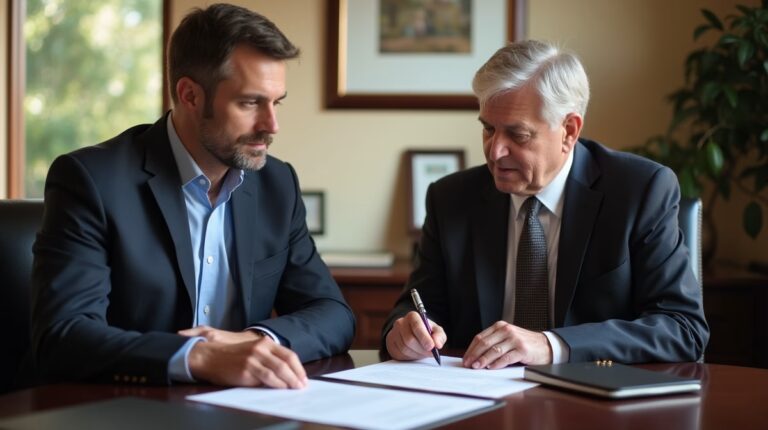
I recently had a client, David, come to me in a state of panic. He’d meticulously established a Grantor Retained Annuity Trust (GRAT) three years prior, projecting significant tax benefits, only to discover a critical drafting oversight: the original codicil amending his estate plan hadn’t been properly executed. The trust, designed to transfer considerable wealth to his children, was jeopardized. This oversight could have cost his family over $250,000 in unnecessary estate taxes. That’s where a trust protector could have intervened.
Why Add a Trust Protector to Your GRAT?

A GRAT, as you know, is a powerful tool, but it isn’t foolproof. It’s fundamentally reliant on the grantor surviving the trust term. Unexpected events – changes in family dynamics, unforeseen legislative shifts, or even simple administrative errors – can derail the carefully crafted plan. A trust protector provides a vital safety net, a designated individual with the authority to modify the trust terms to adapt to evolving circumstances. They aren’t meant to change the fundamental purpose of the GRAT, but rather to ensure its continued effectiveness.
What Powers Does a Trust Protector Typically Have?
The powers granted to a trust protector are highly customizable, but generally fall into several key categories. First, they often have the authority to replace trustees. This is crucial if a trustee becomes incapacitated, conflicts of interest arise, or simply isn’t performing adequately. Second, a protector can correct administrative errors or clarify ambiguous language in the trust document. David’s situation, with the unexecuted codicil, is a prime example of where this power would be invaluable. A protector could potentially ratify the intended amendment, preventing a costly legal battle. Finally, and increasingly important, they can address changes in tax law. The OBBBA (effective Jan 1, 2026) provides a permanent $15 million per person Federal Estate Tax Exemption, but proactively updating the GRAT to capitalize on that change would require protector action.
Choosing the Right Trust Protector
- Credibility: Select someone with a strong understanding of estate planning principles, ideally a professional like an attorney or CPA.
- Impartiality: The protector shouldn’t be a direct beneficiary of the trust, to avoid conflicts of interest.
- Familiarity: They should be familiar with your overall estate plan and financial situation.
- Responsiveness: The ability to act quickly and decisively is essential, especially in response to time-sensitive legal or tax changes.
As an estate planning attorney and CPA with over 35 years of experience, I often recommend a trust protector to clients establishing complex GRATs. My CPA background allows me to anticipate potential valuation issues or step-up in basis implications, ensuring the GRAT is structured to maximize tax efficiency. For example, a proper distribution strategy within the GRAT can minimize capital gains taxes and unlock the full potential of the transferred assets.
The Intersection with Digital Assets
With the increasing prevalence of digital assets, the role of a trust protector is becoming even more critical. Without specific RUFADAA language (Probate Code § 870) in the GRAT, service providers can block the trustee from accessing or valuing digital assets (crypto/NFTs) essential for the annuity payment calculation. A trust protector with digital asset expertise can navigate these complexities and ensure the trust remains viable.
Ultimately, a trust protector isn’t an optional add-on; it’s a proactive measure to safeguard your wealth and ensure your estate plan remains aligned with your wishes, regardless of unforeseen circumstances.
What failures trigger court intervention and contests in California trust administration?
The advantage of a California trust is control and continuity, but this relies entirely on accurate funding and disciplined administration. Without clear asset titles and strict adherence to fiduciary standards, a private trust can quickly become a subject of public litigation over mismanagement, capacity, or undue influence.
To prevent family friction during administration, trustees must adhere to the rules in trust administration, while beneficiaries should monitor actions to prevent the issues highlighted in common trust pitfalls, ensuring the trusts is enforced correctly.
Ultimately, the success of a trust depends on the details—proper funding, clear terms, and a trustee willing to follow the rules. By anticipating friction points and documenting every step of the administration, fiduciaries can protect the estate and themselves from liability.
Verified Authority on GRAT Administration & Compliance
-
Zeroed-Out Structure (IRC § 2702): Internal Revenue Code § 2702
The governing statute for Grantor Retained Annuity Trusts. It allows the grantor to retain an annuity value equal to the contribution, effectively “zeroing out” the gift tax value of the remainder interest. -
IRS Hurdle Rate (§ 7520): Section 7520 Interest Rates
The critical benchmark for GRAT success. The trust’s assets must appreciate faster than this monthly published rate for any wealth to pass tax-free to the beneficiaries. -
Real Estate Reassessment (Prop 19): California State Board of Equalization (Prop 19)
Vital for GRATs holding real property. While funding the GRAT is safe, the eventual transfer to children at the end of the term is subject to strict Prop 19 reassessment rules if the property is not used as a primary residence. -
Estate Tax Exemption (OBBBA): IRS Estate Tax Guidelines
Reflects the OBBBA permanent increase to a $15 million per person exemption (effective Jan 1, 2026). This is the “safety net” if a GRAT fails and assets are pulled back into the grantor’s taxable estate. -
Missed Asset Recovery (AB 2016): California Probate Code § 13151 (Petition for Succession)
If an asset intended for the GRAT was legally left out, this statute (effective April 1, 2025) allows for a “Petition for Succession” for assets up to $750,000, bypassing full probate to clean up funding errors. -
Digital Asset Valuation (RUFADAA): California Probate Code § 870 (RUFADAA)
Mandatory for GRATs funded with volatile digital assets (crypto). Without RUFADAA powers, a trustee cannot access or properly appraise these assets for the required annual annuity payments.
|
Attorney Advertising, Legal Disclosure & Authorship
ATTORNEY ADVERTISING.
This content is provided for general informational and educational purposes only and does not constitute legal, financial, or tax advice. Under the California Rules of Professional Conduct and State Bar advertising regulations, this material may be considered attorney advertising. Reading this content does not create an attorney-client relationship or any professional advisory relationship. Laws vary by jurisdiction and are subject to change, including recent 2026 developments under California’s AB 2016 and evolving federal estate and reporting requirements. You should consult a qualified attorney or advisor regarding your specific circumstances before taking action.
Responsible Attorney:
Steven F. Bliss, California Attorney (Bar No. 147856).
Local Office:
Escondido Probate Law720 N Broadway 107 Escondido, CA 92025 (760) 884-4044
Escondido Probate Law is a practice location and trade name used by Steven F. Bliss, Esq., a California-licensed attorney.
About the Author & Legal Review Process
This article was researched and drafted by the Legal Editorial Team of the Law Firm of Steven F. Bliss, Esq.,
a collective of attorneys, legal writers, and paralegals dedicated to translating complex legal concepts into clear, accurate guidance.
Legal Review:
This content was reviewed and approved by Steven F. Bliss, a California-licensed attorney (Bar No. 147856). Mr. Bliss concentrates his practice in estate planning and estate administration, advising clients on proactive planning strategies and representing fiduciaries in probate and trust administration proceedings when formal court involvement becomes necessary.
With more than 35 years of experience in California estate planning and estate administration,
Mr. Bliss focuses on structuring enforceable estate plans, guiding fiduciaries through court-supervised proceedings, resolving creditor and notice issues, and coordinating asset management to support compliant, timely distributions and reduce fiduciary risk. |