|
Legal & Tax Disclosure
ATTORNEY ADVERTISING.
This article is provided for general informational purposes only and does not constitute legal, financial, or tax advice. Reading this content does not create an attorney-client or professional advisory relationship. Laws vary by jurisdiction and are subject to change. You should consult a qualified professional regarding your specific circumstances. |
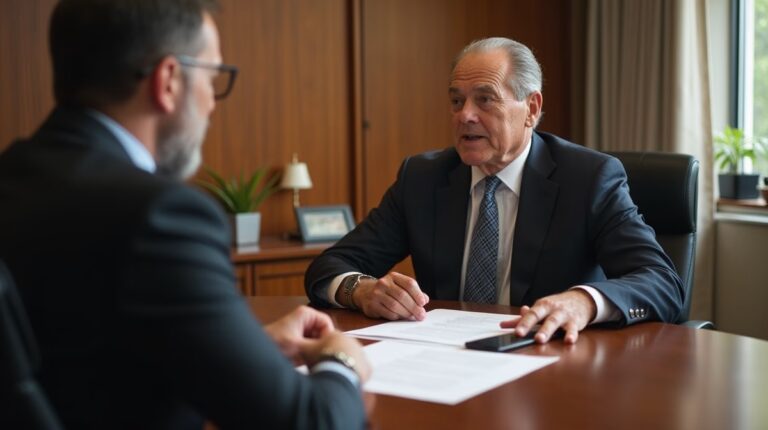
It’s a devastating situation, Chris. You’ve lost your mother, and now the court is handling her estate because the named trustee in her trust couldn’t, or wouldn’t, fulfill their duties. That delay, and the uncertainty surrounding it, can be agonizing – and costly. I’ve seen families lose significant funds simply because of the time it takes for a public fiduciary to get up to speed, especially with complex asset holdings.
The problem isn’t the fiduciary themselves; they’re typically experienced professionals. The bottleneck is the court process. Once a petition is filed requesting a public fiduciary – often a professional conservator or a local attorney appointed by the court – a waiting period begins. This isn’t a quick turnaround. First, there’s the notice requirement, ensuring all interested parties are informed. Then, the court must hold a hearing to confirm the appointment. Expect at least 60-90 days from the initial petition just to get the fiduciary officially in place.
But that’s just the beginning. Once appointed, the public fiduciary has to take inventory of everything: bank accounts, investments, real estate, even digital assets. They’re required to adhere to strict guidelines and file detailed reports with the court – annual accountings, as mandated by Probate Code §§ 16060–16069. These aren’t simple tasks, and they’re designed to protect the estate, which means thoroughness is prioritized over speed. This investigation phase can easily take another 60-180 days, depending on the estate’s complexity.
And, unfortunately, there’s the potential for pushback. Heirs who disagree with the fiduciary’s decisions can file objections, leading to further delays and legal battles. Even routine matters can become contested, stretching the process out for months, or even years. Without named backup fiduciaries, Probate Code § 15660 allows the court to appoint a public fiduciary, which can delay estate management by months and incur significant unnecessary fees.
As an estate planning attorney and CPA with over 35 years of experience, I’ve witnessed firsthand the financial repercussions of these delays. The fees charged by public fiduciaries are set by statute and, while reasonable, they can erode the estate’s value. More importantly, missed investment opportunities or neglected property maintenance can lead to substantial losses. My CPA background allows me to step in, quickly assess the tax implications of these delays – particularly the potential loss of the step-up in basis on appreciated assets – and proactively minimize capital gains exposure. We can often identify and value assets far more efficiently than a generalist fiduciary, preserving value that would otherwise be lost.
Finally, it’s important to remember that a trust that isn’t properly funded remains vulnerable. Under California Probate Code § 15200, a trust exists only when identifiable property is transferred into it; an unfunded trust is a ‘shell’ that fails to bypass probate, regardless of how well the documents are drafted.
What determines whether a California trust settlement remains private or erupts into public litigation?

California trusts are designed to bypass probate and maintain privacy, yet they often fail when assets are not properly funded, trustee duties are ignored, or ambiguous terms trigger disputes. Even with a signed trust document, families can face court battles if the “operations manual” of the trust isn’t followed strictly under the Probate Code.
| Objective | Implementation |
|---|---|
| Spousal Support | Setup a qualified terminable interest property trust. |
| Family Protection | Establish a A/B trust structure. |
| Risk Control | Avoid mistakes in trust planning. |
Ultimately, the success of a trust depends on the details—proper funding, clear terms, and a trustee willing to follow the rules. By anticipating friction points and documenting every step of the administration, fiduciaries can protect the estate and themselves from liability.
Verified Authority on California Trust Pitfalls & Maintenance
-
Trust Funding Verification: California Probate Code § 15200 (Asset Transfer)
The primary statute confirming that a trust requires property to be valid. Use this to verify that your real estate deeds and bank accounts have been correctly retitled to the trust’s name. -
Real Estate Succession (AB 2016): California Probate Code § 13151 (Petition for Succession)
Specific guidance for the 2025/2026 process. It outlines how a primary residence worth $750,000 or less can be transferred via a court-approved Petition rather than a full probate. -
Trustee Duty to Account: California Probate Code § 16062 (Annual Reporting)
Trustees must provide an annual report to beneficiaries. Failure to do so is one of the top triggers for trust litigation in California. -
Digital Legacy (RUFADAA): California Probate Code § 870 (Digital Assets)
The authoritative resource on the Revised Uniform Fiduciary Access to Digital Assets Act. It explains why your trust must explicitly grant access to digital records and cryptocurrency. -
Successor Trustee Appointment: California Probate Code § 15660 (Vacancy in Trustee)
Outlines what happens when a trust lacks a successor. This resource highlights the importance of naming multiple backup fiduciaries to avoid court-appointed public administrators. -
Small Estate Personal Property: California Probate Code § 13100 (Affidavits)
Statutory limits for the $208,850 threshold (effective April 1, 2025). Use this for non-real estate assets like bank accounts and vehicles that were accidentally left out of the trust.
|
Attorney Advertising, Legal Disclosure & Authorship
ATTORNEY ADVERTISING.
This content is provided for general informational and educational purposes only and does not constitute legal, financial, or tax advice. Under the California Rules of Professional Conduct and State Bar advertising regulations, this material may be considered attorney advertising. Reading this content does not create an attorney-client relationship or any professional advisory relationship. Laws vary by jurisdiction and are subject to change, including recent 2026 developments under California’s AB 2016 and evolving federal estate and reporting requirements. You should consult a qualified attorney or advisor regarding your specific circumstances before taking action.
Responsible Attorney:
Steven F. Bliss, California Attorney (Bar No. 147856).
Local Office:
Escondido Probate Law720 N Broadway 107 Escondido, CA 92025 (760) 884-4044
Escondido Probate Law is a practice location and trade name used by Steven F. Bliss, Esq., a California-licensed attorney.
About the Author & Legal Review Process
This article was researched and drafted by the Legal Editorial Team of the Law Firm of Steven F. Bliss, Esq.,
a collective of attorneys, legal writers, and paralegals dedicated to translating complex legal concepts into clear, accurate guidance.
Legal Review:
This content was reviewed and approved by Steven F. Bliss, a California-licensed attorney (Bar No. 147856). Mr. Bliss concentrates his practice in estate planning and estate administration, advising clients on proactive planning strategies and representing fiduciaries in probate and trust administration proceedings when formal court involvement becomes necessary.
With more than 35 years of experience in California estate planning and estate administration,
Mr. Bliss focuses on structuring enforceable estate plans, guiding fiduciaries through court-supervised proceedings, resolving creditor and notice issues, and coordinating asset management to support compliant, timely distributions and reduce fiduciary risk. |