
|
Legal & Tax Disclosure
ATTORNEY ADVERTISING.
This article is provided for general informational purposes only and does not constitute legal, financial, or tax advice. Reading this content does not create an attorney-client or professional advisory relationship. Laws vary by jurisdiction and are subject to change. You should consult a qualified professional regarding your specific circumstances. |
It started with a phone call last Tuesday. Alan’s daughter, Emily, called, frantic. Her father had passed unexpectedly, and she’d found a handwritten codicil…a change to his will. But it wasn’t properly witnessed. A single signature, no dates, just a note altering who received his vintage Porsche. Now, that codicil is worthless, and Emily faces a probate battle with her uncle over a car worth over $120,000 – legal fees alone will likely exceed $30,000. This is a shockingly common scenario, and it highlights the critical importance of a correctly executed estate plan.
As an estate planning attorney and CPA with over 35 years of experience here in Escondido, I see this happen far too often. People assume a simple will is enough, or they try to save money with online forms, only to create bigger problems for their families down the road. But let’s talk about what happens when there isn’t a valid will – that’s when we’re dealing with intestate probate.
What Happens When Someone Dies Without a Will?
Intestate probate is the legal process of administering an estate when someone dies without a valid will. California law dictates how assets are distributed, and it doesn’t necessarily align with what the decedent might have wanted. The court appoints an administrator – often a close family member – to manage the estate, just as an executor would with a valid will. However, the rules for distribution are now governed by the California Probate Code, specifically the statutes for intestate succession.
Who Gets What When There’s No Will?
The distribution of assets in intestate probate depends on the decedent’s surviving family members. Here’s a breakdown of the most common scenarios:
- Spouse and No Children: The surviving spouse typically receives the entire estate.
- Spouse and Children: Things get more complex. The spouse usually receives one-half of the community property, plus one-half of the separate property. The children divide the remaining separate property equally.
- Children, No Spouse: The children inherit the entire estate, dividing it equally among them.
- Parents, No Spouse or Children: If there are no children, the parents inherit the estate, dividing it equally.
- Siblings, No Spouse, Children, or Parents: Siblings inherit the estate, dividing it equally.
These are simplified examples, of course. Stepchildren, adopted children, and other family complexities can significantly alter the outcome.
What Assets Are Subject to Intestate Probate?
Not all assets go through probate, even in an intestate estate. Assets with beneficiary designations – like life insurance, 401(k)s, and certain bank accounts – pass directly to the named beneficiaries, bypassing probate altogether. Similarly, assets held in a living trust are not subject to probate. However, assets owned individually, without a designated beneficiary, are generally subject to probate, including:
- Real estate
- Vehicles
- Bank accounts (without POD designation)
- Stocks and bonds
- Personal property
How Long Does Intestate Probate Take?
Intestate probate can be a lengthy process, often taking anywhere from six months to over a year, depending on the complexity of the estate and the court’s caseload. There are several steps involved, including:
- Petitioning the Court: Filing a petition to be appointed as the administrator of the estate.
- Notifying Creditors: Publishing a notice to creditors, allowing them to file claims against the estate.
- Inventorying Assets: Identifying and valuing all assets owned by the decedent.
- Paying Debts and Taxes: Satisfying outstanding debts and filing any necessary tax returns.
- Distributing Assets: Distributing the remaining assets to the heirs according to California law.
What About Small Estates?
If the gross value of the estate is relatively small, you might be able to avoid the full probate process. For deaths on or after April 1, 2025, if the gross value of the estate is under $208,850, you generally do not need to open a full probate. You can use the ‘Affidavit for Collection of Personal Property.’ Note: This limit excludes cars, boats, and trust assets. However, this simplified process has limitations, and it’s not always suitable for every situation.
The CPA Advantage: Beyond Just Tax Returns
As a CPA as well as an attorney, I bring a unique perspective to estate planning and probate. I can not only navigate the legal complexities but also ensure proper tax planning. The “step-up in basis” rule is particularly important. When an asset is inherited, its cost basis is adjusted to its fair market value on the date of death. This can significantly reduce capital gains taxes when the asset is later sold. Proper valuation is critical, and my accounting expertise ensures that these valuations are defensible.
Avoiding Intestate Probate: The Importance of Planning
The best way to avoid the complexities and costs of intestate probate is to create a comprehensive estate plan. This includes a valid will, a durable power of attorney, and an advanced healthcare directive. A trust can be an even more effective tool, allowing you to bypass probate entirely and maintain greater control over your assets. Don’t let a poorly executed will, or the lack of one, create a hardship for your loved ones. Emily’s situation is a painful reminder that a little planning now can save a lot of heartache – and money – later.
What causes California probate cases to spiral into delay, disputes, and extra cost?
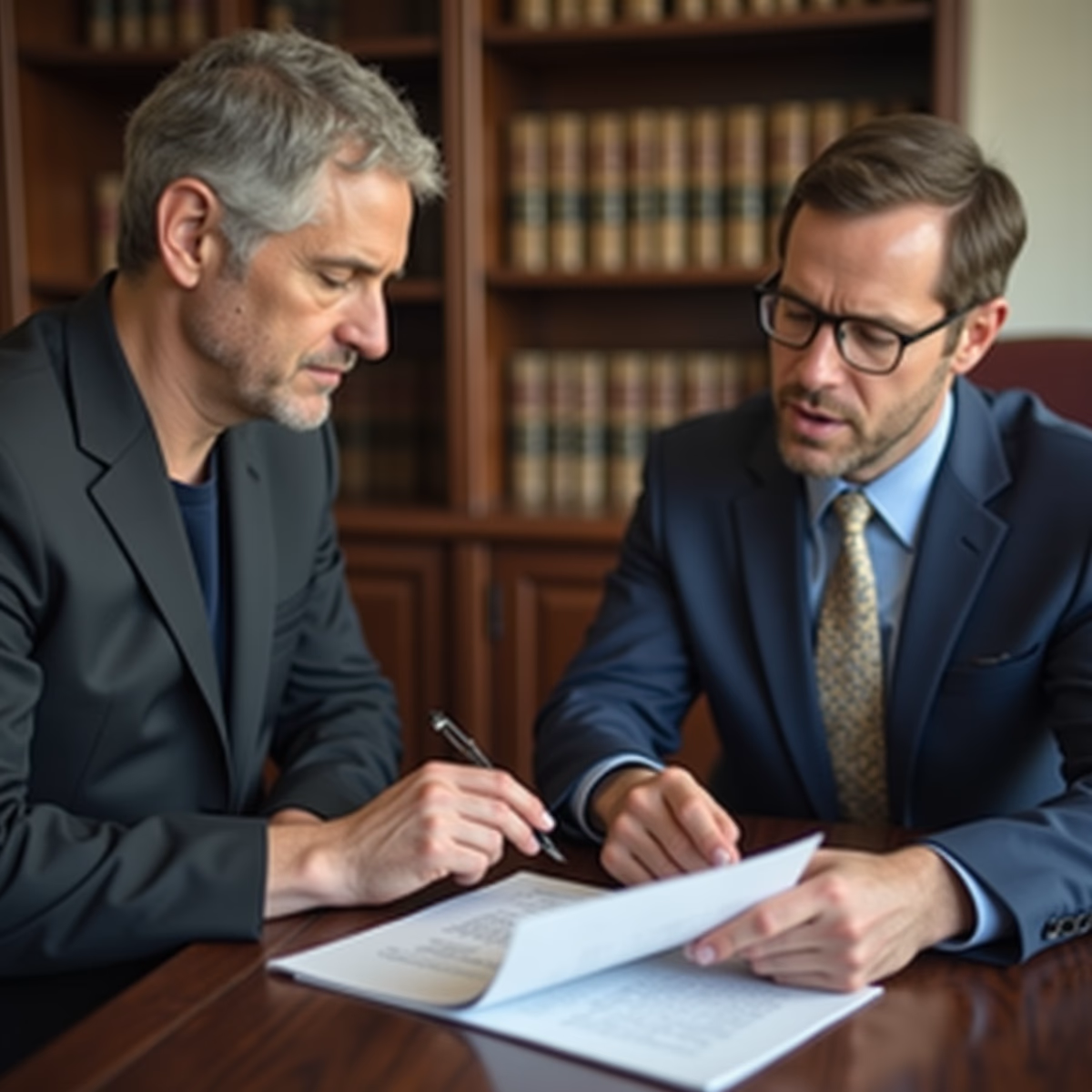
Success in probate court depends less on the size of the estate and more on the accuracy of the petition and the behavior of the fiduciary. Whether the issue is a forgotten asset, a contested creditor claim, or a disagreement among siblings, understanding the procedural triggers for court intervention is the best defense against prolonged administration.
To protect against specific family risks, review heir disputes without a will, check for omitted heirs and pretermitted children, and be vigilant for signs of financial abuse concerns.
California probate is most manageable when authority is documented early, assets are classified correctly, and procedure is followed consistently from petition through closing. When the process is approached with realistic expectations about notice, claims, accounting, and dispute risk, the estate is more likely to move toward closure without avoidable conflict or delay.
Verified Authority on Types of California Probate
-
Spousal Property Petition: California Probate Code § 13650
The gold standard for surviving spouses. This petition allows for the transfer of community and separate property to the surviving spouse without the delays of full probate. There is no dollar limit on the value of assets transferred under this section. -
Small Estate Affidavit ($208,850 Limit): California Probate Code § 13100
For smaller estates (valued under $208,850 as of April 1, 2025), this procedure allows successors to collect money and tangible personal property by presenting a notarized affidavit to the holder (e.g., the bank), bypassing the courts entirely. -
Petition for Succession (AB 2016): California Probate Code § 13151
Designed for “house-only” estates. If the primary residence is worth less than $750,000, this court-supervised summary proceeding allows for the transfer of the property. It is faster and cheaper than full probate but requires a judge’s order to clear title. -
Ancillary Administration (Foreign Domicile): California Probate Code § 12501
If the decedent lived in another state (e.g., Nevada) but owned a vacation home in California, the California courts have jurisdiction over that real estate. “Ancillary Probate” is the process used to admit the foreign will and distribute the California property. -
Special Administration (Emergency): California Probate Code § 8540
When time is of the essence. If assets are in danger or a business needs immediate management, the court can appoint a Special Administrator. These powers are temporary and specific, intended only to hold the line until a general executor is appointed. -
The “Heggstad” Petition (Trust Cure): California Probate Code § 850
Often mistaken for probate, this is actually a petition to avoid it. If a decedent had a trust but forgot to title an asset in the trust’s name, a Section 850 petition asks the court to declare that the asset belongs to the trust, bypassing the need for a full estate administration.
|
Attorney Advertising, Legal Disclosure & Authorship
ATTORNEY ADVERTISING.
This content is provided for general informational and educational purposes only and does not constitute legal, financial, or tax advice. Under the California Rules of Professional Conduct and State Bar advertising regulations, this material may be considered attorney advertising. Reading this content does not create an attorney-client relationship or any professional advisory relationship. Laws vary by jurisdiction and are subject to change, including recent 2026 developments under California’s AB 2016 and evolving federal estate and reporting requirements. You should consult a qualified attorney or advisor regarding your specific circumstances before taking action.
Responsible Attorney:
Steven F. Bliss, California Attorney (Bar No. 147856).
Local Office:
Escondido Probate Law720 N Broadway 107 Escondido, CA 92025 (760) 884-4044
Escondido Probate Law is a practice location and trade name used by Steven F. Bliss, Esq., a California-licensed attorney.
About the Author & Legal Review Process
This article was researched and drafted by the Legal Editorial Team of the Law Firm of Steven F. Bliss, Esq.,
a collective of attorneys, legal writers, and paralegals dedicated to translating complex legal concepts into clear, accurate guidance.
Legal Review:
This content was reviewed and approved by Steven F. Bliss, a California-licensed attorney (Bar No. 147856). Mr. Bliss concentrates his practice in estate planning and estate administration, advising clients on proactive planning strategies and representing fiduciaries in probate and trust administration proceedings when formal court involvement becomes necessary.
With more than 35 years of experience in California estate planning and estate administration,
Mr. Bliss focuses on structuring enforceable estate plans, guiding fiduciaries through court-supervised proceedings, resolving creditor and notice issues, and coordinating asset management to support compliant, timely distributions and reduce fiduciary risk. |