|
Legal & Tax Disclosure
ATTORNEY ADVERTISING.
This article is provided for general informational purposes only and does not constitute legal, financial, or tax advice. Reading this content does not create an attorney-client or professional advisory relationship. Laws vary by jurisdiction and are subject to change. You should consult a qualified professional regarding your specific circumstances. |
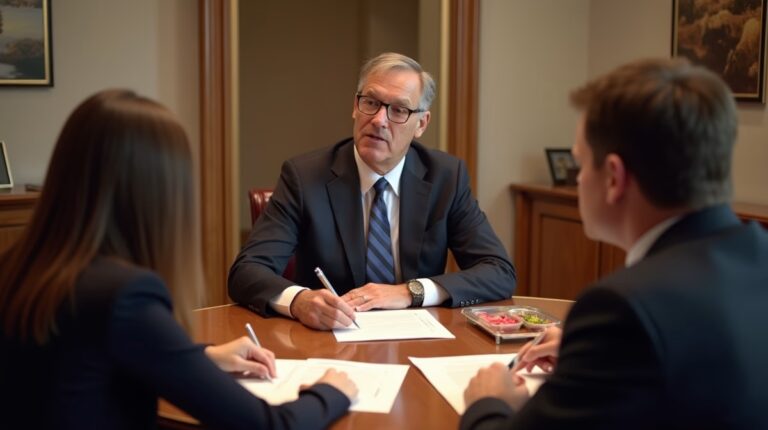
It’s a question I hear frequently, and recently, it involved a particularly stressful situation with my client, Walter. Walter had meticulously prepared a Revocable Living Trust years ago, intending to avoid probate. He even executed a pour-over will. But, and this is crucial, he failed to formally fund the trust with his home – the deed never transferred ownership to the trust. After Walter passed, his daughter, Emily, attempted to sell the house using a grant deed as trustee of the trust. The title company, rightfully so, flagged the issue. Emily faced a potential six-to-nine-month probate delay, significant legal fees, and a very anxious buyer threatening to walk away. The cost of this oversight? Easily $20,000 to $30,000 in lost time, legal expenses, and potential sale price reduction.
As an Estate Planning Attorney and CPA with over 35 years of experience here in Escondido, I’ve seen this scenario play out countless times. People believe creating a trust is enough. It’s not. Proper funding—the actual transfer of assets—is the linchpin. A trust document sitting in a drawer is functionally the same as having no estate plan at all.
What Happens If a Home Isn’t Properly Titled in the Trust?

If a property isn’t held in the name of your trust at the time of your passing, it becomes a probate asset. This means a court-supervised process is required to transfer ownership to your heirs. That process includes publishing notices, creditor claims, and often, court hearings. The entire process can easily take six months to over a year and involves attorney’s fees, court costs, and executor compensation. It’s not insurmountable, but it’s a significant inconvenience and expense most clients want to avoid.
Can I Sell a House While a Probate Case is Pending?
Yes, but it’s complicated. The court must authorize the sale, and this requires filing a petition with the court, providing notice to all interested parties (heirs, creditors), and obtaining a court order specifically permitting the sale. The court will review the proposed sale terms to ensure they are reasonable and in the best interest of the estate. This adds time, cost, and a layer of judicial scrutiny to what could otherwise be a straightforward transaction.
What are My Options for Avoiding Probate When Selling a Home?
Thankfully, there are several strategies. First, funding your trust correctly is paramount. This involves executing a new deed transferring ownership of your home from your individual name to the name of your trust. Second, utilizing a “Petition to Determine Succession” under AB 2016 can streamline the transfer of certain assets. For deaths on or after April 1, 2025, executors may avoid full probate for personal property under $208,850. Notably, AB 2016 now allows a simplified ‘Petition to Determine Succession’ for a primary residence valued up to $750,000. Per Probate Code § 13050, you MUST exclude all California-registered vehicles and up to $20,875 in unpaid salary from the small estate calculation. This is significantly faster and less expensive than full probate, but it has valuation and eligibility limitations.
How Does a CPA’s Expertise Help with Estate Sales?
My dual background as an attorney and CPA provides a unique advantage. Selling real estate triggers capital gains tax implications. As a CPA, I can help clients understand the “step-up in basis” rule, which allows heirs to inherit property at its fair market value on the date of death, potentially eliminating significant capital gains taxes. I can also advise on proper valuation methods to minimize tax liabilities. This is especially critical if the property has appreciated substantially over the years. Accurate valuation is often a point of contention with the IRS, and my expertise ensures compliance.
What About Joint Ownership and Right of Survivorship?
If the home is held in joint tenancy with right of survivorship, it automatically passes to the surviving joint tenant outside of probate. This is a simple and effective way to avoid probate, but it’s important to understand the implications for estate planning purposes. Joint ownership can simplify things, but it doesn’t necessarily align with your overall estate planning goals and may create unintended tax consequences.
What Digital Assets Do I Need to Consider?
Often overlooked, digital assets – online accounts, cryptocurrency, digital photos – can complicate estate administration. Under California RUFADAA (Probate Code § 870), executors are legally barred from accessing ‘content’ (emails, private messages, crypto-keys) unless the decedent provided explicit ‘prior consent’ in their Will or Trust. Generic ‘all power’ clauses are legally insufficient for digital content access. It’s crucial to document your digital assets and provide clear instructions regarding access in your estate plan.
Solving the immediate legal issue is only the first step; ensuring your foundational documents hold up in court is the next.
As a dual-licensed CPA and Attorney, I warn clients that specific asset strategies are useless if the core Will fails to meet probate standards.
Understanding the following standards is critical to ensuring your wishes are honored in probate court:
What standards do California judges use to determine a will’s true meaning?
In California, a last will and testament is reviewed under probate standards that focus on intent, capacity, and execution. Clear drafting reduces ambiguity, limits misinterpretation, and helps families avoid unnecessary conflict during estate administration.
- Authority: Define executor duties clearly.
- Protection: Establish guardianship for minors.
- Jurisdiction: Confirm residency rules.
For California residents, understanding how intent, authority, and compliance interact is one of the most effective ways to protect family harmony and estate integrity. A will that anticipates probate scrutiny is far more likely to be honored as written and far less likely to become the source of unnecessary conflict.
Official Legal Standards and Resources for California Executors
-
Mandatory Judicial Forms:
Judicial Council of California – Probate Forms (DE Series)
The official repository for all “Decedents’ Estates” forms; in 2026, this includes mandatory updated forms for the $208,850 Small Estate threshold and the new AB 2016 simplified petitions for primary residences valued under $750,000. -
Riverside County Local Rules:
Riverside Superior Court – Executor FAQ
A localized resource for Riverside County fiduciaries that outlines 2026 requirements for mandatory e-filing, Local Rule 7010 for remote appearances, and specific duties regarding the 4-month creditor claim period. -
Federal Tax Compliance:
IRS Guidelines for Executors (Form 706 & 1041)
The authoritative federal guide for filing a final 1040 and the estate’s 1041; it reflects the 2026 OBBBA update, which established a permanent $15 million individual estate tax exemption, effectively ending the previous “tax cliff” uncertainty. -
Statutory Duty of Care:
California Probate Code § 9600 (The Prudent Person Rule)
Codifies the “Prudent Person Rule,” stipulating that an executor must manage estate assets with reasonable care and skill; it remains the primary legal standard in 2026 for determining if a fiduciary is liable for mismanagement or “surcharge.” -
Digital Asset Authority:
Revised Uniform Fiduciary Access to Digital Assets Act (RUFADAA)
Access California Probate Code §§ 870-884, which governs an executor’s power to manage online accounts; it clarifies why service providers can legally block access to private emails and crypto-wallets without explicit “prior consent” in the estate plan.
|
Attorney Advertising, Legal Disclosure & Authorship
ATTORNEY ADVERTISING.
This content is provided for general informational and educational purposes only and does not constitute legal, financial, or tax advice. Under the California Rules of Professional Conduct and State Bar advertising regulations, this material may be considered attorney advertising. Reading this content does not create an attorney-client relationship or any professional advisory relationship. Laws vary by jurisdiction and are subject to change, including recent 2026 developments under California’s AB 2016 and evolving federal estate and reporting requirements. You should consult a qualified attorney or advisor regarding your specific circumstances before taking action.
Responsible Attorney:
Steven F. Bliss, California Attorney (Bar No. 147856).
Local Office:
Escondido Probate Law720 N Broadway 107 Escondido, CA 92025 (760) 884-4044
Escondido Probate Law is a practice location and trade name used by Steven F. Bliss, Esq., a California-licensed attorney.
About the Author & Legal Review Process
This article was researched and drafted by the Legal Editorial Team of the Law Firm of Steven F. Bliss, Esq.,
a collective of attorneys, legal writers, and paralegals dedicated to translating complex legal concepts into clear, accurate guidance.
Legal Review:
This content was reviewed and approved by Steven F. Bliss, a California-licensed attorney (Bar No. 147856). Mr. Bliss concentrates his practice in estate planning and estate administration, advising clients on proactive planning strategies and representing fiduciaries in probate and trust administration proceedings when formal court involvement becomes necessary.
With more than 35 years of experience in California estate planning and estate administration,
Mr. Bliss focuses on structuring enforceable estate plans, guiding fiduciaries through court-supervised proceedings, resolving creditor and notice issues, and coordinating asset management to support compliant, timely distributions and reduce fiduciary risk. |