|
Legal & Tax Disclosure
ATTORNEY ADVERTISING.
This article is provided for general informational purposes only and does not constitute legal, financial, or tax advice. Reading this content does not create an attorney-client or professional advisory relationship. Laws vary by jurisdiction and are subject to change. You should consult a qualified professional regarding your specific circumstances. |
I had a call with Emily last week, and it was a mess. Her mother, bless her heart, was known by three different names during her life – maiden name, married name, and a nickname she used professionally. Emily thought she’d covered everything in the petition, but the court kicked it back because the publication notice only listed one name. It cost her an extra $1,500 in legal fees to redo the notice and delay the estate administration by another month. That’s a surprisingly common problem, and a painful reminder of how meticulous probate publication rules can be.
Why Are Multiple Names a Problem for Probate Publication?
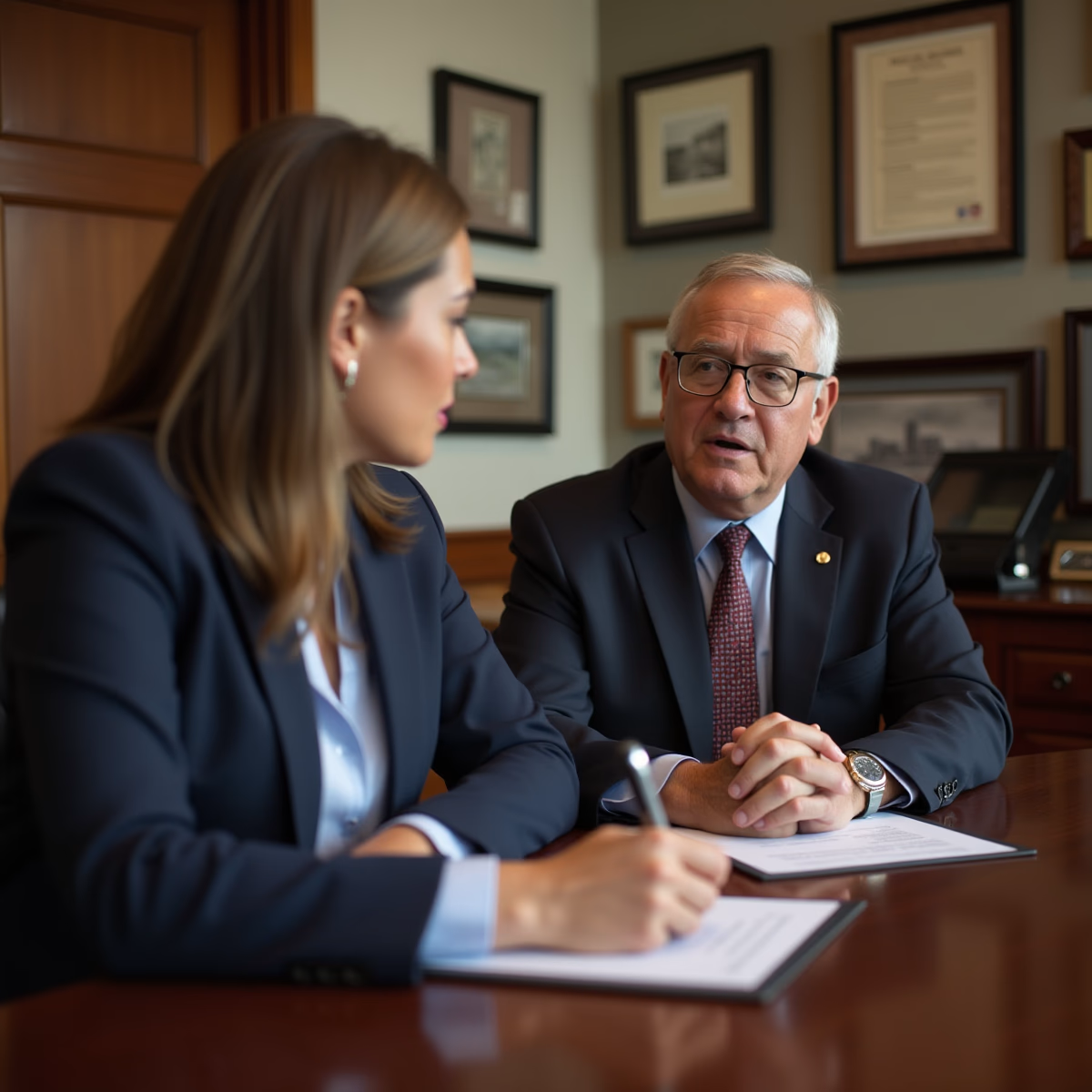
Probate publication, as you know, isn’t about announcing the death to the world generally. It’s about ensuring anyone with a valid claim against the estate—creditors, unknown heirs—actually has legal notice of the proceedings. If someone knows your loved one by a different name than the one published, they could legitimately argue they didn’t receive proper notification, potentially invalidating the entire process. The court wants to minimize that risk.
What Names Should Be Included in the Publication Notice?
Generally, you need to include all names your loved one was known by during their lifetime, especially those under which they held assets or incurred debts. That means:
- Legal Birth Name: The name on their birth certificate.
- Current Legal Name: The name they used most recently before passing.
- Prior Legal Names: Any names they changed through a legal process (marriage, divorce, court order).
- DBA or “Doing Business As” Names: If they operated a business under a different name.
- Commonly Used Aliases: Nicknames or alternative names they regularly used in financial transactions or publicly.
The key is to think about where they might have established relationships with creditors. Did they have credit cards under their maiden name? Was their professional reputation built under a nickname? These are red flags that suggest including additional names in the publication notice.
The Newspaper Requirement: “General Circulation” and Three Publications
It’s not enough to just pick any newspaper. As Probate Code § 8120 clearly states, publication is not optional. It must occur in a newspaper of ‘general circulation’ in the specific city where the decedent resided (not just anywhere in the county). The notice must be published three times over a period of at least 15 days before the hearing.
What Happens If You Miss a Name?
If the court finds you haven’t provided adequate notice, it will likely issue a continuance, meaning the hearing is delayed. You’ll have to redo the publication notice with the missing name(s) and start the 15-day clock all over again. This eats up time, and of course, your attorney’s fees. More importantly, it opens the estate up to potential challenges down the road.
The CPA Advantage: Uncovering Hidden Assets & Liabilities
As an Estate Planning Attorney and CPA with over 35 years of experience, I always emphasize the importance of a thorough estate inventory. My background in accounting allows me to dig deeper than many attorneys to identify all potential assets and liabilities. This includes uncovering accounts held under different names, businesses your loved one may have owned, and any debts they may have incurred. A proper valuation also helps understand the potential capital gains implications of assets, crucial information for maximizing the step-up in basis.
Don’t let a seemingly minor detail like listing aliases derail your probate process. A proactive approach, combined with professional guidance, can save you time, money, and a great deal of frustration.
What causes California probate cases to spiral into delay, disputes, and extra cost?
The path through California probate is rarely a straight line; it requires precise adherence to statutory deadlines, accurate asset characterization, and strict fiduciary compliance. Without a clear roadmap, what begins as a standard administrative proceeding can quickly dissolve into a costly battle over interpretation, valuation, and beneficiary rights.
To protect against specific family risks, review heir disputes without a will, check for left-out heirs issues, and be vigilant for signs of financial abuse concerns.
A stable probate administration outcome usually follows from clarity, consistency, and readiness for court review, especially when multiple stakeholders and competing interpretations are involved. When documentation supports enforcement and timelines are respected, families are less likely to face preventable escalation.
Verified Authority on Probate Notice Requirements
-
Mailing Requirements (The 15-Day Rule): California Probate Code § 8110
Jurisdiction is everything. At least 15 days before the hearing on the petition, you must mail the Notice of Petition to Administer Estate (Form DE-121) to every person named in the will and every legal heir. If you miss an heir, the court lacks the authority to act. -
Publication Mandate: California Probate Code § 8120 (Newspaper of General Circulation)
You cannot hide a probate case. The law requires publication in a newspaper circulated in the area where the decedent lived. This publication must run three times before the hearing. The court will check for the “Proof of Publication” affidavit from the newspaper before granting the petition. -
Notice to Attorney General: California Probate Code § 8111 (Charitable/No Heirs)
If the will leaves assets to a specific charity or a charitable trust, or if the decedent has no known heirs, the California Attorney General becomes a mandatory party to the case. Failing to notice the AG will result in the court continuing your hearing. -
Foreign Citizen Notice: California Probate Code § 8113
If the decedent was a citizen of a foreign nation, or if a beneficiary is a foreign resident, California law often requires notice be sent to the Consulate of that country. This ensures international treaties regarding property rights are respected. -
Request for Special Notice: California Probate Code § 1250
This is a strategic tool for beneficiaries and creditors. By filing Form DE-154, you force the executor to send you a copy of every major document filed in the case (Inventories, Accountings, Petitions). It is the best way to monitor an estate without constantly checking the court docket. -
Defective Notice Consequences: California Probate Code § 8124
This code section is the “stop sign.” If the publication or mailing requirements are not met perfectly, the court cannot hear the petition. The judge has no discretion to waive the notice defect; the hearing must be continued, and notice must be redone properly.
|
Attorney Advertising, Legal Disclosure & Authorship
ATTORNEY ADVERTISING.
This content is provided for general informational and educational purposes only and does not constitute legal, financial, or tax advice. Under the California Rules of Professional Conduct and State Bar advertising regulations, this material may be considered attorney advertising. Reading this content does not create an attorney-client relationship or any professional advisory relationship. Laws vary by jurisdiction and are subject to change, including recent 2026 developments under California’s AB 2016 and evolving federal estate and reporting requirements. You should consult a qualified attorney or advisor regarding your specific circumstances before taking action.
Responsible Attorney:
Steven F. Bliss, California Attorney (Bar No. 147856).
Local Office:
Escondido Probate Law720 N Broadway 107 Escondido, CA 92025 (760) 884-4044
Escondido Probate Law is a practice location and trade name used by Steven F. Bliss, Esq., a California-licensed attorney.
About the Author & Legal Review Process
This article was researched and drafted by the Legal Editorial Team of the Law Firm of Steven F. Bliss, Esq.,
a collective of attorneys, legal writers, and paralegals dedicated to translating complex legal concepts into clear, accurate guidance.
Legal Review:
This content was reviewed and approved by Steven F. Bliss, a California-licensed attorney (Bar No. 147856). Mr. Bliss concentrates his practice in estate planning and estate administration, advising clients on proactive planning strategies and representing fiduciaries in probate and trust administration proceedings when formal court involvement becomes necessary.
With more than 35 years of experience in California estate planning and estate administration,
Mr. Bliss focuses on structuring enforceable estate plans, guiding fiduciaries through court-supervised proceedings, resolving creditor and notice issues, and coordinating asset management to support compliant, timely distributions and reduce fiduciary risk. |