|
Legal & Tax Disclosure
ATTORNEY ADVERTISING.
This article is provided for general informational purposes only and does not constitute legal, financial, or tax advice. Reading this content does not create an attorney-client or professional advisory relationship. Laws vary by jurisdiction and are subject to change. You should consult a qualified professional regarding your specific circumstances. |
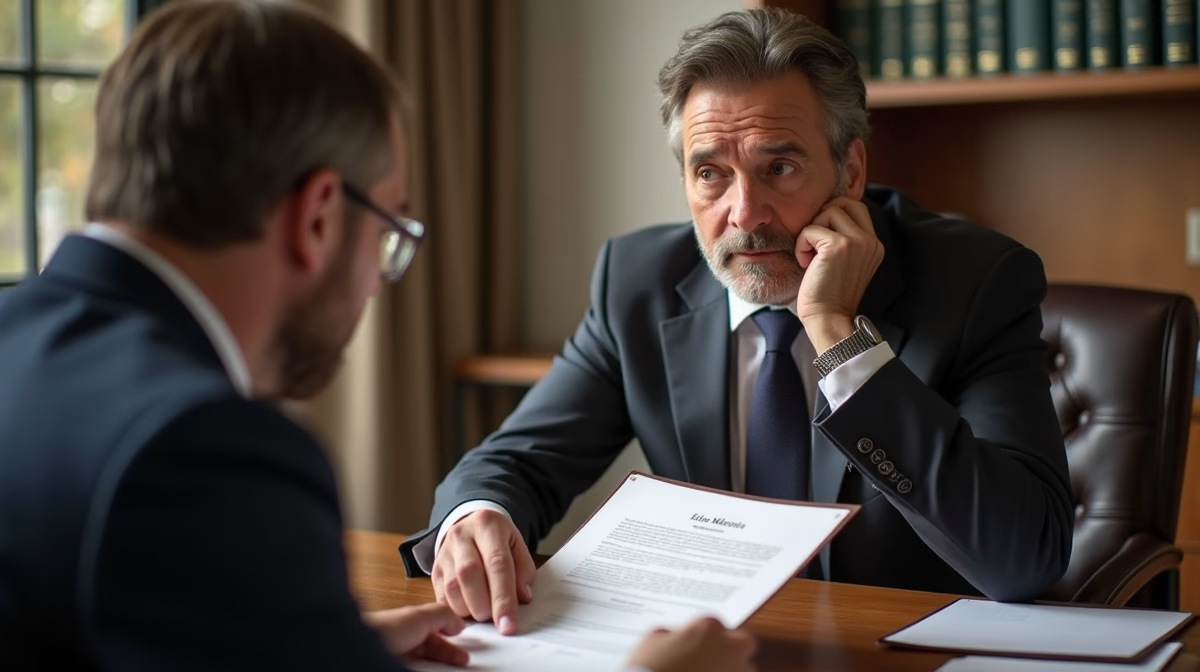
It started with a simple misunderstanding. Dax, a recently widowed software engineer, thought he’d done everything right. He’d filed the initial probate petition, served notice on the family, and even prepared for the hearing. What he didn’t do, however, was address the “Probate Notes” – those little flags the probate examiner raises on the court’s internal system. He figured they were just minor clarifications, easily addressed at the hearing. He was wrong. The judge continued the matter, costing Dax another $3,000 in legal fees and delaying the estate administration by months.
As an estate planning attorney and CPA with over 35 years of experience here in Escondido, I see this happen far too often. People focus on the big picture – the petition, the assets, the family dynamics – and completely overlook these critical administrative details. It’s a frustrating, expensive mistake, and one that’s easily avoided with a little foresight. My CPA background gives me a unique advantage; I understand how seemingly minor probate delays can snowball into significant tax implications, particularly when it comes to securing that crucial step-up in basis for inherited assets.
Why Are Probate Notes Even Generated?
Probate Notes are essentially requests for clarification from the probate examiner. They aren’t formal objections, but they must be addressed before the judge will consider the petition. These notes can cover a wide range of issues, from missing signatures to inconsistencies in the declared asset values. The examiner’s job is to ensure everything is legally sound before it reaches the judge. Ignoring them is like showing up to a construction site without the proper permits—you’re simply not going to get very far.
What Happens When You Ignore Them?
The most common outcome is a continuance. The judge won’t rule on your petition if there are unresolved Probate Notes. They’ll simply kick the can down the road, asking you to “clear the notes” and reschedule the hearing. This means more waiting, more legal fees, and increased stress for everyone involved. In Dax’s case, the notes concerned a minor discrepancy in the appraisal of a rental property. It was easily fixed, but because he didn’t address it proactively, he had to pay for another court appearance and attorney time.
The “Secret” Step: Supplement to Petition
Most hearing delays are caused by uncleared ‘Probate Notes.’ You cannot simply explain the issue to the judge in court; you MUST file a verified ‘Supplement to Petition’ in writing at least 2-3 court days before the hearing to satisfy the Probate Examiner. This document is your opportunity to respond to each note individually, providing the requested information or clarification. Think of it as a pre-emptive strike, addressing potential concerns before they become roadblocks.
The Supplement should be clearly labeled and include the original petition’s case number. Each note from the examiner should be reproduced, followed by your detailed response. Don’t be vague! Provide specific documentation whenever possible. For example, if the note questions the valuation of a stock holding, attach a recent brokerage statement or appraisal report.
What Types of Issues Trigger Probate Notes?
- Missing Information: This is the most common issue. Perhaps a beneficiary’s address is missing, or the date of death isn’t clearly stated.
- Inconsistencies: Discrepancies between the petition and supporting documents (e.g., the stated value of an asset differs from the appraisal).
- Lack of Verification: The petition wasn’t properly signed and verified under penalty of perjury.
- Service Issues: Proof of service for the Notice of Hearing is missing or incomplete. As per Probate Code § 1220, proper notice is essential.
- Unclear Assets: The description of an asset is vague or ambiguous, making it difficult to identify.
How Can You Prevent Probate Notes?
Thoroughness is key. Before filing your petition, carefully review all documents to ensure accuracy and completeness. Double-check names, dates, and asset values. Ensure all required signatures and verifications are in place. Consider having an attorney review your petition before filing to catch any potential issues. A proactive approach will save you time, money, and unnecessary headaches.
What if I Receive Notes After Filing?
Don’t panic. It’s perfectly normal to receive Probate Notes even after filing your petition. The examiner will typically notify you of any issues. The key is to respond promptly and thoroughly with a ‘Supplement to Petition.’ Don’t delay, as this will only prolong the process.
Remember, the probate process is complex. While it’s possible to navigate it on your own, having experienced legal counsel can make a significant difference. My firm provides comprehensive probate administration services, handling everything from petition preparation to asset distribution, ensuring a smooth and efficient process for our clients.
What failures trigger contested proceedings and court intervention in California probate administration?
California probate is designed to provide court-supervised transfer of property, yet cases often break down when authority is unclear, required steps are missed, or disputes arise over assets, notice, and fiduciary conduct. When the process is misunderstood, families can face avoidable delay, escalating conflict, and increased exposure to creditor issues, hearings, or litigation before the estate can close.
| Money Matter | Action |
|---|---|
| Debts | Manage estate creditor process. |
| Disputes | Handle creditor claim disputes. |
| Expenses | Track probate costs. |
A stable probate administration outcome usually follows from clarity, consistency, and readiness for court review, especially when multiple stakeholders and competing interpretations are involved. When documentation supports enforcement and timelines are respected, families are less likely to face preventable escalation.
Verified Authority on California Probate Hearings
-
Oral Objections (The “Stop” Button): California Probate Code § 1043
This is the most important statute for beneficiaries. It grants an interested person the right to appear at the hearing and object orally to the petition. Once an oral objection is made, the court generally must continue the hearing to allow time for written objections to be filed. -
Remote Appearances (Zoom/CourtCall): California Code of Civil Procedure § 367.75
Modern probate hearings are often hybrid. This code section governs the right to appear remotely. While convenient, note that the court can typically require a physical appearance for “evidentiary” hearings where witness credibility is being judged. -
Affidavits as Evidence: California Probate Code § 1022
Unlike criminal court, probate hearings rely heavily on paper. A verified petition or an affidavit is admissible as evidence in an uncontested probate hearing. This is why “clearing your notes” in writing is more important than your oral argument. -
Notice of Hearing Requirements: California Probate Code § 1220
The court’s jurisdiction depends on this. The petitioner must mail notice of the hearing at least 15 days in advance to all interested parties. If the “Proof of Service” is not filed or is defective, the judge cannot legally hold the hearing. -
Lodging the Proposed Order: California Rules of Court 3.1312
A common rookie mistake is showing up without the paperwork. The “Proposed Order” (the document the judge signs) should generally be lodged with the court before the hearing. If the judge approves your petition but has nothing to sign, your Letters cannot be issued. -
Proving the Will (Witnesses): California Probate Code § 8220
If a Will is contested, or if it is not “self-proving” (lacking a proper attestation clause), the court may require the testimony of a subscribing witness at the hearing to prove the Will is authentic.
|
Attorney Advertising, Legal Disclosure & Authorship
ATTORNEY ADVERTISING.
This content is provided for general informational and educational purposes only and does not constitute legal, financial, or tax advice. Under the California Rules of Professional Conduct and State Bar advertising regulations, this material may be considered attorney advertising. Reading this content does not create an attorney-client relationship or any professional advisory relationship. Laws vary by jurisdiction and are subject to change, including recent 2026 developments under California’s AB 2016 and evolving federal estate and reporting requirements. You should consult a qualified attorney or advisor regarding your specific circumstances before taking action.
Responsible Attorney:
Steven F. Bliss, California Attorney (Bar No. 147856).
Local Office:
Escondido Probate Law720 N Broadway 107 Escondido, CA 92025 (760) 884-4044
Escondido Probate Law is a practice location and trade name used by Steven F. Bliss, Esq., a California-licensed attorney.
About the Author & Legal Review Process
This article was researched and drafted by the Legal Editorial Team of the Law Firm of Steven F. Bliss, Esq.,
a collective of attorneys, legal writers, and paralegals dedicated to translating complex legal concepts into clear, accurate guidance.
Legal Review:
This content was reviewed and approved by Steven F. Bliss, a California-licensed attorney (Bar No. 147856). Mr. Bliss concentrates his practice in estate planning and estate administration, advising clients on proactive planning strategies and representing fiduciaries in probate and trust administration proceedings when formal court involvement becomes necessary.
With more than 35 years of experience in California estate planning and estate administration,
Mr. Bliss focuses on structuring enforceable estate plans, guiding fiduciaries through court-supervised proceedings, resolving creditor and notice issues, and coordinating asset management to support compliant, timely distributions and reduce fiduciary risk. |